
 EN
EN
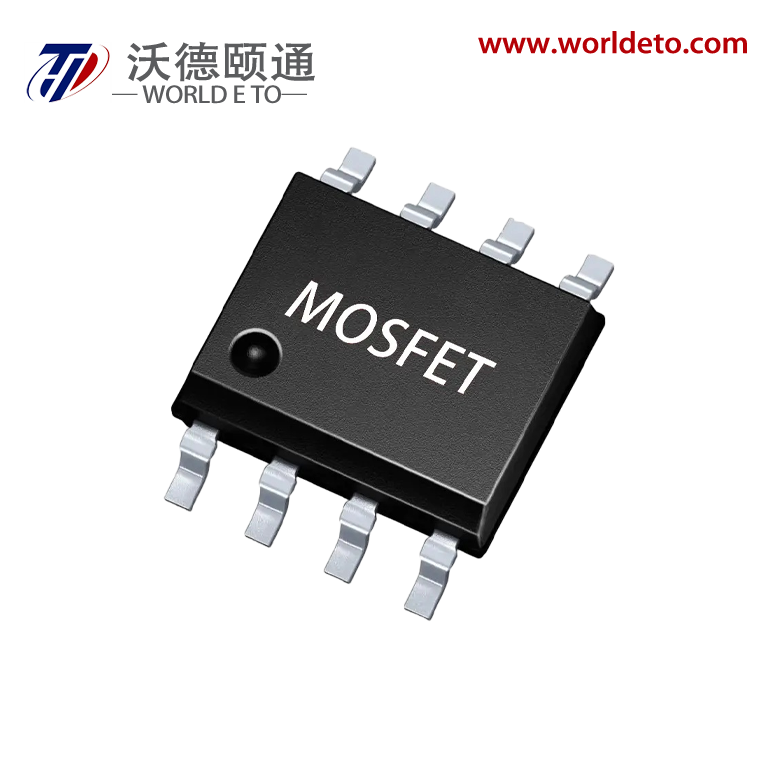
In power electronics, the performance ceiling of any switching circuit is often defined not by the transistor's voltage or current rating, but by a subtler, frequently misunderstood parameter: gate charge. Every designer who has tried to push a MOSFET to higher switching frequencies has encountered the reality that gate charge is the gatekeeper to high-speed efficiency. Understanding how this parameter works, why it matters at elevated frequencies, and how to use it as a design variable rather than a datasheet footnote is essential for anyone building efficient power converters, motor drives, or switching regulators.
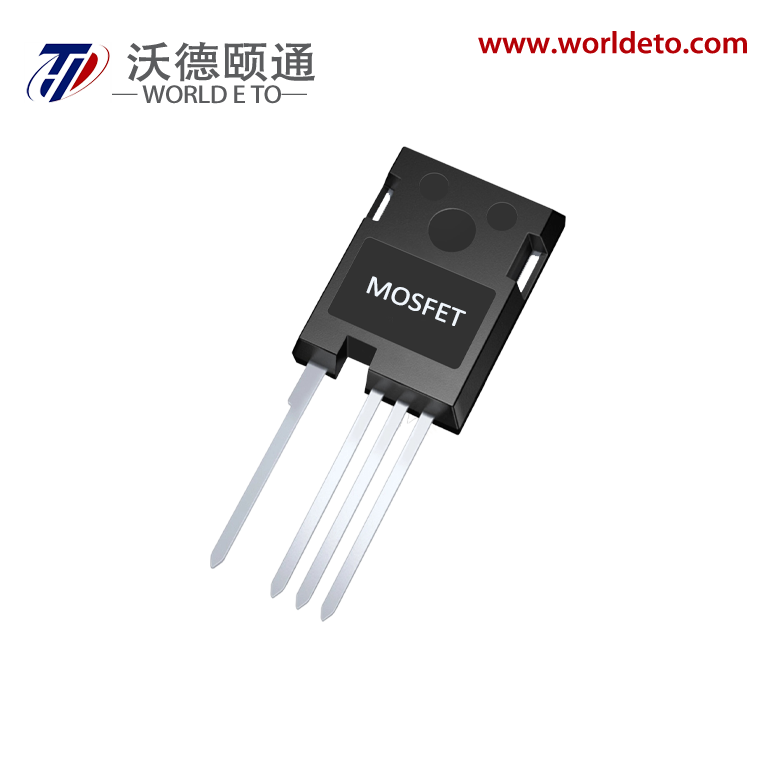
The MOSFET gate charge parameter, commonly labeled Qg on a datasheet, quantifies the total charge that must be delivered to the gate terminal to fully switch the device from its off state to its on state. Unlike a simple resistive input, the MOSFET gate presents a nonlinear capacitive load whose charging behavior directly determines switching speed, drive power consumption, and overall system efficiency. This article breaks down the mechanics of gate charge, its relationship to switching losses, and the practical decisions engineers must make to optimize high-speed designs around this critical parameter.
The Physics Behind MOSFET Gate Charge
Gate Capacitance and Its Nonlinear Nature
When a drive signal is applied to the gate of a MOSFET, current flows into the gate terminal and charges the internal capacitances of the device. These capacitances are not fixed values; they vary with the applied drain-to-source voltage and the gate-to-source voltage. The three primary capacitances — Cgs (gate-to-source), Cgd (gate-to-drain), and Cds (drain-to-source) — combine in ways that produce the characteristic nonlinear shape of the gate charge waveform observed during switching transitions.
The Cgd capacitance, often called the Miller capacitance, is particularly significant because it is reflected back to the gate input with a multiplication factor equal to the voltage gain of the stage. During switching, as the drain voltage swings across the full bus voltage, the Miller effect forces the gate voltage to stall at what is known as the Miller plateau. This plateau is a direct manifestation of charge redistribution inside the MOSFET and is the region where most switching-related losses originate.
Understanding that gate capacitance is bias-dependent is critical. A MOSFET operating at a high drain voltage will present a very different dynamic input impedance than the same device operating near zero volts. Datasheet capacitance values measured at a single test voltage can be misleading, which is why the gate charge curve plotted against gate voltage provides a far more useful and accurate picture of what the drive circuit must handle in real operation.
Interpreting the Gate Charge Curve
The gate charge curve plots gate-to-source voltage as a function of total gate charge delivered under a defined set of conditions, typically a specified drain current and drain-to-source voltage. The curve has three recognizable regions. In the first region, the gate voltage rises linearly as Cgs charges. This is a relatively quick phase and contributes to the initial turn-on delay of the MOSFET.
The second region is the Miller plateau, where the gate voltage remains nearly constant while significant charge is consumed by Cgd as the drain voltage falls. This plateau represents the phase during which the MOSFET is actively switching and both significant voltage and current are present simultaneously across the device — the condition that produces crossover losses. The wider and longer this plateau, the greater the switching losses and the greater the burden on the gate driver.
The third region sees the gate voltage resume its rise after the drain voltage has reached its minimum, charging the gate to its final drive voltage. From a design perspective, the total charge Qg, the charge to the Miller plateau Qgs, and the charge through the plateau Qgd are the three sub-components that drive circuit architects must account for individually. Each has different implications for driver sizing, dead time management, and efficiency optimization at high switching frequencies.
How Gate Charge Directly Governs Switching Losses
Power Consumed by the Gate Drive Circuit
The gate drive power loss in a MOSFET-based circuit is elegantly expressed by a simple relationship: Pgate equals Qg multiplied by Vgs multiplied by the switching frequency fs. This equation immediately reveals why gate charge becomes a dominant efficiency concern as switching frequencies rise. At 100 kHz, a device with a Qg of 100 nC and a drive voltage of 12 V consumes 120 mW purely in gate drive losses. At 1 MHz, that same device consumes 1.2 W — a potentially significant fraction of the total converter budget.
This relationship drives the selection logic for high-frequency MOSFET designs toward devices with the lowest possible Qg consistent with the required on-resistance and voltage rating. The tradeoff is well established: lower on-resistance typically requires a larger gate oxide area, which increases Qg. Designers must therefore find the optimal balance point based on the specific duty cycle, switching frequency, and current level of their application. There is no universal best device; the optimum depends on the operating conditions.
Beyond the gate drive circuit itself, excess gate charge slows down the switching transitions of the MOSFET, extending the duration of the crossover period where both drain current and drain-to-source voltage are simultaneously elevated. This overlap is the source of hard-switching losses, and any increase in transition time — caused by insufficient drive current relative to Qg — translates directly into thermal stress and reduced converter efficiency.
The Role of Gate Drive Strength in Transition Speed
The speed at which a MOSFET switches is fundamentally determined by how quickly the gate driver can supply or sink the required gate charge. The peak gate drive current Ig directly controls the dV/dt at the drain node and the di/dt in the power loop. A driver that cannot deliver sufficient current to charge through the Miller plateau rapidly will produce slow, lossy transitions that negate the benefits of choosing a low-Qg device in the first place.
Gate driver selection must therefore be matched to the specific gate charge characteristics of the MOSFET being driven. Drive current capability is specified differently across driver families, and the effective current available at the gate pin depends on the gate resistor value, the bootstrap or bias supply voltage, and parasitic inductance in the drive loop. Each of these elements adds impedance that slows charge delivery and must be minimized in layouts intended for high-speed operation.
Practical designers often simulate the gate charge waveform under worst-case conditions — minimum driver supply voltage, maximum gate resistance, and elevated temperature, where MOSFET threshold voltage and transconductance both shift — before committing to a device and driver combination. The gate charge curve is a predictive tool that, when used correctly, allows the designer to budget transition times, calculate switching losses, and set dead times with confidence rather than guesswork.
Gate Charge Tradeoffs in High-Speed MOSFET Design
Balancing Qg Against Ron and Voltage Rating
The gate charge of a MOSFET is not an independent variable. It is intimately connected to the on-resistance Rds(on) and the breakdown voltage rating through the fundamental geometry and doping profiles of the device. For a given technology generation and voltage class, reducing Rds(on) requires increasing the active gate area, which proportionally increases Qg. This means that a MOSFET optimized purely for low conduction losses will carry a penalty in switching losses, and vice versa.
The figure of merit most commonly used to capture this tradeoff is the product Qg × Rds(on). Lower values indicate a more efficient technology platform, and comparing devices of the same voltage class using this figure of merit provides a technology-neutral way to identify which MOSFET will perform better at a given switching frequency and load current combination. Newer silicon technologies and wide-bandgap materials such as GaN have dramatically lower figures of merit than conventional silicon planar devices, which is why they are increasingly favored in high-frequency designs.
Higher voltage-rated MOSFETs inherently carry larger gate charge values for a given Rds(on) target, because achieving a high breakdown voltage requires either thicker epitaxial layers or complex charge-balance structures that increase Cgd significantly. Designers working at 600 V or 650 V bus voltages must be particularly attentive to Qgd, as the larger voltage swing during turn-off means more charge must be removed from the Miller capacitance during every switching cycle.
Temperature Effects on Gate Charge Behavior
Gate charge parameters in a MOSFET are moderately temperature-dependent, though less so than parameters such as Rds(on) or threshold voltage. As junction temperature rises, the threshold voltage of a MOSFET decreases, which shifts the Miller plateau to a lower gate voltage level. This shift can affect the timing of dead-time intervals in synchronous rectifier topologies, potentially allowing shoot-through if dead times were set based on room-temperature measurements alone.
The gate capacitances themselves change relatively little with temperature, but the interaction between threshold voltage drift and drive voltage levels can alter the effective switching speed at elevated temperatures. In safety-critical or high-reliability applications, thermal characterization of the switching waveform across the full operating temperature range is a necessary step in design verification, ensuring that the MOSFET continues to switch cleanly without shoot-through or excessive loss at maximum junction temperature.
Thermal runaway scenarios in hard-switching converters often originate from a feedback loop in which higher junction temperature increases switching losses — partly through threshold shifts that alter switching timing — which further raises temperature. Selecting a MOSFET with adequate thermal margin and a Qg value that allows sufficiently fast transitions even at maximum temperature is a fundamental safeguard against this failure mode.
Practical Design Strategies for Minimizing Gate Charge Losses
PCB Layout and Parasitic Reduction
The physical layout of the gate drive circuit has a profound impact on how effectively the specified gate charge characteristics of a MOSFET are realized in practice. Parasitic inductance in the gate drive loop, created by long PCB traces or poorly placed bypass capacitors, effectively adds an impedance in series with the gate. This additional impedance limits the peak current available during switching transitions, slowing charge delivery and degrading switching performance relative to what the datasheet predicts.
Best practice for high-speed MOSFET layouts involves placing the gate driver as physically close to the gate and source pins of the device as possible, using short and wide traces or dedicated drive layers in multi-layer PCBs, and ensuring that the gate driver decoupling capacitor is placed at the driver output pins rather than at some remote location on the board. The source of the MOSFET — specifically the power source pin, not the Kelvin sense pin if available — should be the reference point for the gate driver return path to avoid ground bounce corrupting the drive signal.
Using a split gate resistor approach, where separate resistors are placed in the turn-on and turn-off paths, allows the designer to control the rate of charge delivery independently for each transition. A lower turn-off resistance reduces the time to discharge the gate and speeds up turn-off, reducing tail current losses, while a slightly higher turn-on resistance can control di/dt and reduce EMI without unnecessarily slowing the turn-off transition. This asymmetric approach to gate charge management is a standard technique in precision high-efficiency power converter design.
Soft Switching and Resonant Gate Drive
Soft-switching topologies — including zero-voltage switching and zero-current switching converters — reduce the switching losses of a MOSFET by ensuring that either the drain voltage or the drain current is near zero at the moment of switching. When a MOSFET switches under zero-voltage conditions, the energy stored in Cgd is not dissipated as heat but is instead recovered through the resonant circuit, fundamentally altering the role of gate charge in the loss budget.
Under soft-switching conditions, Qgd still must be supplied and removed during transitions, but because the drain voltage swing is absent or greatly reduced, the Miller effect is diminished and the plateau region of the gate charge curve becomes far less prominent. This allows converters to operate at much higher switching frequencies — hundreds of kilohertz to several megahertz — while maintaining high efficiency, provided that the topology can consistently achieve soft-switching across the full operating range.
Resonant gate drive circuits recover a portion of the energy stored in the gate capacitance by using an inductor to resonate charge into and out of the gate, rather than dissipating it in a resistor. While the complexity of these circuits is higher, the efficiency benefit at very high switching frequencies can justify the additional components. The gate charge parameter remains the central variable in designing such circuits, as it determines the resonant inductance value, the peak current in the resonant network, and the achievable transition speed.
FAQ
What is gate charge in a MOSFET and why does it matter for efficiency?
Gate charge, denoted Qg on a datasheet, is the total charge that must be delivered to the gate of a MOSFET to fully turn it on from its off state. It matters for efficiency because the gate drive power loss equals Qg multiplied by the drive voltage and the switching frequency. At higher frequencies, larger Qg values translate directly into greater gate drive losses and slower switching transitions, both of which reduce converter efficiency and increase thermal stress.
How does the Miller plateau in a MOSFET gate charge curve affect switching losses?
The Miller plateau is the region of the gate charge curve where the gate voltage remains nearly constant while charge is consumed by the gate-to-drain capacitance Cgd as the drain voltage transitions. During this plateau, both significant current and voltage exist simultaneously across the MOSFET, creating crossover losses. A longer or wider plateau indicates more charge consumed by Cgd, longer switching transitions, and higher switching losses per cycle. Minimizing Qgd is therefore a key strategy for reducing hard-switching losses in a MOSFET-based converter.
How should I choose the right gate driver for a specific MOSFET based on gate charge?
The gate driver should be selected to supply peak current sufficient to charge through the total gate charge Qg within the desired switching transition time. A higher peak drive current capability results in faster charge delivery, shorter transition times, and lower switching losses. You must also account for gate resistance, PCB trace inductance, and the drive voltage level, as all of these limit the effective current available at the gate pin. Matching driver strength to MOSFET gate charge is one of the most impactful decisions in high-speed power circuit design.
Does gate charge change with temperature and operating conditions?
Gate charge values in a MOSFET are relatively stable with temperature compared to parameters like Rds(on), but the threshold voltage shifts downward at elevated temperatures, which can change the position of the Miller plateau and alter switching timing. The actual charge consumed also depends on the operating drain voltage and current, meaning datasheet Qg values measured at specific test conditions may not exactly represent your application. Designers should always simulate or measure gate charge behavior under worst-case temperature and voltage conditions to ensure correct dead-time settings and transition speed performance.
Table of Contents
- The Physics Behind MOSFET Gate Charge
- How Gate Charge Directly Governs Switching Losses
- Gate Charge Tradeoffs in High-Speed MOSFET Design
- Practical Design Strategies for Minimizing Gate Charge Losses
-
FAQ
- What is gate charge in a MOSFET and why does it matter for efficiency?
- How does the Miller plateau in a MOSFET gate charge curve affect switching losses?
- How should I choose the right gate driver for a specific MOSFET based on gate charge?
- Does gate charge change with temperature and operating conditions?