
 EN
EN
The emergence of the new-generation SiC module has fundamentally shifted how power electronics engineers approach dynamic loss analysis. Unlike conventional silicon-based devices, a SiC module operates at higher switching frequencies and elevated junction temperatures while maintaining significantly lower conduction and switching losses. Understanding the precise mechanisms behind these dynamic behaviors is no longer optional for engineers designing high-efficiency converters, inverters, or traction systems — it is a core competency that directly determines system performance and reliability.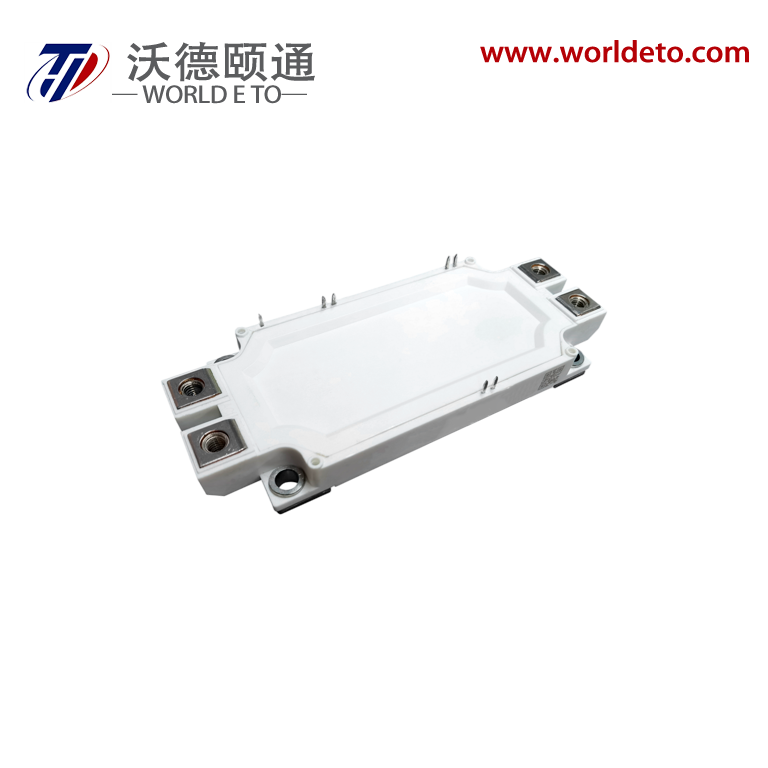
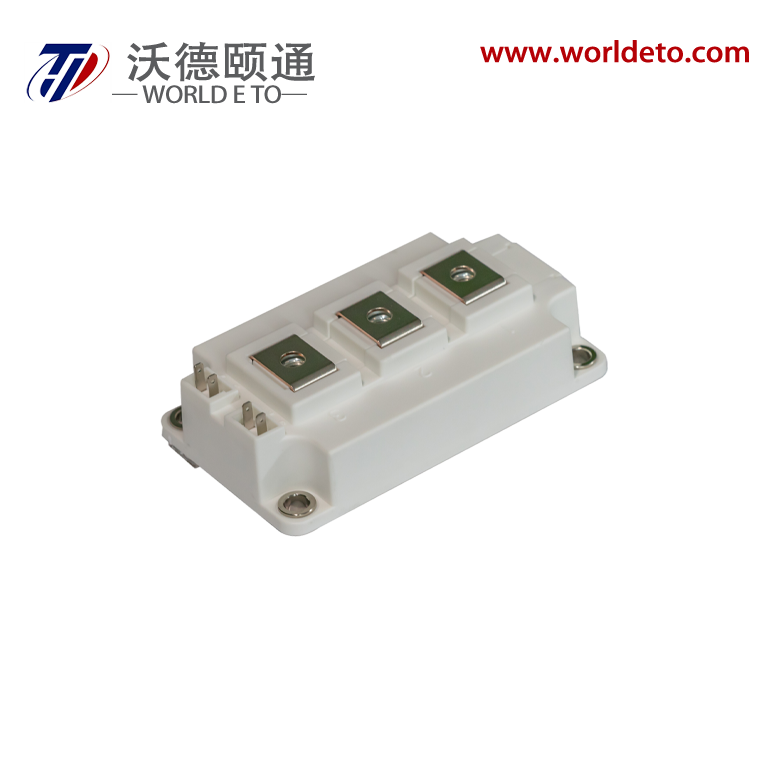
This article provides a detailed technical analysis of the dynamic losses and switching dynamics inherent to the new SiC module architecture. We examine the physical origins of turn-on and turn-off energy losses, the role of parasitic elements in shaping switching transients, thermal behavior under dynamic conditions, and the practical implications for circuit design. Whether you are evaluating a SiC module for an industrial drive, a renewable energy converter, or an EV powertrain, the insights here will help you make more informed engineering decisions.
Understanding Dynamic Losses in a SiC Module
The Physical Origins of Switching Energy Loss
Dynamic losses in a SiC module arise primarily during the switching transitions — the brief intervals when the device moves between its on-state and off-state. During these transitions, both voltage and current are simultaneously present across the device, creating an instantaneous power dissipation that integrates into measurable energy loss per switching cycle. In a SiC module, the wide bandgap properties of silicon carbide reduce the minority carrier storage effect that plagues conventional silicon IGBTs, which means the current tail during turn-off is dramatically shortened.
The turn-on energy loss (Eon) in a SiC module is influenced by the reverse recovery charge of the freewheeling diode, the gate drive resistance, and the stray inductance in the commutation loop. Because SiC Schottky diodes exhibit near-zero reverse recovery charge, the Eon of a SiC module is substantially lower than that of an equivalent silicon IGBT module operating under the same conditions. This reduction in Eon is one of the primary reasons engineers select a SiC module for high-frequency applications where switching losses dominate the total loss budget.
Turn-off energy loss (Eoff) in a SiC module is governed by the rate at which the device depletes its channel and the speed at which the drain-source voltage rises. The absence of minority carrier injection in the SiC MOSFET structure means that Eoff is determined almost entirely by the gate drive conditions and the external circuit parasitics rather than by stored charge within the device itself. This gives the design engineer a much higher degree of control over Eoff compared to bipolar-based technologies.
Frequency Dependence and Total Loss Budgeting
One of the most consequential characteristics of a SiC module is how its total dynamic losses scale with switching frequency. In a silicon IGBT module, increasing the switching frequency from 10 kHz to 50 kHz can cause switching losses to dominate so severely that the thermal budget is exceeded. A SiC module, by contrast, maintains a much more favorable loss-to-frequency relationship, enabling operation at 50 kHz, 100 kHz, or even higher frequencies without proportional thermal runaway.
Total power loss in a SiC module is the sum of conduction losses and switching losses. At low switching frequencies, conduction losses dominate, and the on-state resistance (Rdson) of the SiC MOSFET becomes the critical parameter. At high switching frequencies, switching losses dominate, and the Eon plus Eoff values per cycle multiplied by frequency determine the thermal load. Engineers must identify the crossover frequency for their specific SiC module and application to optimize the gate drive and thermal management strategy accordingly.
It is also important to account for gate charge losses, which represent the energy required to charge and discharge the gate capacitance of the SiC module during each switching cycle. Although gate charge losses are typically smaller than Eon and Eoff, they become non-negligible at very high switching frequencies and must be included in any rigorous loss model for a SiC module operating above 200 kHz.
Switching Dynamics and Transient Behavior
Turn-On Transient Analysis
The turn-on transient of a SiC module begins when the gate voltage rises above the threshold voltage and the channel begins to conduct. During this phase, the drain current rises rapidly while the drain-source voltage remains elevated, creating the overlap region responsible for Eon. The rate of current rise (di/dt) is controlled by the gate drive resistance and the total gate charge of the SiC module. A lower gate resistance accelerates the turn-on transient, reducing Eon but increasing the peak voltage overshoot caused by stray inductance in the power loop.
In a SiC module, the turn-on di/dt can reach values of several thousand amperes per microsecond, which is significantly higher than what is typical for silicon IGBTs. This high di/dt is a double-edged characteristic: it reduces switching losses but simultaneously excites the parasitic inductances in the busbar and module package, generating voltage spikes that can stress the device and surrounding components. Careful PCB layout and busbar design are therefore essential when deploying a SiC module in a high-performance converter.
The Miller plateau region, visible in the gate voltage waveform during turn-on, is shorter and less pronounced in a SiC module compared to silicon devices. This is because the gate-drain capacitance (Cgd) of a SiC MOSFET is smaller relative to the total gate capacitance, which means the Miller effect has less influence on the switching speed. This characteristic contributes to the faster and more controllable switching dynamics that make a SiC module attractive for demanding applications.
Turn-Off Transient Analysis
The turn-off transient of a SiC module is initiated when the gate voltage is pulled below the threshold, causing the channel to pinch off. The drain current begins to fall while the drain-source voltage rises toward the bus voltage. The rate of voltage rise (dv/dt) during turn-off is a critical parameter because it determines both the Eoff value and the electromagnetic interference (EMI) generated by the switching event. In a SiC module, dv/dt values can exceed 50 V/ns under aggressive gate drive conditions.
High dv/dt in a SiC module creates displacement currents through parasitic capacitances in the circuit, which can couple noise into gate drive circuits, sensor circuits, and control electronics. This is a well-documented challenge in SiC module applications and requires careful attention to shielding, decoupling, and gate drive design. Some engineers use a split gate resistor approach — a lower resistance for turn-on and a higher resistance for turn-off — to independently control di/dt and dv/dt in the SiC module.
Unlike silicon IGBTs, a SiC module does not exhibit a current tail during turn-off. The absence of minority carrier recombination means that once the gate voltage drops below threshold, the current falls sharply and cleanly. This behavior simplifies the Eoff calculation and makes the turn-off energy of a SiC module more predictable and consistent across operating conditions, which is a significant advantage for loss modeling and thermal design.
Parasitic Elements and Their Impact on SiC Module Performance
Package Inductance and Its Role in Switching Transients
The internal parasitic inductance of a SiC module package plays a decisive role in shaping the switching waveforms. Even a few nanohenries of stray inductance in the power loop can generate voltage spikes of hundreds of volts when the high di/dt of a SiC module interacts with it. Modern SiC module packages are designed with low-inductance internal layouts, using techniques such as laminated busbars, symmetrical current paths, and minimized bond wire lengths to reduce the effective loop inductance.
The common-source inductance — the inductance shared between the power loop and the gate drive loop — is particularly problematic in a SiC module. This inductance creates a negative feedback effect during turn-on, where the rising drain current induces a voltage that opposes the gate drive signal, effectively slowing down the switching transition and increasing Eon. Minimizing common-source inductance through careful package design and external circuit layout is therefore a priority when working with a SiC module.
Engineers evaluating a SiC module should always review the datasheet values for internal stray inductance (Ls) and consider how these values interact with the external busbar and PCB layout inductance. The total commutation loop inductance determines the peak voltage overshoot during switching, and this overshoot must be kept within the voltage rating of the SiC module to ensure reliable long-term operation.
Gate Capacitance and Drive Circuit Interaction
The input capacitance (Ciss) of a SiC module is composed of the gate-source capacitance (Cgs) and the gate-drain capacitance (Cgd). Unlike silicon MOSFETs, the Ciss of a SiC module can exhibit significant nonlinearity with respect to drain-source voltage, particularly at low voltages where Cgd increases sharply. This nonlinearity must be accounted for when designing the gate drive circuit and when calculating the gate charge energy loss.
The gate drive voltage levels for a SiC module are typically higher than those used for silicon MOSFETs. A positive gate voltage of +15 V to +20 V is commonly used to fully enhance the channel and minimize Rdson, while a negative gate voltage of -5 V to -10 V is applied during turn-off to prevent spurious turn-on caused by the Miller effect. The gate drive circuit must be capable of sourcing and sinking the peak gate current required to charge and discharge the Ciss of the SiC module within the desired switching time.
Crosstalk between the high-side and low-side switches in a half-bridge SiC module configuration is a known challenge. When one switch turns on rapidly, the high dv/dt across the complementary switch can induce a positive voltage spike on its gate through the Cgd capacitance, potentially causing a false turn-on event. This phenomenon, sometimes called 'Miller-induced turn-on,' is mitigated by using a negative turn-off gate voltage and by selecting a gate drive circuit with low impedance during the off-state for the SiC module.
Thermal Behavior Under Dynamic Switching Conditions
Junction Temperature Dynamics and Thermal Impedance
The thermal behavior of a SiC module under dynamic switching conditions is governed by the thermal impedance network between the chip junction and the heatsink. Unlike steady-state conduction losses, switching losses are deposited in discrete pulses at the switching frequency, creating a ripple in the junction temperature that is superimposed on the average temperature rise. The amplitude of this junction temperature ripple depends on the switching frequency, the per-cycle energy loss, and the thermal capacitance of the SiC module package.
At high switching frequencies, the thermal time constant of the SiC module chip is much longer than the switching period, which means the junction temperature ripple is small and the chip effectively sees an average power dissipation. At lower switching frequencies, the thermal time constant becomes comparable to the switching period, and the peak junction temperature can significantly exceed the average value. This distinction is important when evaluating the thermal margin of a SiC module in variable-frequency drive applications.
The positive temperature coefficient of Rdson in a SiC module means that conduction losses increase with junction temperature, creating a self-reinforcing thermal effect under heavy load conditions. However, this positive temperature coefficient also facilitates current sharing in parallel SiC module configurations, since a device running hotter will naturally carry less current as its resistance increases. This is a significant advantage over silicon IGBTs, which have a negative temperature coefficient of on-state voltage drop and are prone to current hogging in parallel configurations.
Thermal Management Strategies for Dynamic Loss Reduction
Effective thermal management of a SiC module requires a holistic approach that considers both the average power dissipation and the peak junction temperature under worst-case dynamic conditions. Liquid cooling is commonly used in high-power SiC module applications because it provides a lower thermal resistance between the module baseplate and the coolant compared to air cooling, enabling higher power density and more aggressive switching frequencies.
The thermal interface material (TIM) between the SiC module baseplate and the heatsink or cold plate is a critical element in the thermal stack. A high-quality TIM with low thermal resistance and good long-term stability under thermal cycling is essential to maintain the designed junction-to-ambient thermal resistance over the lifetime of the SiC module. Engineers should also consider the thermal cycling fatigue of the solder layers and bond wires within the SiC module, as the high dT/dt associated with dynamic switching can accelerate fatigue mechanisms.
Advanced thermal simulation tools allow engineers to model the transient thermal response of a SiC module under realistic mission profiles, including variable load cycles, startup transients, and fault conditions. These simulations, combined with accurate loss models derived from datasheet characterization data, enable confident thermal design without requiring extensive physical prototyping. The result is a faster development cycle and a more reliable final product built around the SiC module.
Practical Design Implications for Engineers
Gate Drive Optimization for Dynamic Loss Control
Optimizing the gate drive circuit is the most direct lever an engineer has for controlling the dynamic losses of a SiC module. The gate resistance determines the switching speed, and therefore the trade-off between switching losses and voltage overshoot. A systematic approach involves characterizing the Eon, Eoff, and peak voltage overshoot of the SiC module as a function of gate resistance under the target operating conditions, then selecting the gate resistance that minimizes total losses while keeping the voltage overshoot within safe limits.
Active gate drive techniques, such as variable gate resistance or multi-level gate voltage control, offer additional flexibility for optimizing the switching dynamics of a SiC module across different operating points. These techniques can reduce dynamic losses at light load while maintaining safe switching behavior at full load, which is particularly valuable in applications with wide load variation such as solar inverters and EV chargers.
The gate drive power supply must be carefully designed to provide stable, low-noise gate voltages for the SiC module under all operating conditions. Noise on the gate supply can cause erratic switching behavior and increase dynamic losses. Isolated gate drive power supplies with good common-mode transient immunity (CMTI) are strongly recommended for half-bridge and full-bridge SiC module configurations where the high dv/dt of the switching node can couple noise into the gate drive circuitry.
Layout and Busbar Design for Minimizing Parasitic Effects
The PCB or busbar layout surrounding a SiC module has a profound effect on its dynamic loss performance. The goal is to minimize the total commutation loop inductance, which requires placing the DC link capacitors as close as possible to the SiC module terminals and using a low-inductance busbar geometry. Laminated busbars with opposing current paths are the preferred solution for high-power SiC module applications because they achieve very low inductance through magnetic field cancellation.
Decoupling capacitors placed directly at the SiC module terminals serve a dual purpose: they reduce the peak voltage overshoot during switching by providing a local charge reservoir, and they reduce the high-frequency current ripple that flows through the main DC link capacitors. The selection of these decoupling capacitors must account for their self-resonant frequency, ESR, and ESL to ensure they are effective at the switching frequencies used by the SiC module.
Separating the gate drive signal traces from the power traces in the PCB layout is essential to prevent switching noise from coupling into the gate circuit of the SiC module. A dedicated ground plane for the gate drive circuit, combined with careful routing of the Kelvin source connection, minimizes the impact of power loop currents on the gate drive signal integrity and ensures consistent, predictable switching dynamics from the SiC module.
FAQ
What makes the dynamic losses of a SiC module lower than those of a silicon IGBT?
A SiC module uses silicon carbide MOSFETs, which are unipolar devices that do not rely on minority carrier injection for conduction. This means there is no stored charge to recombine during turn-off, eliminating the current tail that is responsible for a large portion of the Eoff in silicon IGBTs. Additionally, SiC Schottky diodes used as freewheeling diodes in a SiC module have near-zero reverse recovery charge, which dramatically reduces the turn-on energy loss compared to silicon pin diodes. The combination of these two effects results in total switching losses that are typically 5 to 10 times lower than an equivalent silicon IGBT module at the same operating conditions.
How does stray inductance affect the switching dynamics of a SiC module?
Stray inductance in the commutation loop interacts with the high di/dt of a SiC module to generate voltage spikes during switching transitions. The peak voltage overshoot is approximately equal to the stray inductance multiplied by the peak di/dt. Because a SiC module switches much faster than a silicon IGBT, even small amounts of stray inductance — a few nanohenries — can produce voltage spikes of hundreds of volts. This makes low-inductance layout design a critical requirement when deploying a SiC module, and it is why modern SiC module packages are engineered with minimized internal inductance and why laminated busbars are strongly recommended in the external circuit.
Can a SiC module be operated at higher junction temperatures than silicon devices?
Yes, a SiC module is rated for higher maximum junction temperatures than silicon IGBTs, typically up to 175°C compared to 150°C for most silicon devices, with some advanced SiC module designs rated to 200°C. This capability stems from the wide bandgap of silicon carbide, which maintains its semiconductor properties at temperatures where silicon would experience excessive leakage current and thermal runaway. However, operating a SiC module at elevated junction temperatures does increase Rdson due to the positive temperature coefficient of the SiC MOSFET, which must be accounted for in the conduction loss budget. The higher temperature capability also places greater demands on the packaging materials, solder joints, and thermal interface materials used with the SiC module.
How should gate drive parameters be selected to minimize dynamic losses in a SiC module?
Gate drive parameter selection for a SiC module involves balancing switching speed against voltage overshoot and EMI. The gate resistance controls the switching speed: lower resistance reduces Eon and Eoff but increases dv/dt and di/dt, leading to higher voltage spikes and more EMI. The recommended approach is to characterize the SiC module across a range of gate resistances under the actual operating voltage and current conditions, then select the lowest gate resistance that keeps the peak voltage overshoot within the device voltage rating with adequate margin. Using a negative turn-off gate voltage of -5 V to -10 V is also important to prevent Miller-induced false turn-on in half-bridge SiC module configurations. The gate drive power supply should be isolated and rated for high CMTI to maintain signal integrity under the fast dv/dt conditions generated by the SiC module.
Table of Contents
- Understanding Dynamic Losses in a SiC Module
- Switching Dynamics and Transient Behavior
- Parasitic Elements and Their Impact on SiC Module Performance
- Thermal Behavior Under Dynamic Switching Conditions
- Practical Design Implications for Engineers
-
FAQ
- What makes the dynamic losses of a SiC module lower than those of a silicon IGBT?
- How does stray inductance affect the switching dynamics of a SiC module?
- Can a SiC module be operated at higher junction temperatures than silicon devices?
- How should gate drive parameters be selected to minimize dynamic losses in a SiC module?