
 EN
EN
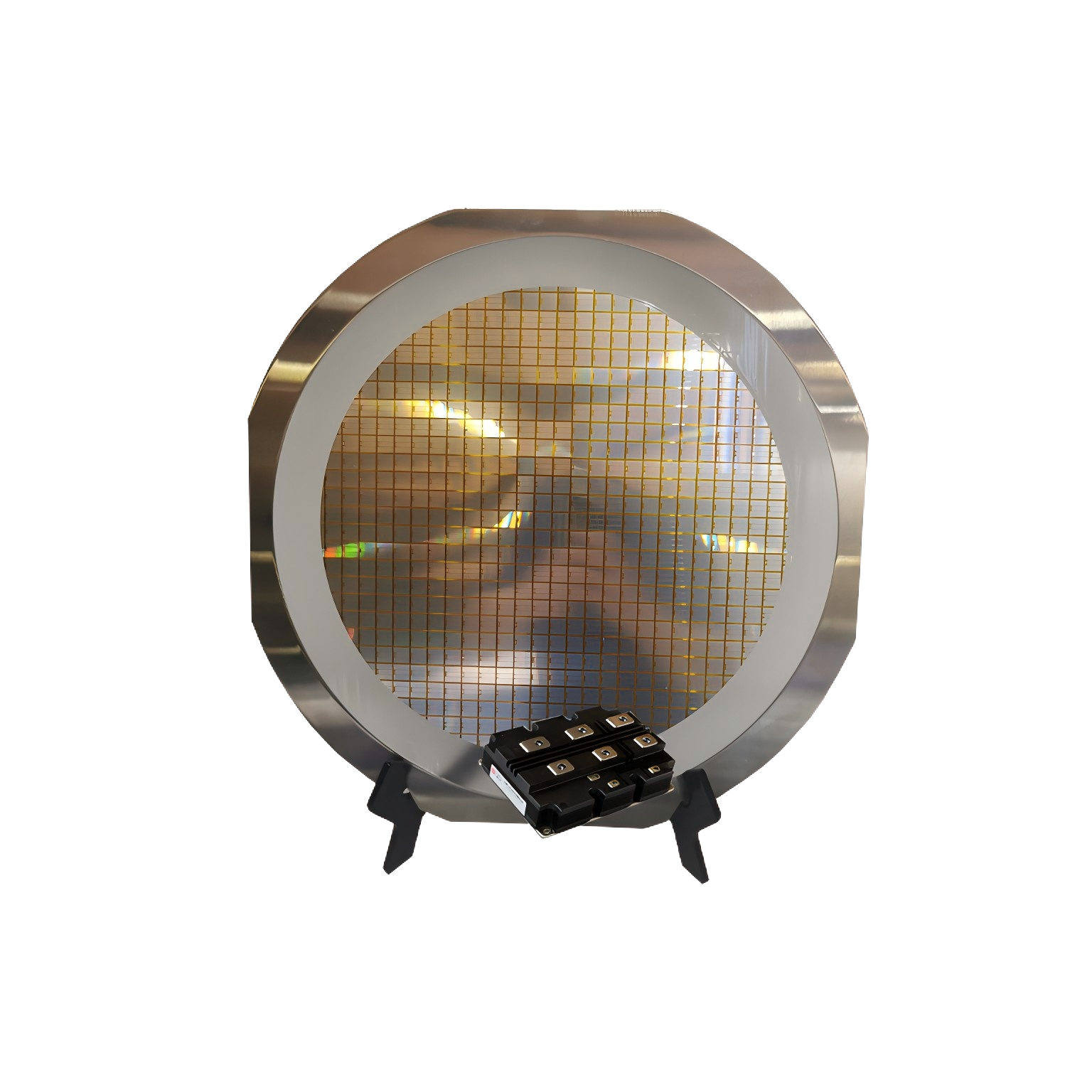
Half-bridge topology circuits represent a cornerstone of modern power electronics, enabling efficient energy conversion in applications ranging from motor drives to renewable energy inverters. Within these circuits, the collaboration between Insulated Gate Bipolar Transistor (IGBT) devices and Free-Wheeling Diode (FRD) components forms a critical partnership that determines overall system performance, thermal stability, and switching efficiency. Understanding the synergy between IGBT and FRD Wafer technologies reveals why designers must carefully balance device characteristics, packaging strategies, and thermal management approaches to achieve optimal circuit behavior in demanding industrial environments.
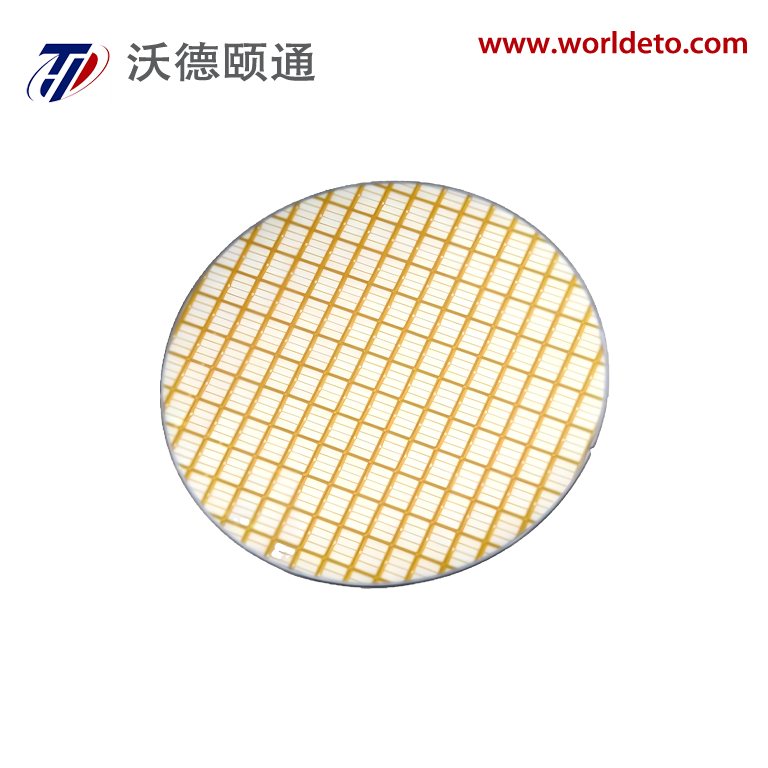
The inherent complementarity between IGBT switching characteristics and FRD recovery behavior creates a functional ecosystem within half-bridge configurations. When the IGBT transitions from conduction to blocking state, the inductive load current must find an alternative path through the FRD, which then experiences reverse recovery stress. This moment of transition determines losses, electromagnetic interference levels, and long-term device reliability. The quality and design of the FRD Wafer directly influences how effectively the circuit manages these dynamic stresses, making the material properties, doping profiles, and junction engineering of both semiconductor elements equally important for achieving predictable, efficient operation across wide operating ranges.
Fundamental Operating Principles of Half-Bridge Topology
Circuit Configuration and Current Flow Dynamics
Half-bridge circuits consist of two power switches arranged in series between positive and negative DC bus rails, with the load connected to the midpoint junction. In IGBT-based implementations, each switch position integrates an IGBT device for controlled current flow and an antiparallel FRD for reverse current conduction. During normal operation, when the upper IGBT conducts, current flows from the positive rail through the load. When this IGBT turns off, the inductive load current cannot cease instantaneously and instead commutates to the lower FRD Wafer, which provides a low-impedance path for current continuation. This cyclical switching between active conduction and freewheeling operation defines the basic power conversion mechanism.
The effectiveness of this current commutation depends heavily on the FRD Wafer characteristics. A well-designed FRD must exhibit low forward voltage drop during conduction to minimize losses, while simultaneously demonstrating fast reverse recovery when the associated IGBT begins conducting again. The minority carrier lifetime within the FRD Wafer structure determines how quickly the diode can transition from forward conduction to reverse blocking. Excessive carrier storage causes prolonged recovery transients, forcing the IGBT to conduct both load current and recovery current simultaneously, thereby increasing switching losses and generating harmful voltage spikes that stress both devices.
Voltage Stress Distribution Mechanisms
Voltage stress in half-bridge topologies distributes dynamically between the upper and lower device pairs based on switching timing, parasitic inductances, and device characteristics. When an IGBT turns off, the rate of current decrease through the circuit inductance generates a voltage overshoot that adds to the DC bus voltage. The FRD in the complementary position must withstand this combined stress during its forward recovery phase. Simultaneously, stray inductances in the power loop create additional voltage spikes during the reverse recovery of the FRD Wafer when its paired IGBT turns on. These transient voltage stresses can exceed static ratings by significant margins, making coordination between IGBT voltage capability and FRD Wafer breakdown voltage essential for reliable operation.
Modern FRD Wafer designs incorporate controlled lifetime engineering to balance forward conduction efficiency against reverse recovery speed. Platinum or gold diffusion techniques adjust minority carrier recombination rates within the silicon structure, creating a compromise between on-state voltage drop and switching speed. This material-level optimization directly affects the voltage stress experienced by the paired IGBT, as faster FRD Wafer recovery reduces the duration of simultaneous conduction but may increase peak recovery current. Circuit designers must therefore select FRD devices whose recovery characteristics complement the specific IGBT switching speed and gate drive strategy employed in the half-bridge configuration.
Thermal Interdependence and Junction Temperature Management
Loss Distribution Between IGBT and FRD Components
Power dissipation in half-bridge circuits splits between the IGBT and FRD according to duty cycle, load characteristics, and switching frequency. In motor drive applications operating at moderate duty cycles, the FRD Wafer often conducts for substantial portions of each switching cycle, accumulating significant conduction losses despite its lower forward voltage compared to IGBT saturation voltage. As switching frequency increases, the proportion of losses attributable to FRD reverse recovery grows, particularly when the FRD Wafer exhibits soft recovery behavior with extended tail current. Accurate thermal modeling requires accounting for both components' contributions to junction temperature rise, as thermal coupling through shared baseplate or direct bonding structures causes interdependent temperature profiles.
The thermal resistance path from each device junction to the cooling interface determines how effectively heat dissipates. In discrete implementations, separate packages may provide thermal isolation, allowing independent temperature management. However, integrated modules that combine IGBT and FRD Wafer dice on common substrates create thermal coupling that requires careful power cycling analysis. When the IGBT experiences high switching losses, its junction temperature rise influences the nearby FRD Wafer temperature through lateral heat spreading in the substrate. This coupled heating affects FRD forward voltage drop and reverse recovery characteristics, creating feedback loops that can accelerate degradation if not properly managed through derating or enhanced cooling strategies.
Temperature-Dependent Performance Shifts
Junction temperature profoundly affects both IGBT and FRD Wafer electrical characteristics in ways that influence their synergistic operation. As temperature increases, the IGBT experiences reduced saturation voltage and faster switching speeds due to increased carrier mobility, but also faces higher leakage current and reduced blocking capability. The FRD Wafer similarly exhibits reduced forward voltage drop at elevated temperatures, improving conduction efficiency but simultaneously experiencing slower reverse recovery as minority carrier lifetime increases. This temperature-dependent behavior means that circuit performance at cold startup differs substantially from hot steady-state operation, complicating protection scheme design and efficiency optimization across operating ranges.
Thermal cycling between these temperature extremes induces thermomechanical stress in solder joints, bond wires, and the semiconductor-ceramic interfaces within power modules. The different coefficients of thermal expansion between silicon, metallization layers, and substrate materials create shear stresses during temperature excursions. The FRD Wafer and IGBT chips, despite their proximity, may experience different temperature swings based on their respective loss profiles, leading to differential expansion that concentrates stress at attachment points. Advanced packaging approaches utilize materials with matched expansion coefficients and optimized die attach processes to mitigate these stresses, but the fundamental thermal interdependence between IGBT and FRD Wafer components remains a primary reliability consideration in half-bridge designs.
Switching Dynamics and Electromagnetic Compatibility
Reverse Recovery Impact on Turn-On Transients
The reverse recovery process of the FRD Wafer constitutes one of the most critical interaction points with the IGBT in half-bridge operation. When an IGBT turns on, it must sink not only the load current but also the reverse recovery current of the freewheeling FRD in the opposite leg. This recovery current flows as stored minority carriers evacuate from the FRD Wafer junction region, initially rising linearly with the IGBT current slope, then snapping off when the depletion region fully reforms. The abrupt termination of recovery current generates high-frequency voltage oscillations in the circuit parasitic inductance, creating electromagnetic interference and potentially exceeding device voltage ratings during the ringing transient.
FRD Wafer designs specifically engineered for IGBT compatibility employ lifetime control techniques that soften the recovery snap-off, trading some increase in recovery charge for reduced peak reverse current and gentler di/dt at recovery termination. This soft recovery characteristic reduces the voltage overshoot experienced by the conducting IGBT, improving electromagnetic compatibility and reducing the likelihood of avalanche breakdown during switching transients. However, softer recovery typically extends the duration of reverse current flow, increasing overlap losses in the IGBT. Circuit designers must therefore balance FRD Wafer recovery softness against IGBT switching loss targets, often using simulation tools to predict the interaction effects under specific gate drive conditions and circuit parasitics.
Gate Drive Strategy Influence on Synergistic Performance
The IGBT gate drive circuit exerts considerable influence over the IGBT-FRD synergy through its control of switching speed and timing. Aggressive gate drive with high current capability and low gate resistance produces fast IGBT turn-on and turn-off transitions, minimizing switching losses in the IGBT but potentially exacerbating FRD Wafer recovery stress. Rapid IGBT turn-on forces high di/dt through the recovering FRD, increasing peak recovery current and associated voltage spikes. Conversely, slowing the IGBT turn-on transition reduces stress on the FRD Wafer but extends the period of IGBT-FRD current overlap, increasing dissipation in the IGBT and elevating junction temperatures.
Advanced gate drive techniques implement multi-stage turn-on profiles that initially apply moderate gate current to control the initial current rise rate through the FRD Wafer recovery phase, then increase gate drive strength once recovery completes to minimize the remaining portion of IGBT turn-on loss. This approach requires detailed knowledge of the specific FRD Wafer recovery characteristics and may incorporate active voltage clamping circuits to limit overshoot during recovery snap-off. The optimal gate drive strategy depends on the interplay between the selected FRD Wafer type, circuit layout parasitics, switching frequency targets, and efficiency requirements, demonstrating how deeply the IGBT and FRD components must be co-optimized rather than independently specified.
Material Science Foundations of IGBT-FRD Synergy
Silicon Processing Compatibility Requirements
Manufacturing IGBT and FRD Wafer devices for integrated power modules requires careful coordination of silicon processing technologies to ensure compatibility and cost-effectiveness. Both device types originate from high-purity silicon wafers, but their optimal doping profiles, epitaxial layer structures, and surface processing differ substantially. IGBTs typically employ field-stop or punch-through designs with precisely controlled buffer layers to achieve low saturation voltage while maintaining blocking capability. FRD Wafer structures favor thinner drift regions with controlled lifetime to balance forward drop against recovery speed. When these devices must coexist on the same substrate or be manufactured in parallel production lines, process compromises may be necessary that slightly degrade the independent optimization of each component.
The diffusion processes used for lifetime control in FRD Wafer fabrication can interact with IGBT processing if devices share thermal cycles or contamination control strategies. Platinum or electron irradiation used to adjust FRD Wafer carrier lifetime must not compromise the carefully engineered carrier distribution within IGBT structures. Modern semiconductor facilities address these challenges through segregated processing flows or by developing compatible lifetime control techniques that suit both device types. The ability to co-fabricate optimized IGBT and FRD Wafer components on cost-shared production equipment provides significant economic advantages for integrated module manufacturers, but only if the material science fundamentals allow sufficient performance for each device type without excessive compromise.
Junction Engineering for Complementary Characteristics
At the semiconductor physics level, the junction design within IGBT and FRD Wafer structures must produce complementary electrical characteristics that enhance rather than hinder half-bridge operation. The IGBT's MOS-gated structure provides voltage-controlled turn-on and turn-off, with switching speed determined by gate capacitance charging and minority carrier dynamics in the drift region and collector junction. The FRD Wafer, lacking active control, relies purely on forward bias to inject carriers and reverse bias to sweep them out, with its transient behavior governed by minority carrier lifetime and junction capacitance. Optimal synergy occurs when the FRD Wafer recovery time scale matches or slightly exceeds the IGBT turn-on transition time, preventing excessive overlap losses while avoiding the voltage spikes associated with recovery snap-off during rapid IGBT commutation.
Recent advances in FRD Wafer technology include merged PIN-Schottky architectures that blend the low forward drop of PIN diodes with the fast switching of Schottky barriers. These hybrid structures reduce stored charge compared to pure PIN diodes while maintaining better forward conduction than pure Schottky devices, providing an improved compromise for IGBT pairing. Similarly, field-stop IGBT designs reduce the thickness of the drift region required for a given blocking voltage, lowering saturation voltage and allowing better matching with thinner, faster FRD Wafer structures. The continuing evolution of both device technologies reflects the industry's recognition that optimal half-bridge performance emerges not from independently maximizing each component's capabilities, but from engineering complementary characteristics that produce superior system-level outcomes.
Practical Design Considerations for Industrial Applications
Device Selection Criteria for Matched Performance
Selecting IGBT and FRD Wafer components for half-bridge applications requires a systematic approach that accounts for electrical ratings, thermal characteristics, and dynamic behavior under the specific operating conditions of the target application. The voltage ratings of both devices must provide adequate margin above the DC bus voltage plus expected transient overshoots, typically requiring 20-30 percent derating for industrial reliability. Current ratings must consider both steady-state and transient loading, with the FRD Wafer often requiring higher peak current capability than the paired IGBT to handle inrush conditions and short-circuit events. Careful attention to the FRD Wafer reverse recovery charge specification ensures compatibility with the IGBT's switching speed and the circuit's ability to absorb recovery energy without destructive voltage spikes.
Thermal resistance specifications must be evaluated in the context of the actual heatsink and cooling system, not just the device junction-to-case values. The FRD Wafer and IGBT may experience different case temperatures if mounted on separate heatsink locations or may share thermal coupling if integrated in a common module. Designers should calculate worst-case junction temperatures for both devices under maximum ambient conditions, highest loading, and end-of-life thermal interface degradation. Many applications benefit from selecting devices with asymmetric current ratings, using higher-rated FRD Wafer components to accommodate the additional stress from reverse recovery current, even when the steady-state load current would suggest equivalent ratings for both IGBT and FRD elements.
Layout and Parasitic Management Strategies
The physical arrangement of IGBT and FRD Wafer components within the half-bridge circuit profoundly affects switching performance and reliability through its influence on parasitic inductance and capacitance. Minimizing the commutation loop inductance between the IGBT, FRD Wafer, and DC bus capacitors reduces voltage overshoot during switching transitions and lessens the severity of FRD recovery oscillations. This typically requires placing the DC bus capacitors as close as possible to the power devices, using wide, low-inductance bus bars or laminated structures, and minimizing the physical area enclosed by the commutation current path. Gate drive circuits should be positioned near their respective IGBTs with short, controlled-impedance gate loops to prevent oscillations and ensure predictable switching behavior.
In module-based implementations where IGBT and FRD Wafer dice are co-packaged, the internal layout establishes fixed parasitic values that designers must work within. Understanding the module's internal structure guides decisions about external snubbers, gate resistors, and dead-time requirements. For discrete implementations, circuit board layout becomes critical, with careful attention to current return paths, ground plane management, and thermal vias for heat extraction. The interdependence between electromagnetic performance and thermal management often creates design trade-offs, as the most compact layout for parasitic minimization may compromise thermal spreading or airflow access. Successful industrial designs balance these competing requirements through iterative simulation and prototyping, optimizing the physical arrangement of IGBT and FRD Wafer components for the specific constraints of the application environment.
Protection Scheme Integration
Protecting the IGBT-FRD synergy in half-bridge circuits requires coordinated strategies that address the failure modes of both device types and their interactions during fault conditions. Overcurrent protection must respond quickly enough to prevent IGBT junction temperature from exceeding ratings during short-circuit events, typically requiring desaturation detection circuits that monitor collector-emitter voltage during conduction and trigger gate turn-off within a few microseconds. The FRD Wafer must survive the current spike that occurs when the IGBT attempts to turn off under overcurrent conditions, making surge current rating and thermal capacitance critical FRD specifications. Some advanced protection schemes implement active clamping of the DC bus voltage to limit the energy in the commutation inductance during fault turn-off, reducing stress on both IGBT and FRD Wafer elements.
Shoot-through protection prevents simultaneous conduction of both half-bridge IGBTs through implementation of dead-time in the gate drive signals, ensuring one device fully turns off before the complementary device turns on. However, excessive dead-time allows the load current to freewheel through the FRD Wafer for extended periods, increasing conduction losses and potentially distorting output waveforms in precision applications. Optimal dead-time setting requires knowledge of the specific IGBT turn-off delay, FRD Wafer forward recovery time, and circuit parasitics. Some sophisticated controllers implement adaptive dead-time that adjusts based on measured current direction and magnitude, minimizing losses while maintaining robust protection. These protection considerations demonstrate how the IGBT and FRD Wafer function as an integrated system rather than independent components, with protection schemes necessarily addressing their combined behavior under both normal and fault conditions.
FAQ
Why does FRD Wafer reverse recovery affect IGBT switching losses?
When an IGBT turns on in a half-bridge circuit, the FRD Wafer in the complementary position is conducting load current in forward mode. As the IGBT begins to conduct, it must sink both the load current and the reverse recovery current from the FRD Wafer as stored charge evacuates from the diode junction. This additional recovery current flows through the IGBT during its voltage fall time, creating overlap loss that increases total switching dissipation. The magnitude and duration of this recovery current depend on the FRD Wafer design, particularly its minority carrier lifetime and junction capacitance. FRD devices with excessive stored charge force the IGBT to handle higher peak currents for longer durations, substantially increasing turn-on losses and junction temperature rise. This interaction explains why FRD Wafer selection significantly impacts overall half-bridge efficiency and thermal management requirements.
Can different voltage-rated IGBT and FRD Wafer devices be paired in half-bridge circuits?
While theoretically possible, pairing IGBT and FRD Wafer devices with significantly different voltage ratings in half-bridge configurations is generally inadvisable for reliability and performance reasons. The voltage stress during switching transients distributes dynamically between devices based on circuit parasitics and switching timing. If the FRD Wafer has substantially lower voltage rating than the paired IGBT, voltage overshoot during IGBT turn-off or recovery snap-off may exceed the FRD's breakdown voltage, causing avalanche breakdown and potential failure. Conversely, using an over-rated FRD Wafer with a lower-voltage IGBT wastes cost and may compromise performance, as higher-voltage FRD devices typically exhibit increased forward voltage drop and slower switching due to thicker drift regions. Best practice involves selecting matched or closely adjacent voltage ratings with appropriate derating margins, ensuring both devices can withstand the worst-case transient stresses that occur during complementary switching in the half-bridge topology.
How does switching frequency affect the thermal balance between IGBT and FRD Wafer?
Switching frequency profoundly influences the relative power dissipation and junction temperatures of IGBT and FRD Wafer components in half-bridge operation. At low switching frequencies, conduction losses dominate for both devices, with the distribution depending primarily on duty cycle and forward voltage characteristics. As frequency increases, IGBT switching losses grow linearly with frequency, while FRD Wafer recovery losses similarly increase. However, the rate of increase differs between devices based on their respective switching characteristics. IGBTs with tail current during turn-off experience greater loss escalation with frequency compared to fast-switching designs. Similarly, FRD Wafer devices with high recovery charge see disproportionate loss increases at elevated frequencies. The thermal balance point where both devices reach similar junction temperatures shifts with frequency, often requiring different heatsink mounting or current derating strategies. Applications operating across wide frequency ranges may need to optimize device selection for the highest expected frequency, even if this compromises efficiency at lower frequencies, to ensure the thermal limits of both IGBT and FRD Wafer components remain within acceptable ranges throughout the operating envelope.
What determines the optimal dead-time setting between complementary IGBTs in a half-bridge?
Optimal dead-time represents a compromise between shoot-through protection and minimizing FRD Wafer conduction losses while maintaining output waveform quality. The minimum safe dead-time must exceed the turn-off delay of the outgoing IGBT plus any propagation delays in the gate drive circuitry, ensuring the device fully enters blocking state before the complementary IGBT receives its turn-on command. However, during this dead interval, load current freewheels through the FRD Wafer, accumulating conduction losses that increase with dead-time duration. Additionally, in applications requiring precise output voltage control, excessive dead-time distorts the average output by allowing uncontrolled FRD conduction periods. Practical dead-time settings typically range from 500 nanoseconds to several microseconds, depending on IGBT switching speed, gate drive circuit characteristics, and the consequences of shoot-through for the specific application. Advanced implementations may adjust dead-time dynamically based on measured current magnitude and direction, reducing it under light load conditions where shoot-through risk is minimal and extending it under heavy currents where IGBT turn-off requires more time. This optimization directly affects the synergy between IGBT active switching and FRD Wafer passive freewheeling functions within the half-bridge topology.
Table of Contents
- Fundamental Operating Principles of Half-Bridge Topology
- Thermal Interdependence and Junction Temperature Management
- Switching Dynamics and Electromagnetic Compatibility
- Material Science Foundations of IGBT-FRD Synergy
- Practical Design Considerations for Industrial Applications
-
FAQ
- Why does FRD Wafer reverse recovery affect IGBT switching losses?
- Can different voltage-rated IGBT and FRD Wafer devices be paired in half-bridge circuits?
- How does switching frequency affect the thermal balance between IGBT and FRD Wafer?
- What determines the optimal dead-time setting between complementary IGBTs in a half-bridge?