
 EN
EN
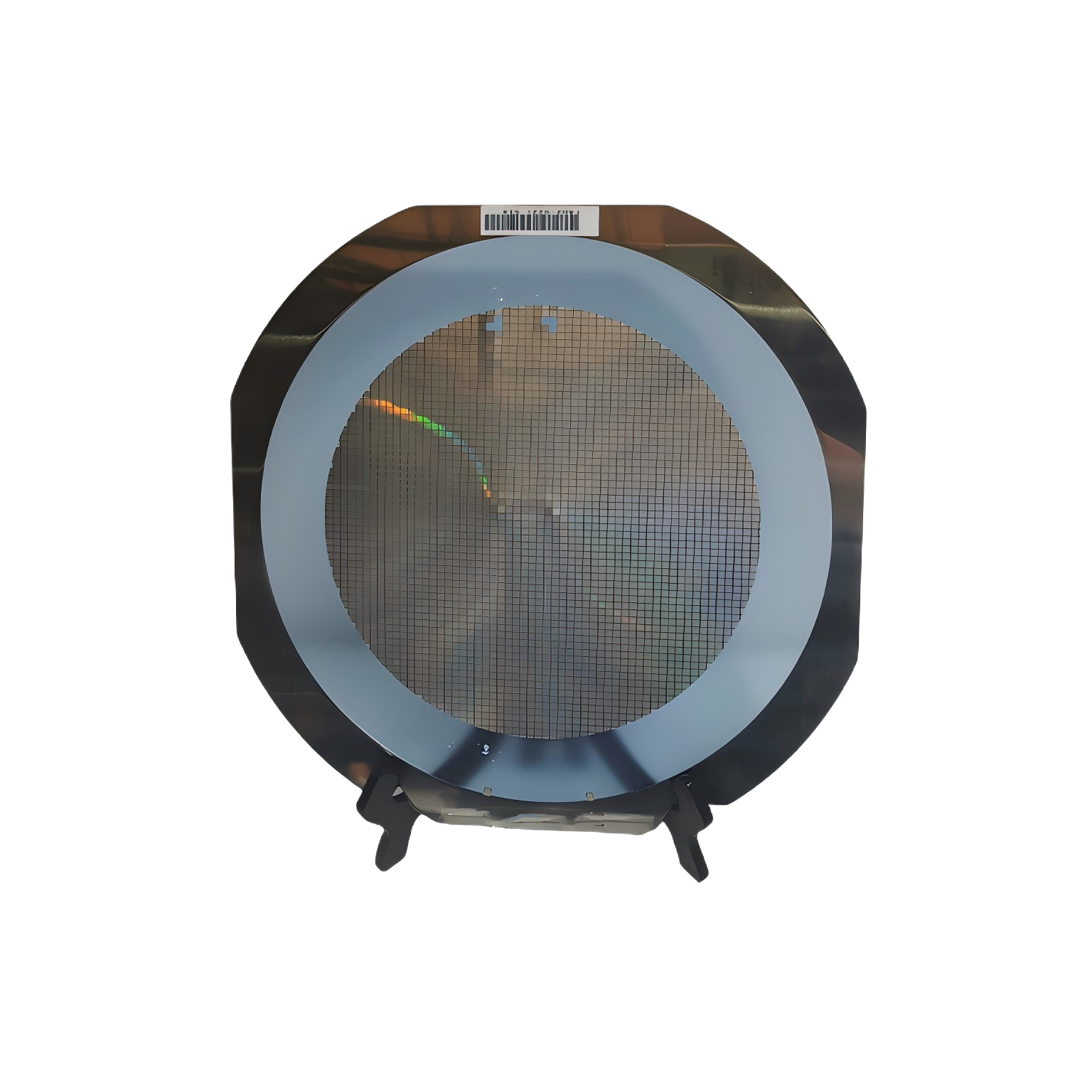
Fast Recovery Diode wafers represent a critical technological frontier in power electronics, where the optimization of softness and recovery time directly influences circuit efficiency, electromagnetic interference reduction, and overall system reliability. Engineers and designers working in high-frequency switching applications face a persistent challenge: balancing the speed at which an FRD Wafer transitions from forward conduction to reverse blocking with the smoothness of that transition to minimize voltage overshoot and electromagnetic noise. This technical exploration examines the material science, doping architecture, and geometric considerations that enable advanced FRD Wafer designs to achieve superior softness characteristics while maintaining industry-leading recovery times.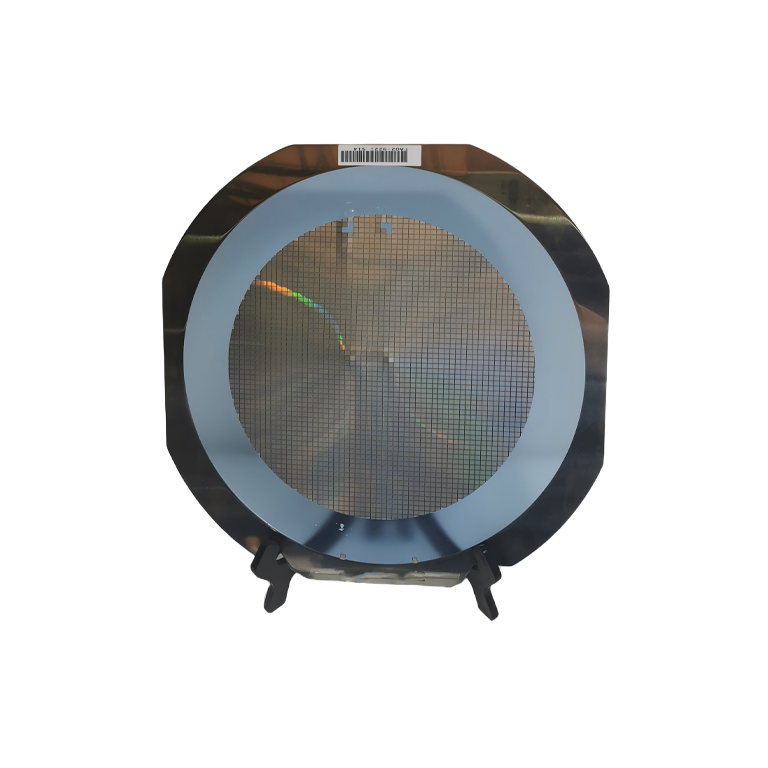
The technical parameters governing FRD Wafer performance extend beyond simple switching speed metrics. Modern power conversion systems demand components that can handle rapid current changes without generating destructive voltage spikes or contributing to radiated emissions that compromise system integrity. The interplay between carrier lifetime engineering, junction architecture, and silicon substrate quality determines whether an FRD Wafer delivers optimal softness during reverse recovery or introduces problematic ringing that cascades through the circuit. Understanding these relationships requires examining how minority carrier distribution, recombination center placement, and field shaping techniques converge to create diodes that meet the demanding requirements of automotive, industrial, and telecommunications power systems.
Fundamental Physics Governing FRD Wafer Recovery Characteristics
Charge Carrier Dynamics During Reverse Recovery
The reverse recovery process in an FRD Wafer begins when the diode transitions from forward conduction to reverse bias, initiating a complex sequence of charge carrier removal from the depletion region. During forward conduction, minority carriers flood the lightly doped drift region, creating a stored charge that must be evacuated before the junction can support reverse voltage. The rate and manner of this charge removal fundamentally determine both recovery time and softness. In conventional rectifier diodes, this stored charge extraction occurs abruptly, generating a sharp current snap-off that produces voltage overshoot and high-frequency oscillations. Advanced FRD Wafer designs manipulate carrier lifetime profiles to extend the tail current phase, distributing the charge extraction over a longer period and reducing the di/dt that drives electromagnetic interference.
Carrier recombination mechanisms within the FRD Wafer drift region play a decisive role in shaping the recovery waveform. Silicon lattice defects, intentionally introduced dopants like gold or platinum, and controlled process-induced damage create recombination centers that accelerate minority carrier annihilation. The spatial distribution of these recombination centers can be engineered through precision ion implantation and thermal annealing cycles to create graded lifetime profiles. Near the junction interface, shorter carrier lifetimes promote rapid initial charge removal, reducing the total recovery time. Deeper in the drift region, longer carrier lifetimes support a gentler current decay, enhancing softness. This vertical lifetime engineering represents one of the most powerful tools for optimizing FRD Wafer performance across competing design objectives.
Electric Field Distribution and Junction Architecture
The electric field profile within an FRD Wafer during reverse recovery directly influences both the speed and softness of the transition. A steep field gradient near the metallurgical junction accelerates charge carrier extraction, reducing recovery time but potentially compromising softness if the field intensity rises too rapidly. Junction engineering techniques such as field-stop layers and buffer zones modify this field distribution by introducing intermediate doping concentrations between the heavily doped anode and the lightly doped drift region. These architectural elements redistribute the electric field, creating a more gradual voltage drop across the device thickness and enabling smoother current transitions during reverse recovery events.
Modern FRD Wafer structures often incorporate asymmetric doping profiles that balance blocking voltage capability with recovery performance. The drift region thickness and resistivity must accommodate the required reverse voltage rating while minimizing forward voltage drop during conduction. Thinner drift regions naturally exhibit faster recovery times due to reduced stored charge, but compromise breakdown voltage and increase on-state losses. Advanced designs employ field-shaping implants that allow thinner drift regions to support higher voltages by preventing premature avalanche breakdown at field concentration points. This approach enables FRD Wafer products to achieve recovery times below fifty nanoseconds while maintaining softness factors exceeding recommended thresholds for noise-sensitive applications.
Material Science Strategies for Enhanced Softness Control
Lifetime Killing and Controlled Defect Introduction
Carrier lifetime engineering through controlled defect introduction represents the primary material science approach to optimizing FRD Wafer softness characteristics. Heavy metal doping with gold or platinum creates deep-level traps within the silicon bandgap that serve as efficient recombination centers for electrons and holes. The concentration and spatial distribution of these recombination centers can be precisely tailored through diffusion temperature profiles and time-at-temperature parameters during wafer processing. Higher concentrations near the anode junction accelerate initial charge removal, while lower concentrations in the bulk drift region support extended tail current phases that enhance softness without excessively prolonging total recovery time.
Alternative lifetime control techniques involve electron or proton irradiation that creates lattice damage without introducing metallic impurities. These radiation-induced defects offer advantages in uniformity and stability compared to metal diffusion, particularly in high-temperature operating environments where heavy metal atoms may migrate and alter device characteristics over time. The FRD Wafer manufacturing process must carefully balance defect density to achieve target carrier lifetimes across the wafer area, maintaining tight parameter distributions that ensure consistent recovery performance from device to device. Annealing steps following irradiation allow fine-tuning of defect activity, providing a calibration mechanism that compensates for process variations and enables precise recovery time targeting.
Substrate Quality and Crystal Perfection
The starting silicon substrate quality fundamentally constrains achievable FRD Wafer performance by establishing baseline carrier lifetimes and introducing unavoidable recombination sites. Float-zone silicon offers superior crystal perfection compared to Czochralski-grown material, exhibiting lower oxygen and carbon impurity concentrations that reduce unintended recombination. For FRD Wafer applications requiring the longest carrier lifetimes and softest recovery characteristics, float-zone substrates provide the cleanest starting platform for subsequent lifetime engineering. However, the higher cost of float-zone material necessitates careful economic analysis to determine whether performance benefits justify premium substrate pricing for specific application requirements.
Crystal orientation and surface preparation also influence FRD Wafer electrical characteristics through their effects on interface state density and surface recombination velocity. The standard orientation for power devices minimizes interface trap density at the silicon-oxide boundary, reducing leakage current and improving voltage blocking reliability. Surface treatments prior to junction formation remove contamination and create atomically smooth interfaces that promote uniform current distribution during switching events. These material quality considerations extend beyond the active device regions to encompass edge termination structures that prevent premature breakdown at the wafer periphery, ensuring that the carefully engineered bulk properties determine device performance rather than edge effects dominating behavior.
Geometric Design Parameters Influencing Recovery Dynamics
Active Area Scaling and Current Density Effects
The FRD Wafer active area dimensions directly impact stored charge magnitude and consequently affect both recovery time and softness characteristics. Larger junction areas support higher forward current ratings but accumulate proportionally greater stored charge during conduction, extending recovery times and potentially degrading softness if charge distribution becomes non-uniform. Current density during forward operation influences the depth of minority carrier penetration into the drift region, with higher densities pushing carriers deeper and increasing stored charge volume. Device designers must optimize active area for target current ratings while considering how operating conditions affect charge distribution and recovery behavior across the application duty cycle.
Edge effects become increasingly significant as FRD Wafer dimensions shrink, particularly for chip-scale packages where the perimeter-to-area ratio increases substantially. Peripheral regions experience enhanced recombination due to surface states and termination structure interactions, creating non-uniform carrier distributions that affect recovery waveform shape. Advanced termination designs such as multiple floating guard rings or variation of lateral doping structures mitigate these edge effects, promoting more uniform current distribution during switching transients and enhancing overall softness. The geometric optimization of FRD Wafer structures requires three-dimensional simulation tools that account for carrier transport, field distribution, and thermal effects simultaneously to predict recovery performance accurately before committing to expensive mask sets and fabrication runs.
Metallization and Contact Resistance Considerations
The metal-semiconductor contact interfaces on an FRD Wafer introduce parasitic resistances and capacitances that modify switching behavior beyond the intrinsic semiconductor physics. Anode and cathode metallization schemes must provide low-resistance ohmic contacts that minimize forward voltage drop while supporting rapid current redistribution during recovery transients. Titanium-nickel-silver multilayer stacks represent common metallization approaches, with each layer serving specific functions: titanium forms the ohmic contact to silicon, nickel provides a diffusion barrier, and silver offers high conductivity for external connection. The thickness and uniformity of these metal layers affect current crowding tendencies that can create localized hot spots and non-uniform recovery across the FRD Wafer surface.
Contact geometry patterns, including finger spacing and width ratios, determine current distribution efficiency and influence thermal management during high-frequency switching. Narrower metal fingers spaced more closely reduce current path lengths and improve uniformity, enhancing softness by ensuring synchronized charge removal across the entire active area. However, finer metallization features increase fabrication complexity and may compromise yield, requiring careful tradeoff analysis. The FRD Wafer backside metallization typically includes additional layers for die attachment and thermal dissipation, with solder compatibility and adhesion strength representing critical reliability considerations. These seemingly peripheral geometric factors cumulatively impact recovery performance by modifying local current densities and thermal gradients during switching events, demonstrating that FRD Wafer optimization requires holistic consideration of every structural element.
Advanced Characterization Techniques for Recovery Optimization
Dynamic Switching Parameter Measurement
Accurate characterization of FRD Wafer recovery time and softness requires specialized test circuits that replicate application switching conditions while providing high-resolution measurements of current and voltage waveforms. Standard measurement configurations employ inductive loads driven by controllable current sources that force the diode from forward conduction into reverse bias at rates matching target application profiles. The reverse recovery current waveform reveals critical parameters including peak reverse current, recovery time to specific percentage thresholds, and softness factor calculated as the ratio of charge removed during different recovery phases. High-bandwidth oscilloscopes with differential probes minimize measurement artifacts that could obscure the true FRD Wafer switching behavior, particularly important when characterizing devices with recovery times below one hundred nanoseconds.
Temperature-dependent characterization exposes how FRD Wafer recovery characteristics shift across the operating range, revealing thermal sensitivities that impact system design margins. Carrier mobility, lifetime, and saturation velocity all exhibit temperature coefficients that alter stored charge magnitude and extraction dynamics as junction temperature varies. Comprehensive testing across temperature extremes identifies worst-case conditions for recovery time and softness, ensuring design robustness against environmental variations. Pulsed measurement techniques prevent self-heating from distorting results, particularly critical when characterizing high-current FRD Wafer products where even brief conduction periods generate significant power dissipation. These advanced characterization methodologies provide the empirical data necessary to validate simulation models and optimize designs for specific application requirements.
Simulation-Driven Design Optimization
Technology computer-aided design platforms enable detailed simulation of FRD Wafer electrical behavior by solving coupled semiconductor transport equations across two-dimensional or three-dimensional device geometries. These simulations incorporate physical models for carrier generation, recombination, drift, and diffusion, predicting device characteristics from first principles based on doping profiles, geometry specifications, and material parameters. Design engineers leverage simulation to explore parameter spaces far more efficiently than experimental iteration permits, identifying optimal combinations of drift region thickness, lifetime profiles, and junction architectures that deliver target recovery performance. Sensitivity analysis reveals which design parameters most strongly influence softness and recovery time, focusing optimization efforts where they yield maximum benefit.
Model calibration against measured FRD Wafer data ensures simulation accuracy and enables predictive design for next-generation products. Extracting effective carrier lifetimes, mobility models, and recombination parameters from test structures allows simulation tools to accurately reproduce observed recovery waveforms. Once calibrated, these models guide design modifications aimed at improving specific performance aspects, such as reducing recovery time by ten percent while maintaining softness factor above critical thresholds. Virtual prototyping through simulation dramatically reduces development cycle times and minimizes costly fabrication iterations, accelerating time-to-market for optimized FRD Wafer products targeting emerging application spaces with increasingly stringent performance requirements.
Application-Specific Optimization Strategies
Power Factor Correction Circuit Requirements
Power factor correction circuits operating at switching frequencies between fifty and one hundred fifty kilohertz impose specific demands on FRD Wafer recovery characteristics. The boost converter topology commonly employed for PFC places the freewheeling diode in a position where recovery losses directly impact overall converter efficiency. Fast recovery times minimize the interval during which simultaneous conduction of the switching transistor and diode occurs, reducing the shoot-through current spike that wastes energy and stresses components. However, excessively hard recovery with abrupt current snap-off generates voltage ringing that increases electromagnetic interference and may require additional filtering components, negating efficiency gains through increased system complexity and cost.
Optimal FRD Wafer selection for power factor correction applications balances recovery time typically between thirty and sixty nanoseconds with softness factors exceeding thirty percent to control voltage overshoot below damaging levels. The relatively predictable operating conditions in PFC circuits, including consistent current levels and switching frequencies, permit tighter optimization around nominal parameters compared to more variable applications. FRD Wafer products designed specifically for PFC service incorporate lifetime profiles tuned for this balance, often sacrificing ultimate speed to achieve the softness necessary for reliable operation without snubber networks. Forward voltage drop remains important for conduction loss minimization, creating a three-way optimization challenge among recovery time, softness, and on-state voltage that defines the engineering tradeoff space for PFC-oriented FRD Wafer development.
Automotive Inverter and Motor Drive Applications
Electric vehicle inverters and industrial motor drives present among the most demanding environments for FRD Wafer operation, combining high currents, elevated temperatures, and variable switching conditions across wide operating ranges. The freewheeling diodes in these systems conduct inductive motor current during transistor off-states and must recover rapidly when the transistor turns on again, with recovery characteristics directly affecting both switching losses and electromagnetic compatibility. Wide bandgap semiconductors increasingly compete with silicon-based FRD Wafer products in these applications, driving continuous improvement in silicon device performance to maintain market relevance through cost-effectiveness advantages.
Temperature stability of recovery parameters becomes critical in automotive applications where junction temperatures may exceed one hundred seventy-five degrees Celsius during peak operating conditions. The FRD Wafer must maintain acceptable softness across this temperature range to prevent voltage transients that could trigger false switching events or damage gate oxide layers in associated transistors. Automotive qualification requirements demand extensive reliability testing including temperature cycling, humidity exposure, and mechanical stress evaluations that verify long-term parameter stability. These stringent requirements drive FRD Wafer manufacturers toward robust lifetime engineering approaches that resist thermal degradation and maintain consistent recovery characteristics throughout fifteen-year vehicle lifetimes spanning hundreds of thousands of operating hours.
FAQ
What is the relationship between FRD Wafer recovery time and softness factor?
Recovery time measures the total duration for an FRD Wafer to transition from forward conduction to full reverse blocking capability, typically defined as the interval from zero crossing to when reverse current decays to a specified percentage of peak value. Softness factor quantifies how gradually this transition occurs, calculated as the ratio between charge removed during the gentle tail current phase and the total recovered charge. These parameters often exhibit inverse relationships, where design changes that reduce recovery time tend to decrease softness by accelerating charge extraction. Advanced FRD Wafer designs employ vertical lifetime engineering and field-shaping techniques to optimize both parameters simultaneously, achieving fast recovery without sacrificing the softness necessary to minimize voltage overshoot and electromagnetic interference in sensitive applications.
How does operating temperature affect FRD Wafer switching characteristics?
Temperature significantly influences carrier mobility, saturation velocity, and lifetime within an FRD Wafer, creating complex dependencies in switching behavior. Higher junction temperatures generally increase carrier lifetimes by reducing the effectiveness of recombination centers, leading to greater stored charge accumulation and longer recovery times. Simultaneously, enhanced carrier mobility at elevated temperatures can accelerate charge extraction, partially offsetting lifetime effects. The net result varies depending on the dominant lifetime control mechanism employed during FRD Wafer fabrication, with heavy metal doping exhibiting different temperature sensitivities compared to irradiation-induced defects. Designers must characterize recovery performance across the full operating temperature range and implement worst-case margins that ensure acceptable softness and recovery time at temperature extremes encountered during actual application operation.
Can FRD Wafer designs achieve sub-thirty-nanosecond recovery while maintaining good softness?
Achieving recovery times below thirty nanoseconds while preserving softness factors above acceptable thresholds represents a significant engineering challenge that pushes the limits of silicon FRD Wafer technology. Such aggressive performance targets typically require thin drift regions with carefully engineered lifetime profiles that remove stored charge rapidly without creating abrupt current transitions. Advanced techniques including graded lifetime engineering, optimized field-stop layers, and precision geometric scaling enable leading FRD Wafer manufacturers to reach these specifications in specialized products targeting high-frequency switching applications. However, these ultra-fast devices often exhibit reduced blocking voltage capability and increased forward voltage drop compared to more conservatively designed alternatives, reflecting fundamental tradeoffs inherent in semiconductor physics that constrain simultaneous optimization of all performance parameters.
What role does FRD Wafer doping profile play in optimizing recovery characteristics?
The vertical doping concentration profile within an FRD Wafer fundamentally determines electric field distribution, charge storage capacity, and carrier extraction dynamics during reverse recovery. A lightly doped drift region supports high blocking voltages but accumulates substantial stored charge and exhibits slower recovery. Introducing buffer layers with intermediate doping concentrations between the drift region and heavily doped substrate creates field-stop structures that allow thinner drift regions to support required blocking voltages, reducing stored charge and accelerating recovery. The junction-side doping profile affects depletion width expansion rates and initial charge removal speed, while anode doping influences contact resistance and current injection efficiency. Modern FRD Wafer designs employ multi-step ion implantation and diffusion processes to create complex doping profiles optimized through simulation, achieving performance combinations unattainable with simpler structures and demonstrating how advanced process control enables continuous improvement in recovery time and softness characteristics.
Table of Contents
- Fundamental Physics Governing FRD Wafer Recovery Characteristics
- Material Science Strategies for Enhanced Softness Control
- Geometric Design Parameters Influencing Recovery Dynamics
- Advanced Characterization Techniques for Recovery Optimization
- Application-Specific Optimization Strategies
-
FAQ
- What is the relationship between FRD Wafer recovery time and softness factor?
- How does operating temperature affect FRD Wafer switching characteristics?
- Can FRD Wafer designs achieve sub-thirty-nanosecond recovery while maintaining good softness?
- What role does FRD Wafer doping profile play in optimizing recovery characteristics?