
 EN
EN
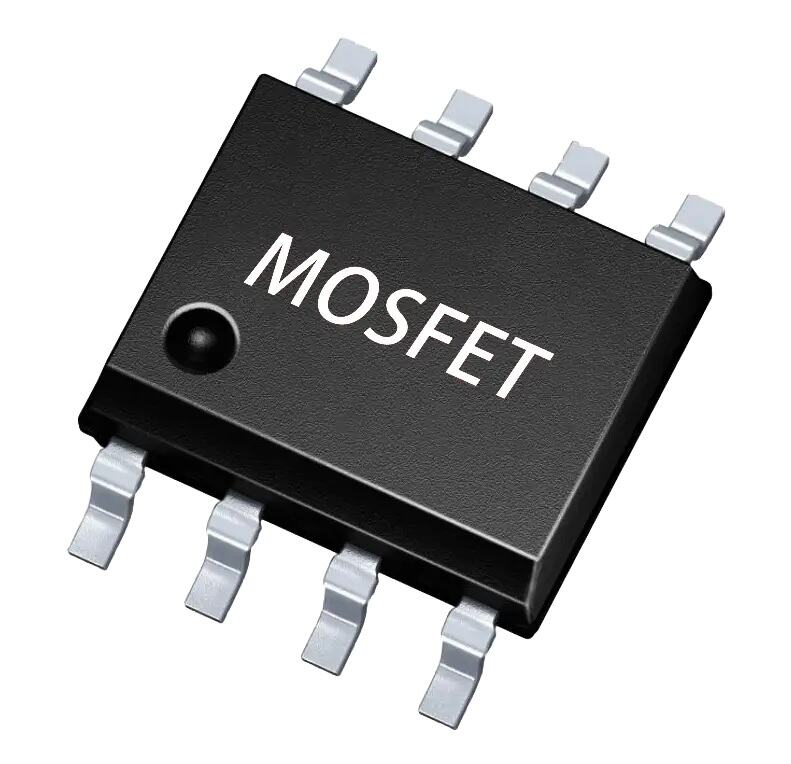
Power conversion efficiency has become the defining metric for server power supply units as data centers worldwide grapple with escalating energy costs and thermal management challenges. At the heart of this efficiency revolution stands the super-junction MOSFET, a semiconductor innovation that fundamentally redefined what silicon-based switching devices could achieve. Traditional MOSFET architectures faced an intrinsic trade-off between on-resistance and breakdown voltage, a physical limitation that constrained power density and conversion efficiency for decades. The emergence of super-junction technology shattered this silicon limit, enabling server power units to achieve efficiency levels approaching 96% while handling increasingly demanding power loads in compact form factors.
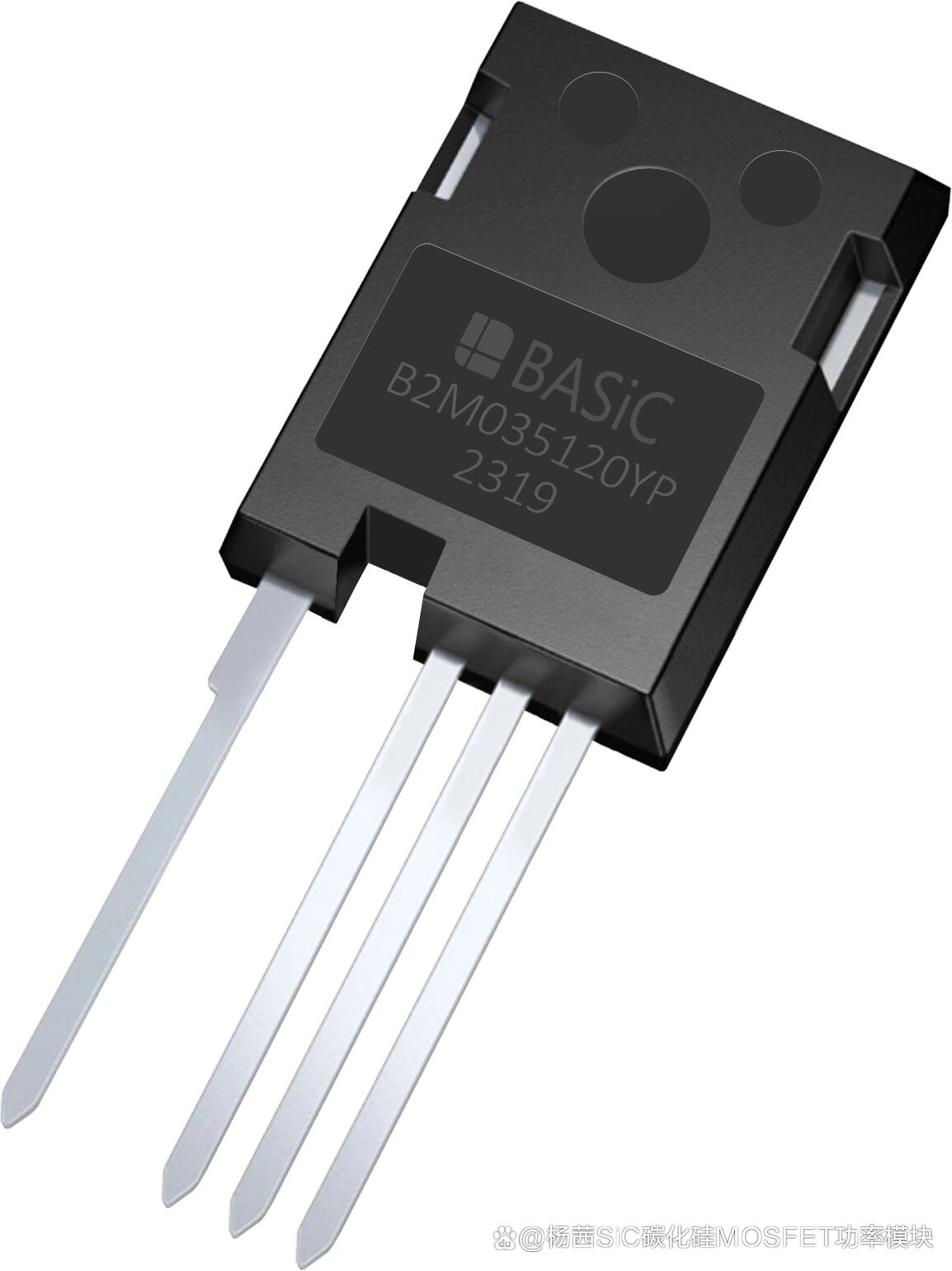
The evolution from conventional planar MOSFET structures to super-junction designs represents more than incremental improvement; it marks a paradigm shift in how power electronics engineers approach high-voltage switching applications. Server power units operating at input voltages between 380V and 800V demand semiconductor switches that minimize conduction losses without sacrificing switching speed or reliability. Super-junction MOSFETs achieve this through a charge-balance principle that strategically alternates p-type and n-type silicon columns within the drift region, effectively circumventing the conventional relationship between blocking voltage capability and on-state resistance. This architectural breakthrough enabled power supply designers to reduce switching losses by 60-70% compared to previous generation devices, directly translating to cooler operation, higher power density, and compliance with stringent efficiency standards like 80 PLUS Titanium.
The Physical Limitations of Conventional MOSFET Architecture
Understanding the Silicon Limit in Traditional Designs
Conventional vertical MOSFET structures rely on a lightly doped drift region to support high blocking voltages when the device operates in its off-state. The fundamental physics governing this design creates an unavoidable compromise: as the required breakdown voltage increases, the drift region must become either thicker or more lightly doped, both of which dramatically increase the device's on-resistance. This relationship, quantified by the silicon limit equation, dictates that specific on-resistance increases proportionally to the 2.5 power of breakdown voltage in ideal planar silicon devices. For server power applications requiring 600V to 900V blocking capability, this physical constraint resulted in MOSFET devices with on-resistances that generated substantial conduction losses, limiting overall power supply efficiency.
The thermal implications of elevated on-resistance extend beyond mere efficiency calculations. Higher conduction losses manifest as heat generation within the semiconductor junction, necessitating larger heatsinks, enhanced airflow systems, and ultimately constraining power density. In rack-mounted server environments where space commands premium value, the physical footprint consumed by thermal management components directly impacts total cost of ownership. Furthermore, elevated junction temperatures accelerate degradation mechanisms within the MOSFET structure, reducing mean time between failures and compromising long-term reliability. Power supply architects faced a stark reality: conventional MOSFET technology had approached its theoretical performance ceiling, and further improvements demanded fundamental architectural innovation rather than incremental process refinements.
The Trade-Off Between Breakdown Voltage and Resistance
The mathematical relationship between breakdown voltage and on-resistance in conventional MOSFET designs stems from the depletion region physics that governs electric field distribution within the semiconductor. When a reverse voltage applies across the drain-source terminals, the depletion region must expand sufficiently to support the electric field without reaching the critical field strength that triggers avalanche breakdown. In uniformly doped drift regions, supporting higher voltages requires proportionally thicker depletion zones, which translates directly to increased resistive path length for current flow during on-state operation. This fundamental coupling meant that every volt of additional breakdown capability extracted a disproportionate penalty in conduction resistance, creating an efficiency barrier that constrained power conversion topologies.
Server power unit designers confronted this limitation daily when selecting components for active power factor correction circuits and DC-DC conversion stages. A typical 600V-rated conventional MOSFET might exhibit specific on-resistance values of 200-300 milliohm-square-centimeters, forcing designers to parallel multiple devices to achieve acceptable conduction losses. This paralleling approach introduced its own complications: current sharing imbalances, increased gate drive complexity, and multiplied switching losses from higher total gate charge. The industry recognized that incremental improvements in silicon processing technology could not overcome the fundamental physics constraining conventional vertical MOSFET architectures. Breaking through the silicon limit required reimagining the internal structure of the device itself, fundamentally altering how the drift region supported blocking voltage while conducting current.
Super-Junction Technology and Charge Balance Principles
Architectural Innovation Through Alternating Doping Columns
The super-junction MOSFET concept emerged from theoretical semiconductor physics research in the 1990s, proposing a radically different approach to drift region design. Instead of relying on a uniformly lightly doped region to support blocking voltage, super-junction structures incorporate alternating vertical columns of heavily doped p-type and n-type silicon throughout the drift zone. When reverse voltage applies across the device, depletion regions extend laterally from each junction between adjacent columns, eventually depleting the entire drift region while maintaining a relatively uniform electric field distribution. This charge-balance mechanism allows the drift region to support high breakdown voltages despite using much higher doping concentrations than conventional designs permit, dramatically reducing the resistance encountered by current flow during on-state conduction.
The manufacturing complexity of creating these precisely alternated doping columns initially challenged commercial viability, requiring multiple epitaxial growth and deep trench etching cycles to construct the characteristic pillar structure. Early super-junction devices emerged in the late 1990s with modest performance advantages, but continuous process refinement through the 2000s enabled increasingly narrow column pitches and taller structures. Modern super-junction MOSFET fabrication achieves column widths below one micrometer with aspect ratios exceeding 50:1, maximizing the active silicon volume dedicated to charge balance while minimizing parasitic resistances. These manufacturing advances transformed super-junction technology from laboratory curiosity to the dominant architecture for high-voltage power MOSFETs in server applications, with virtually all premium efficiency power supplies now incorporating super-junction devices in their primary switching positions.
Breaking the Conventional Silicon Limit Equation
The charge-balance principle underlying super-junction MOSFET operation fundamentally alters the mathematical relationship between breakdown voltage and specific on-resistance, escaping the 2.5 power dependency that constrains conventional structures. In an ideally balanced super-junction device, specific on-resistance increases only linearly with breakdown voltage rating, representing a dramatic improvement that becomes more pronounced at higher voltage ratings. A 600V super-junction MOSFET might achieve specific on-resistance values of 15-25 milliohm-square-centimeters, representing nearly an order of magnitude improvement over conventional planar devices at equivalent voltage ratings. This performance leap directly translates to reduced conduction losses, enabling single-device implementations where conventional designs required paralleled configurations.
The practical implications for server power unit design extend across multiple performance dimensions simultaneously. Lower on-resistance reduces conduction losses proportionally, but the benefits compound through secondary effects on thermal management and switching behavior. Reduced heat generation allows designers to specify smaller heatsinks or increase switching frequencies without thermal constraint, both pathways to enhanced power density. Additionally, the lower gate charge typical of super-junction structures compared to paralleled conventional devices reduces gate drive losses, particularly significant in applications operating above 100 kHz switching frequencies. These cumulative advantages enabled MOSFET technology to remain competitive with emerging wide-bandgap semiconductors in many server power applications, despite the inherent material advantages of silicon carbide and gallium nitride alternatives.
Implementation Evolution in Server Power Supply Topologies
Active Power Factor Correction Stage Integration
Server power units typically employ a two-stage conversion architecture, with active power factor correction circuits forming the front-end stage that interfaces with AC mains input. These PFC boost converters operate at input voltages ranging from 90VAC to 264VAC globally, requiring semiconductor switches rated for 600V to 800V breakdown capability to withstand worst-case overvoltage transients and provide adequate safety margins. The switching element in these PFC topologies conducts the full input current while simultaneously enduring hard-switching transitions at frequencies typically between 65 kHz and 150 kHz, creating demanding thermal and electrical stress conditions. Super-junction MOSFET devices transformed PFC stage design by enabling significant reductions in switching and conduction losses simultaneously, allowing engineers to increase switching frequencies for improved power factor and total harmonic distortion performance without thermal penalty.
The superior figure of merit exhibited by super-junction devices—quantified as the product of on-resistance and gate charge—proves particularly valuable in continuous conduction mode PFC applications where both conduction and switching losses contribute significantly to overall dissipation. Earlier generation PFC designs using conventional MOSFET technology typically achieved efficiency levels around 95% at full load, with losses concentrated in the switching element and output rectifier. Introduction of super-junction MOSFETs enabled PFC stage efficiencies approaching 98%, with the primary switching element often accounting for less than 30% of total stage losses compared to 50% or more in conventional implementations. This efficiency improvement directly reduces thermal stress on adjacent components, improving reliability and enabling more compact layouts that support higher power density server designs demanded by modern data center infrastructure.
Resonant and LLC Converter Applications
The DC-DC conversion stage following the PFC circuit in server power units increasingly employs resonant topologies, particularly LLC resonant converters that leverage the MOSFET body diode and output capacitance as functional elements within the resonant tank. These soft-switching topologies achieve zero-voltage switching conditions during most of the operating range, dramatically reducing switching losses compared to hard-switched PWM approaches. Super-junction MOSFET devices bring specific advantages to LLC implementations beyond their already superior on-resistance characteristics. The output capacitance of super-junction structures exhibits highly nonlinear voltage dependence, with capacitance values decreasing substantially at higher drain-source voltages. This characteristic actually benefits LLC converter operation by reducing circulating energy in the resonant tank and enabling wider zero-voltage switching range across varying load conditions.
The body diode reverse recovery characteristics of super-junction MOSFET devices initially presented implementation challenges in resonant converter applications. Early super-junction structures exhibited relatively slow and lossy body diode recovery behavior compared to conventional fast-recovery MOSFETs, potentially introducing unexpected losses and electromagnetic interference in circuits relying on body diode conduction during dead-time intervals. Subsequent generations of super-junction technology incorporated optimized body diode structures and fast-recovery epitaxial layers, dramatically improving reverse recovery time and reducing associated charge extraction. Modern super-junction MOSFET products designed specifically for LLC applications now offer body diode performance rivaling discrete fast-recovery devices while maintaining the on-resistance advantages of charge-balanced drift regions, enabling single-device solutions that simplify bill of materials and reduce assembly complexity in high-volume server power production.
Synchronous Rectification and Efficiency Optimization
The secondary side of isolated DC-DC converters in server power units traditionally employed Schottky barrier rectifiers to minimize forward voltage drop and improve efficiency at the 12V or 48V output voltages common in these applications. The emergence of low-voltage super-junction MOSFET technology and specialized synchronous rectification controllers enabled replacement of these passive rectifiers with actively controlled MOSFET switches that conduct through their ultra-low resistance channels rather than through a diode forward drop. While synchronous rectification typically employs lower voltage rated MOSFET devices rather than the high-voltage super-junction structures used on the primary side, the overall system efficiency benefits from super-junction primary switches create thermal headroom that enables aggressive synchronous rectification timing strategies without exceeding thermal design limits.
The interaction between primary-side super-junction MOSFET performance and secondary-side synchronous rectification optimization illustrates the system-level thinking required for premium efficiency server power design. Reduced primary-side losses allow designers to increase switching frequency, which shrinks magnetic component size and enables faster transient response to dynamic server load changes. This frequency increase would typically penalize gate drive losses and exacerbate synchronous rectification timing challenges, but the superior gate charge characteristics of super-junction devices partially offset these concerns. Additionally, the thermal benefits of reduced primary losses create margin for more aggressive synchronous rectifier conduction overlap during switching transitions, minimizing body diode conduction losses that would otherwise degrade efficiency during light load operation when zero-voltage switching conditions become difficult to maintain across the full switching cycle.
Performance Evolution Across MOSFET Technology Generations
First Generation Super-Junction Devices and Early Adoption
The initial commercial super-junction MOSFET products appearing in the early 2000s demonstrated approximately 50% reduction in specific on-resistance compared to best-in-class conventional devices at 600V ratings, marking a significant but not revolutionary improvement. These first-generation devices retained relatively high gate charge values and exhibited body diode characteristics inferior to optimized conventional structures, limiting their adoption primarily to applications where conduction losses dominated the total dissipation profile. Server power supply engineers approached these early super-junction devices cautiously, conducting extensive reliability testing to verify that the novel internal structure would withstand the demanding electrical and thermal cycling characteristic of data center environments. Early field experience proved generally positive, establishing confidence in the fundamental reliability of charge-balanced drift region designs and setting the stage for broader adoption as subsequent generations addressed initial shortcomings.
Manufacturing yield challenges constrained the economic viability of first-generation super-junction MOSFET production, with the multiple epitaxial growth cycles and deep trench processes required for charge-balance structure fabrication increasing die cost significantly compared to conventional planar processes. This cost premium limited initial adoption to premium efficiency server power units where the efficiency gains justified higher component costs through reduced cooling infrastructure requirements and lower operational energy consumption. The total cost of ownership calculations for large-scale data center deployments increasingly favored higher efficiency power supplies despite elevated initial acquisition costs, creating market conditions that supported continued investment in super-junction manufacturing process refinement and capacity expansion. This economic dynamic accelerated technology development cycles, with each new product generation incorporating lessons learned from field deployment and addressing specific application pain points identified by power supply design engineers.
Modern High-Performance Super-Junction Architectures
Contemporary super-junction MOSFET products represent the culmination of two decades of continuous architectural refinement and process optimization. Modern devices achieve specific on-resistance values below 10 milliohm-square-centimeters at 600V ratings, with some specialized structures approaching 5 milliohm-square-centimeters in larger die sizes. These performance levels exceed initial theoretical predictions for charge-balanced structures, achieved through innovations including multi-level doping profiles within individual columns, aspect ratio optimization that maximizes active drift region volume, and advanced termination structures that minimize the inactive silicon area required for edge breakdown protection. The gate charge characteristics of modern super-junction devices have improved proportionally, with total gate charge values often 40-50% lower than first-generation products at equivalent on-resistance ratings, directly benefiting switching loss performance in high-frequency applications.
The reliability profile of mature super-junction technology now matches or exceeds conventional MOSFET structures across all relevant stress mechanisms. Extensive field data accumulated over millions of device-years in deployed server power supplies demonstrates that properly implemented super-junction devices exhibit failure rates comparable to previous generation technologies while operating at higher efficiency and lower junction temperatures. The reduced thermal stress resulting from lower power dissipation actually improves long-term reliability by reducing thermomechanical stress on wire bonds, die attach interfaces, and package materials. This reliability maturation removed the final barrier to universal adoption in server power applications, with super-junction MOSFET devices now specified as the default choice for high-voltage switching positions across virtually all premium efficiency server power supply designs. The technology transition from niche performance option to industry standard occurred gradually between 2010 and 2020, driven by compelling efficiency advantages, manufacturing scale economies, and accumulated reliability confidence.
Comparative Performance Against Wide-Bandgap Alternatives
The emergence of silicon carbide and gallium nitride power semiconductors in the 2010s initially appeared to threaten super-junction MOSFET dominance in server power applications, as wide-bandgap materials offer inherent advantages in breakdown field strength, thermal conductivity, and high-temperature operation capability. However, the aggressive performance evolution of super-junction silicon technology combined with substantial cost advantages has maintained competitiveness in many server power supply designs despite the theoretical material superiority of wide-bandgap alternatives. A modern 600V super-junction MOSFET achieves figure of merit values within 2-3x of equivalent silicon carbide devices while typically costing 30-50% less at volume production quantities, creating economic trade-offs that favor silicon solutions in cost-sensitive applications where the absolute highest efficiency is not mandatory.
The application-specific requirements of server power units create nuanced selection criteria that extend beyond simple device parameter comparisons. Wide-bandgap devices excel in ultra-high-frequency switching applications above 200 kHz where their lower switching losses and reduced output capacitance deliver clear advantages, but many server power topologies operate in the 65-150 kHz range where super-junction MOSFET performance proves entirely adequate. The mature gate drive ecosystem supporting silicon MOSFET devices, including integrated gate drivers and protection circuits optimized for silicon characteristics, provides system-level advantages that partially offset raw device performance gaps. Additionally, the accumulated field reliability database for super-junction silicon devices exceeds that available for newer wide-bandgap alternatives, a consideration weighted heavily by server manufacturers where warranty costs and reputation impacts from field failures drive conservative component selection practices. The competitive landscape suggests long-term coexistence rather than outright replacement, with super-junction technology continuing to serve mainstream server power requirements while wide-bandgap devices address premium performance and specialized applications justifying their cost premium.
Future Development Trajectories and Silicon's Physical Limits
Approaching Theoretical Performance Boundaries
The remarkable performance evolution of super-junction MOSFET technology over two decades raises fundamental questions about remaining improvement potential and ultimate physical limits. The charge-balance principle that enables super-junction operation imposes its own theoretical constraints, primarily related to the precision with which charge balance can be maintained across the drift region and the minimum achievable column pitch given manufacturing process limitations. Current advanced super-junction structures approach column pitches near one micrometer with doping concentration matching between adjacent p-type and n-type columns controlled to within a few percent. Further column pitch reduction encounters fundamental lithography limits and increasingly severe process control challenges as the required doping precision scales with the narrower dimensions, suggesting that super-junction technology approaches practical performance limits despite remaining theoretically distant from absolute material constraints.
The specific on-resistance roadmap for future super-junction MOSFET generations indicates continued but decelerating improvement rates compared to the rapid progress characteristic of the technology's first decade. Industry projections suggest 600V devices might achieve specific on-resistance values approaching 3-5 milliohm-square-centimeters within the next decade, representing roughly 50% improvement over current best-in-class products. This improvement rate significantly trails the historical Moore's Law scaling observed in digital semiconductor technology, reflecting the maturation of super-junction architectures and the increasingly challenging trade-offs between on-resistance optimization and other device parameters including gate charge, output capacitance linearity, and avalanche ruggedness. Server power supply designers must adapt product roadmaps to accommodate this slowing improvement trajectory, increasingly seeking system-level efficiency gains through topology optimization, magnetic component innovation, and intelligent control algorithms rather than relying primarily on continued MOSFET device performance evolution.
Hybrid Approaches and Integration Strategies
The future of high-voltage MOSFET technology in server power applications likely involves hybrid approaches that combine super-junction silicon devices with strategic integration of wide-bandgap semiconductors in specific circuit positions where their advantages prove most compelling. For example, a power supply architecture might employ super-junction MOSFET devices in the primary-side PFC boost circuit where conduction losses dominate and silicon cost advantages prove decisive, while incorporating gallium nitride switches in the LLC resonant converter primary where higher switching frequencies enabled by GaN devices shrink magnetic component size and improve transient response. This heterogeneous approach allows system designers to optimize total cost and performance simultaneously rather than forcing binary technology selection across all switching positions within the power supply.
Integration of MOSFET devices with gate drive circuitry, protection functions, and even complete power stages represents another development trajectory that addresses system-level challenges beyond raw device performance. Integrated power modules incorporating super-junction MOSFET devices alongside optimized gate drivers, current sensing elements, and embedded protection logic simplify power supply design, reduce component count, and improve reliability through factory-tested integration that eliminates potential assembly defects. These integrated solutions prove particularly attractive for server power applications where high-volume production demands manufacturing efficiency and consistent performance across thousands of units produced monthly. The integration approach also enables MOSFET manufacturers to differentiate products based on system-level value rather than competing solely on device parameters, creating strategic positioning opportunities as raw device performance improvements become increasingly difficult to achieve through conventional architectural evolution.
Sustainability and Material Efficiency Considerations
The environmental implications of server power supply efficiency extend far beyond the energy consumed during operational use, encompassing the embodied energy and material resources required for component manufacturing. Super-junction MOSFET devices consume significantly more silicon material and require substantially more complex processing compared to conventional planar structures, raising questions about the sustainability trade-offs between operational efficiency gains and manufacturing resource intensity. Lifecycle analysis suggests that the energy saved through improved power supply efficiency typically recovers the additional manufacturing energy investment within weeks or months of data center operation, strongly favoring high-efficiency designs from a total environmental impact perspective. However, as super-junction devices approach practical performance limits and improvement rates slow, the incremental sustainability benefits of each new device generation diminish, potentially shifting optimization focus toward manufacturing efficiency and material conservation rather than purely pursuing maximum electrical performance.
The strategic importance of silicon-based power semiconductor technology also carries geopolitical and supply chain resilience implications increasingly relevant to server infrastructure planning. Wide-bandgap semiconductor manufacturing requires specialized materials and processing capabilities concentrated in limited geographic regions, creating potential supply vulnerabilities for critical data center infrastructure. Super-junction MOSFET production leverages the broadly distributed silicon manufacturing ecosystem developed for digital electronics, offering supply diversification and strategic independence benefits beyond pure technical or economic considerations. These strategic factors reinforce the likelihood that super-junction silicon MOSFET technology will remain central to server power supply design for the foreseeable future, regardless of theoretical performance advantages offered by alternative semiconductor materials. The cumulative effect of technical maturity, cost competitiveness, supply chain robustness, and adequate performance for most applications creates formidable barriers to wholesale technology displacement, ensuring continued evolution and optimization of super-junction architectures alongside rather than replacing them with fundamentally different approaches.
FAQ
What makes super-junction MOSFETs more efficient than conventional designs in server applications?
Super-junction MOSFETs employ alternating p-type and n-type doped silicon columns in their drift region that enable charge-balance during blocking operation, allowing much higher doping concentrations than conventional structures. This architectural difference reduces specific on-resistance by approximately 5-10 times at 600V ratings compared to conventional planar devices, directly decreasing conduction losses which dominate dissipation in server power supply circuits. The reduced power loss translates to lower operating temperatures, smaller thermal management requirements, and ultimately higher system efficiency, with modern server power supplies achieving 96% efficiency largely due to super-junction technology adoption in primary switching positions.
How do super-junction devices compare to silicon carbide MOSFETs for server power units?
Silicon carbide MOSFETs offer lower switching losses and can operate at higher temperatures than super-junction silicon devices, but cost approximately 2-3 times more at equivalent current ratings. For typical server power supply operating frequencies between 65-150 kHz, modern super-junction MOSFET devices provide adequate performance at substantially lower cost, making them the preferred choice for mainstream applications. Silicon carbide devices prove advantageous primarily in specialized high-frequency designs above 200 kHz or extreme temperature environments, while super-junction silicon maintains dominance in cost-sensitive volume server power production where moderate efficiency improvements cannot justify significant component cost increases.
What reliability considerations affect super-junction MOSFET selection in data center environments?
Super-junction MOSFET reliability in server applications depends primarily on proper thermal management, appropriate voltage derating to avoid exceeding breakdown ratings during transient conditions, and gate drive circuit design that prevents false turn-on during high dv/dt switching events. Modern super-junction devices demonstrate failure rates comparable to conventional MOSFET structures when operated within manufacturer specifications, with field data from millions of deployed server power supplies validating long-term reliability. The reduced junction temperatures resulting from lower power dissipation actually improve reliability by decreasing thermomechanical stress on interconnections and package materials, contributing to typical mean time between failure values exceeding 500,000 hours under rated operating conditions.
Can super-junction technology continue improving to meet future server efficiency requirements?
Super-junction MOSFET technology retains improvement potential through continued optimization of charge-balance column geometry, doping profile refinement, and advanced termination structures, but the rate of performance gains has slowed significantly compared to the rapid improvements observed during the technology's first decade. Future devices may achieve specific on-resistance values 30-50% lower than current products over the next decade, but approaching theoretical limits means that system-level efficiency improvements will increasingly depend on topology innovation, magnetic component advances, and intelligent control strategies rather than relying primarily on continued MOSFET device evolution. The technology remains adequate for foreseeable server power requirements while offering superior cost-effectiveness compared to wide-bandgap alternatives in most applications.
Table of Contents
- The Physical Limitations of Conventional MOSFET Architecture
- Super-Junction Technology and Charge Balance Principles
- Implementation Evolution in Server Power Supply Topologies
- Performance Evolution Across MOSFET Technology Generations
- Future Development Trajectories and Silicon's Physical Limits
-
FAQ
- What makes super-junction MOSFETs more efficient than conventional designs in server applications?
- How do super-junction devices compare to silicon carbide MOSFETs for server power units?
- What reliability considerations affect super-junction MOSFET selection in data center environments?
- Can super-junction technology continue improving to meet future server efficiency requirements?