
 EN
Power conversion efficiency remains one of the most critical performance metrics in modern industrial applications. IGCT modules represent a significant advancement in semiconductor technology, delivering superior switching performance and thermal management capabilities that directly translate to improved power conversion efficiency across diverse industrial sectors. Understanding how IGCT modules enhance overall system performance is essential for engineers and procurement professionals seeking to optimize their power electronics infrastructure.
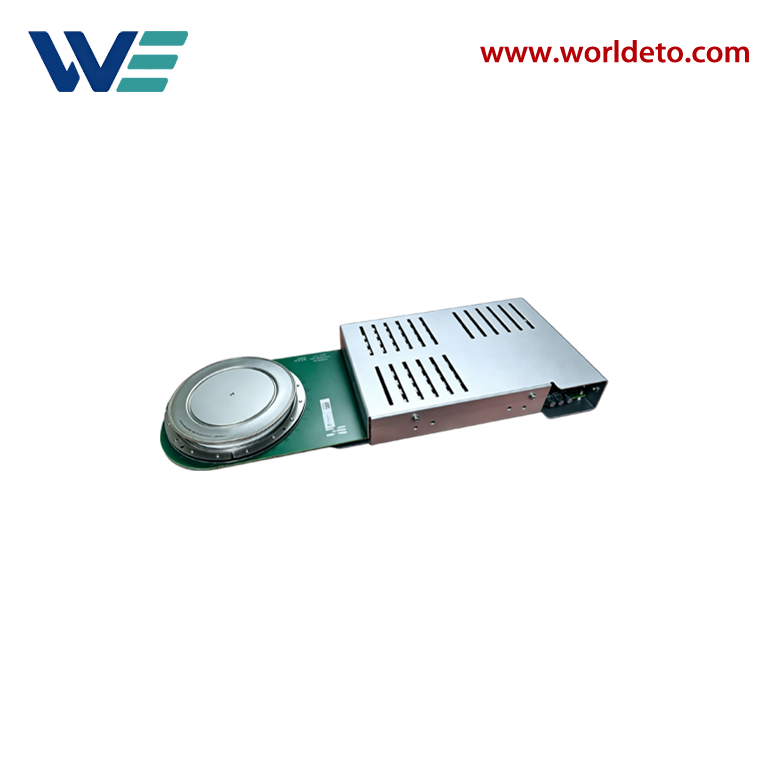
IGCT modules are engineered to minimize energy losses during power switching operations, a fundamental requirement in high-power industrial applications such as medium-voltage drives, renewable energy converters, and grid-connected power systems. The technological foundation of IGCT modules enables faster switching speeds, lower conduction losses, and improved gate drive efficiency compared to conventional thyristor-based solutions. This article explores the mechanisms through which IGCT modules deliver enhanced power conversion efficiency and their practical implications for industrial operations.
Understanding IGCT Modules and Core Technology
What Are IGCT Modules and Their Basic Function
IGCT modules, also known as Integrated Gate Commutated Thyristors, combine the benefits of high-power thyristor technology with advanced gate commutation circuits integrated directly into the semiconductor device. IGCT modules operate as bidirectional switches capable of handling high voltage and current levels while maintaining relatively compact form factors. The integration of gate commutation logic into IGCT modules eliminates the need for external commutation components, simplifying circuit design and reducing parasitic inductances that would otherwise degrade efficiency.
The fundamental advantage of IGCT modules lies in their ability to switch rapidly without generating excessive heat or electromagnetic interference. Unlike earlier generations of power semiconductors, IGCT modules achieve fast turnoff through integrated gate circuits that extract stored charge efficiently. This built-in commutation capability makes IGCT modules ideal for applications demanding rapid switching frequencies and precise timing control in power conversion systems.
How IGCT Modules Differ From Earlier Technologies
Previous power semiconductor generations, particularly traditional thyristors, required external commutation circuits to achieve controlled turnoff. These external components introduced parasitic resistances and inductances that increased switching losses and reduced overall system efficiency. IGCT modules integrate the commutation function directly, eliminating these parasitic elements and enabling superior switching performance. The architectural difference fundamentally changes how IGCT modules handle transient conditions and fault scenarios compared to older technologies.
IGCT modules also demonstrate improved thermal characteristics due to optimized silicon die design and integrated heat dissipation pathways. The physical integration of gate commutation circuits into IGCT modules reduces the number of discrete components, lowering assembly complexity and improving reliability. These design enhancements position IGCT modules as a natural evolution from earlier power semiconductor technologies toward more efficient industrial power systems.
Efficiency Mechanisms in IGCT Modules
Switching Loss Reduction Through IGCT Modules
Switching losses represent a substantial portion of total energy dissipation in power conversion systems. IGCT modules reduce switching losses through several integrated mechanisms: rapid gate commutation circuits that accelerate charge extraction, optimized semiconductor geometries that minimize on-state voltage drops, and integrated snubber functions that suppress voltage transients. When IGCT modules switch between conducting and blocking states, the integrated gate drive circuitry ensures that this transition occurs with minimal energy waste and electromagnetic disturbance.
The switching speed improvement achieved by IGCT modules directly correlates with reduced dv/dt and di/dt stress levels, which in turn minimizes electromagnetic interference generation. Faster switching transitions in IGCT modules mean less time spent in the partially-on region where semiconductor resistance is highest and heat generation peaks. This mechanism alone can reduce switching losses by thirty to fifty percent compared to conventional thyristor solutions, significantly improving overall power conversion efficiency in industrial applications.
Conduction Loss Optimization
Conduction losses occur when IGCT modules carry current in their on-state, with power dissipation directly proportional to on-state resistance and current levels. Modern IGCT modules feature optimized semiconductor designs that minimize on-state voltage drop across the junction, reducing resistive heating during current flow. The engineering approach embedded in IGCT modules balances on-state voltage characteristics against switching speed requirements, achieving favorable trade-offs that enhance power conversion efficiency without sacrificing switching performance.
Advanced IGCT modules incorporate mesa structures and optimized dopant profiles that reduce carrier resistance while maintaining reliable switching characteristics. These design refinements enable IGCT modules to achieve conduction loss reductions of fifteen to thirty percent compared to earlier-generation devices. In continuous-duty industrial applications, the cumulative effect of lower conduction losses across thousands of operating hours translates into substantial energy savings and reduced cooling system requirements.
Real-World Applications and Efficiency Gains
Industrial Power Systems Using IGCT Modules
Medium-voltage variable frequency drives represent one of the most significant application domains for IGCT modules, where power conversion efficiency directly impacts operational costs. IGCT modules in drive systems achieve efficiency improvements of two to five percent compared to conventional thyristor-based designs, which translates to measurable energy savings across large industrial motor fleets. Renewable energy converters, particularly wind turbine power electronics, benefit substantially from IGCT modules' superior switching performance and thermal stability under variable load conditions.
Grid-connected power systems and high-power rectifiers deploy IGCT modules to minimize harmonic distortion and improve power factor, both critical for utility interconnection compliance. IGCT modules enable higher switching frequencies in these applications, which reduces filter sizes and improves dynamic response to grid disturbances. The efficiency gains achieved through IGCT modules extend beyond device-level performance to include system-level benefits such as reduced cooling requirements and lower electromagnetic losses in associated magnetic components.
Thermal Management and System-Level Efficiency
IGCT modules generate substantially less heat during operation compared to alternative semiconductor technologies, reducing the thermal burden on cooling systems. Lower thermal generation means that IGCT modules allow engineers to specify smaller heatsinks, reducing material costs and installation complexity. System-level efficiency improvements extend beyond the semiconductor device itself to encompass supporting infrastructure such as cooling fans, thermal management circuits, and ambient environmental control requirements.
The integrated gate commutation circuits within IGCT modules contribute to this thermal advantage by enabling more efficient energy extraction during switching transients. Heat dissipation patterns in IGCT modules are more predictable and concentrated compared to thyristor solutions, allowing designers to implement targeted cooling strategies that maximize air circulation and minimize thermal hotspots. Over the lifetime of industrial equipment, these thermal management advantages accumulate to produce significant operational cost reductions.
FAQ
What specific efficiency improvements can be expected from IGCT modules compared to conventional thyristors?
IGCT modules typically deliver overall system efficiency improvements of three to six percent depending on application specifics, operating conditions, and load profiles. This improvement derives from combined reductions in switching losses (thirty to fifty percent improvement) and conduction losses (fifteen to thirty percent improvement) compared to conventional thyristor alternatives. Real industrial installations using IGCT modules have documented energy savings ranging from five to twelve percent in variable frequency drive applications, with additional benefits accruing from reduced cooling system requirements and improved power factor.
How do IGCT modules perform under fault conditions and transient load changes?
IGCT modules incorporate integrated protection circuits and gate commutation functions that enable rapid response to fault conditions without requiring external sensing or control circuits. The fast turnoff capability of IGCT modules allows them to interrupt fault currents within microseconds, protecting downstream equipment and reducing system stress. Under transient load changes, IGCT modules maintain stable switching performance and thermal characteristics, enabling power conversion systems to respond quickly to demand fluctuations while preserving efficiency gains.
Are IGCT modules suitable for retrofitting existing power systems designed for conventional thyristors?
Many existing industrial systems can be retrofitted with IGCT modules with minimal circuit modifications due to pin-compatible packaging and similar voltage ratings. However, IGCT modules require different gate drive characteristics and protective circuit designs compared to conventional thyristors, necessitating careful engineering analysis before retrofitting. Successful retrofits of power conversion systems with IGCT modules require professional assessment of existing infrastructure, control systems, and thermal management to ensure proper integration and achievement of expected efficiency gains.