
 EN
EN
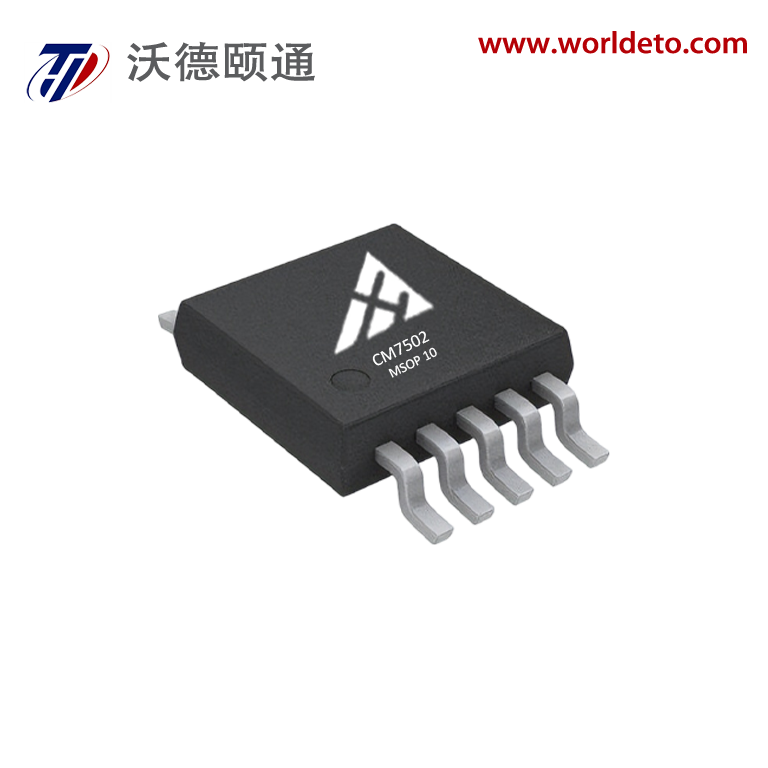
Selecting the right domestic precision DAC for your industrial application requires understanding multiple performance dimensions beyond simple marketing claims. A domestic precision DAC must balance speed, resolution, and power consumption while meeting strict accuracy requirements that drive operational success. This comprehensive guide examines the key factors that distinguish high-performance domestic precision DAC systems, helping you make informed procurement decisions based on genuine technical merit rather than brand reputation alone.
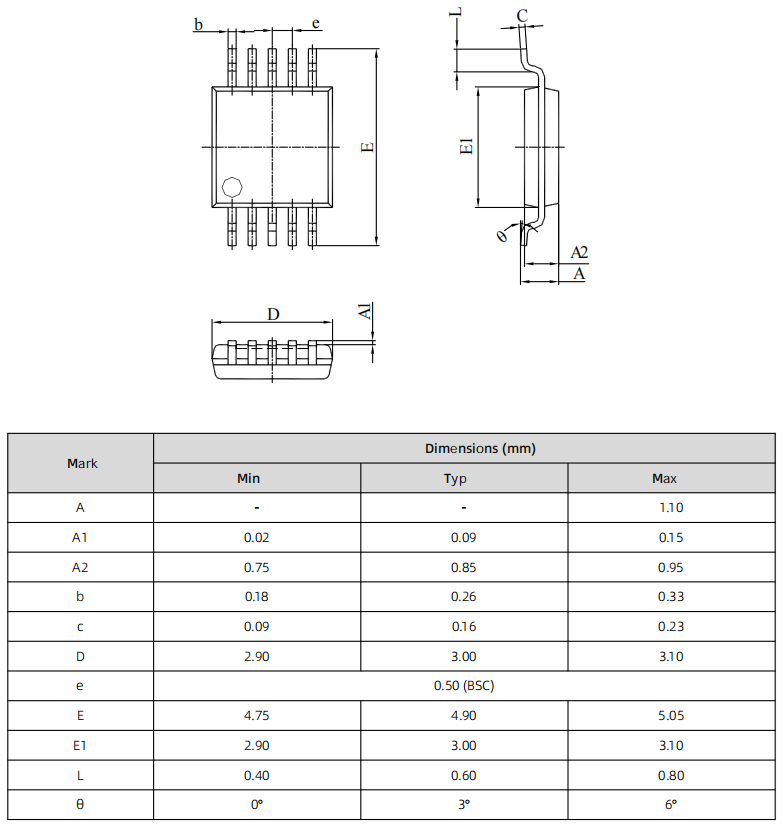
The domestic precision DAC market has matured significantly, with manufacturers now offering solutions that compete directly with imported alternatives on technical specifications and reliability. Understanding the relationship between resolution, sampling speed, and actual circuit performance helps procurement teams avoid costly mistakes and identify solutions truly suited to their application requirements. This article breaks down the essential comparison criteria and explains why certain domestic precision DAC configurations outperform others in specific industrial scenarios.
Understanding Resolution and Accuracy in Domestic Precision DAC Systems
Resolution Specifications and Practical Impact
Resolution in a domestic precision DAC refers to the number of discrete output voltage levels the converter can produce, typically expressed in bits. A 12-bit domestic precision DAC generates 4,096 distinct levels, while a 16-bit domestic precision DAC produces 65,536 levels, allowing significantly finer output control. The practical impact of resolution depends heavily on your application's actual voltage range and required accuracy; doubling resolution only matters if your system can truly utilize the additional levels and maintain signal-to-noise performance.
Linearity and Temperature Stability
A domestic precision DAC's linearity specification describes how accurately its output follows the ideal straight-line relationship between input code and output voltage. Industrial environments demand domestic precision DAC solutions with temperature coefficients below 25 ppm/°C to maintain accuracy across typical operating ranges. Inferior domestic precision DAC designs exhibit nonlinearity errors that accumulate during extended operation, particularly in applications like precision instrumentation, power supply feedback circuits, and audio signal processing where accuracy drift becomes immediately visible as performance degradation.
Speed Performance and Sampling Considerations
Sampling Rate and Settling Time Dynamics
The sampling rate of a domestic precision DAC determines how frequently it updates output voltage, measured in samples per second or megahertz. Settling time, the critical specification often overlooked in domestic precision DAC selection, measures how quickly the output reaches final value after a digital input change. A domestic precision DAC with fast settling time enables high-speed feedback control systems, while slower settling introduces lag that can destabilize closed-loop circuits or reduce servo responsiveness. Industrial applications like variable frequency drive control, magnetic flux density regulation, and automated test systems require domestic precision DAC settling times under 1 microsecond for reliable operation.
Signal Integrity and Glitch Performance
Digital-to-analog converter glitches represent brief voltage spikes that occur during code transitions in a domestic precision DAC output. Lower-quality domestic precision DAC designs exhibit larger glitch impulse errors, introducing noise and distortion into sensitive circuits. Premium domestic precision DAC architectures minimize glitch energy through careful transistor matching and switching sequence optimization, producing cleaner analog outputs essential for precision instrumentation, audio signal chains, and RF modulation systems where distortion directly impacts performance.
Power Consumption and Thermal Management in Domestic Precision DAC Selection
Supply Current Requirements and Heat Dissipation
Power efficiency directly influences total cost of ownership for any domestic precision DAC deployment, particularly in high-channel-count applications. Modern domestic precision DAC solutions consume between 2 milliamps and 50 milliamps depending on architecture and performance tier, with some ultra-low-power domestic precision DAC variants operating below 1 milliamp. Excessive heat dissipation from domestic precision DAC integrated circuits degrades linearity, reduces lifespan, and requires larger power supply and thermal management infrastructure that increases system cost and complexity.
Operating Voltage Ranges and Supply Rejection
Industrial power supplies often exhibit noise and voltage fluctuations that degrade domestic precision DAC output quality unless proper supply rejection specifications exist. Superior domestic precision DAC designs integrate on-chip voltage regulation and filtering, achieving power supply rejection ratios exceeding 80 decibels across relevant frequency ranges. Applications operating in environments with switching power supplies, motor drives, and high-frequency RF systems particularly benefit from domestic precision DAC solutions offering excellent supply rejection, preventing noise coupling from degrading measurement accuracy or control signal integrity.
Application-Specific Configuration Guidance
Selecting Domestic Precision DAC Architecture for Your Use Case
Audio signal processing applications typically prioritize domestic precision DAC solutions with excellent harmonic distortion performance and low noise floor, often accepting moderate sampling rates in exchange for superior analog signal quality. Measurement and test equipment applications demand domestic precision DAC offerings with exceptional linearity, tight calibration tolerances, and excellent temperature stability, as accuracy directly impacts test validity. Industrial control systems require domestic precision DAC solutions with fast settling times, low glitch performance, and robust supply rejection to maintain closed-loop system stability despite electrical noise and load variations.
Integration Complexity and Interface Considerations
Modern domestic precision DAC solutions offer multiple digital interface options including parallel digital input, serial SPI, I2C, and USB connectivity. Embedded system designers often prefer domestic precision DAC modules with simple parallel interfaces requiring minimal supporting circuitry, while networked systems benefit from domestic precision DAC solutions with integrated digital communication protocols. Evaluating the domestic precision DAC integration effort alongside component cost reveals the true economic value; a slightly more expensive domestic precision DAC with integrated communication may reduce board complexity and development time significantly.

FAQ
What distinguishes a high-quality domestic precision DAC from budget alternatives?
Premium domestic precision DAC designs maintain consistency through tighter manufacturing tolerances, superior materials, and advanced circuitry that minimizes distortion sources. A high-quality domestic precision DAC exhibits excellent linearity across temperature ranges, minimal settling time overshoot, fast step response, and low glitch impulse energy. Inferior domestic precision DAC products may perform acceptably in initial testing but demonstrate substantial drift during temperature cycling and show increased noise when supplied from real-world power sources, ultimately requiring system-level compensation or rework.
How do I determine the appropriate resolution for my domestic precision DAC application?
Select domestic precision DAC resolution by calculating required output step size relative to your application's full-scale voltage range and accuracy needs. A 12-bit domestic precision DAC applied to a 10-volt range provides approximately 2.4 millivolt resolution steps, adequate for many control and monitoring applications. Precision instrumentation, audio reproduction, and measurement systems typically require 16-bit or 18-bit domestic precision DAC solutions to prevent quantization noise from dominating system performance, though resolution alone does not guarantee accuracy without matching linearity and temperature stability.
Can domestic precision DAC modules replace imported converters in existing designs?
Modern domestic precision DAC solutions meet or exceed imported converter performance across most specifications, offering exceptional value particularly for high-volume applications where cost advantages compound. Pin-compatible domestic precision DAC alternatives exist for most legacy designs, enabling direct substitution without circuit modification. Verify that replacement domestic precision DAC candidates provide equivalent accuracy specifications, settling time performance, and supply current characteristics before committing to volume production, as subtle specification differences can cause unexpected system behavior even though basic functionality appears identical.