
 EN
EN
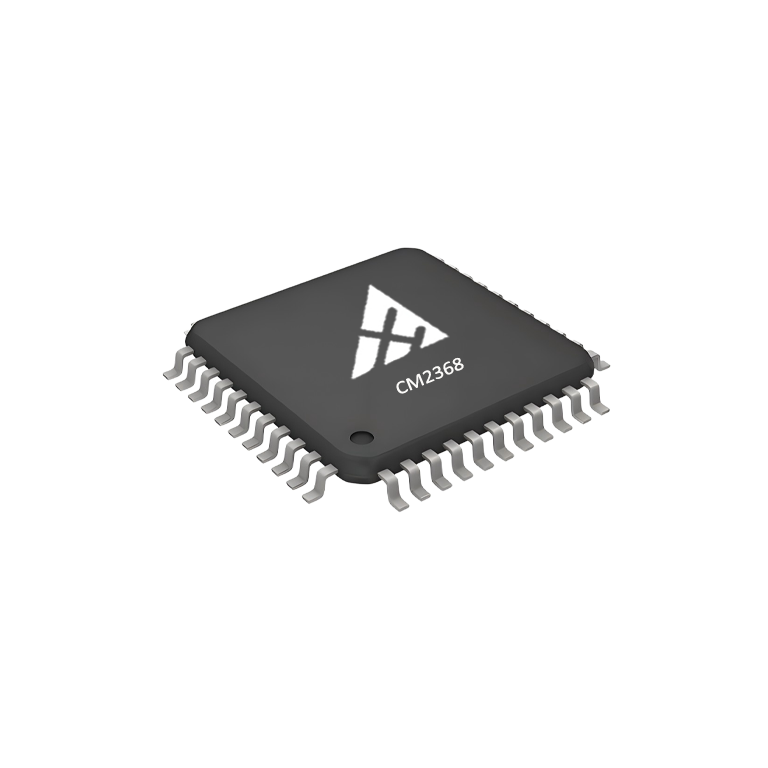
In today's rapidly evolving industrial landscape, the demand for high-speed data converters has reached unprecedented levels. These critical components serve as the bridge between analog and digital domains, enabling sophisticated control systems to process real-time information with exceptional precision. Manufacturing facilities, telecommunications infrastructure, and advanced automation systems all rely heavily on the performance characteristics of high-speed data converters to maintain operational efficiency and competitive advantage.
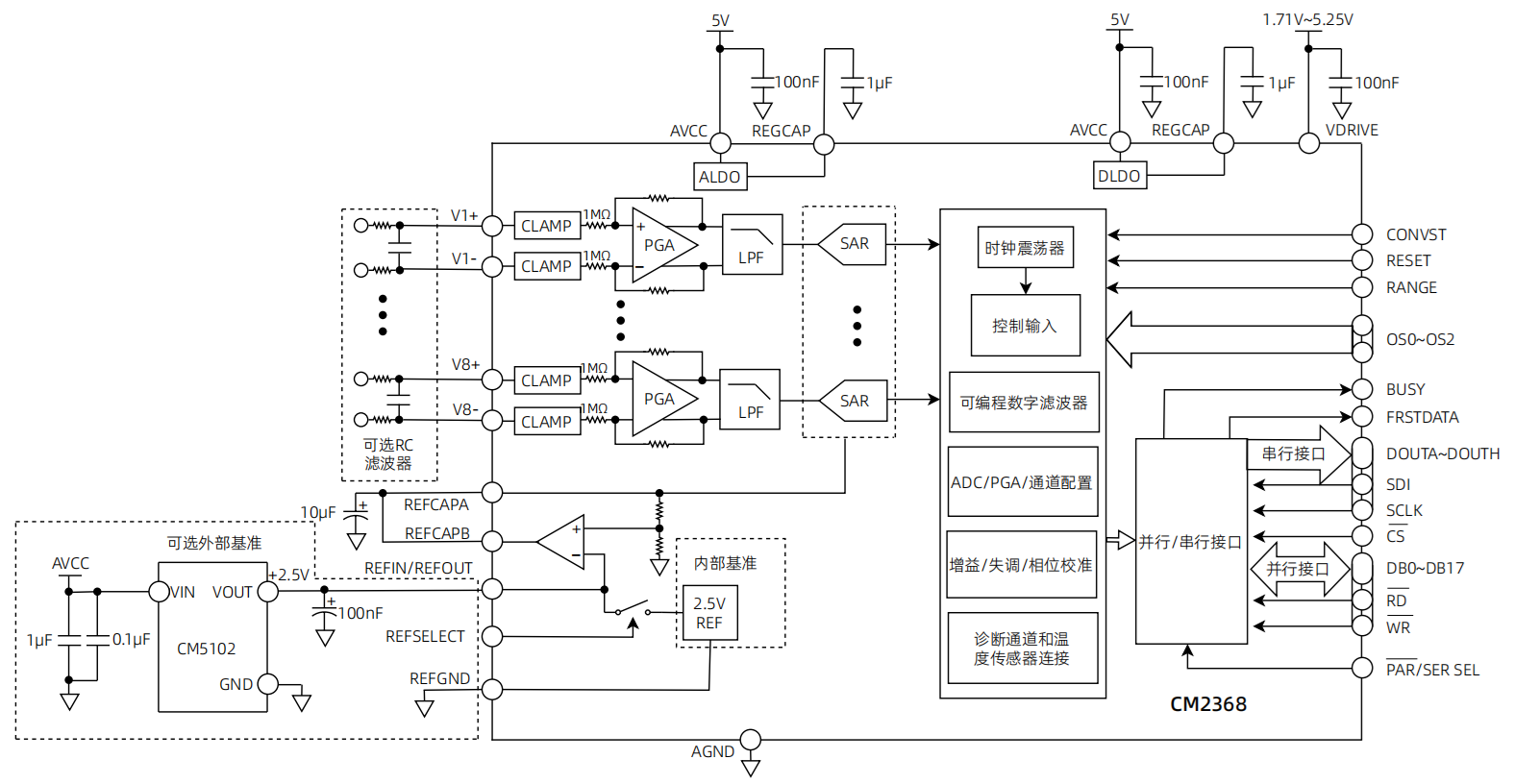
The selection process for high-speed data converters requires careful consideration of multiple technical parameters and application-specific requirements. Engineers must evaluate sampling rates, resolution specifications, power consumption characteristics, and thermal management capabilities to ensure optimal system performance. Understanding these fundamental aspects enables informed decision-making when implementing converter solutions in mission-critical applications where both speed and accuracy are paramount.
Understanding High-Speed Data Converter Fundamentals
Core Architecture and Design Principles
Modern high-speed data converters employ sophisticated architectural designs that balance speed, accuracy, and power efficiency. The fundamental operating principles involve precise timing mechanisms, advanced signal processing algorithms, and optimized circuit topologies. These converters typically utilize pipeline, flash, or successive approximation architectures, each offering distinct advantages depending on the specific application requirements and performance objectives.
The architectural choice significantly impacts the converter's ability to handle high-frequency signals while maintaining signal integrity. Pipeline architectures excel in applications requiring extremely high sampling rates, while successive approximation designs offer superior power efficiency for moderate-speed applications. Understanding these architectural differences enables engineers to select the most appropriate converter topology for their specific operational requirements.
Performance Metrics and Specifications
Evaluating high-speed data converters requires comprehensive analysis of key performance indicators including signal-to-noise ratio, effective number of bits, spurious-free dynamic range, and total harmonic distortion. These metrics directly influence the converter's ability to accurately process high-frequency signals while maintaining acceptable noise levels and distortion characteristics throughout the operational bandwidth.
Resolution specifications must align with application requirements, considering both static and dynamic performance characteristics. Higher resolution converters provide enhanced measurement precision but may compromise maximum sampling rates or increase power consumption. Engineers must carefully balance these competing requirements to achieve optimal system performance while meeting cost and power budget constraints.
Application-Specific Selection Criteria
Industrial Automation and Control Systems
Industrial automation environments demand high-speed data converters capable of processing multiple sensor inputs simultaneously while maintaining precise timing synchronization. These applications typically require converters with sampling rates ranging from several kilohertz to multiple megahertz, depending on the specific control loop requirements and system dynamics. Temperature stability and long-term reliability are critical factors in these demanding operational environments.
Variable frequency drives and motor control applications present unique challenges for data converter selection, requiring exceptional linearity and low noise performance across wide frequency ranges. The converters must accurately digitize feedback signals from position encoders, current sensors, and voltage measurements while maintaining phase coherence and minimizing latency. Robust EMI immunity and industrial temperature ratings are essential characteristics for these harsh operating conditions.
Telecommunications and Signal Processing
Telecommunications infrastructure relies heavily on high-performance data converters for base station equipment, software-defined radios, and digital signal processing applications. These systems require converters with exceptional spurious-free dynamic range and wide instantaneous bandwidth capabilities to handle complex modulated signals effectively. Multi-channel architectures with precise inter-channel matching are often necessary for advanced beamforming and MIMO applications.
The stringent timing requirements in telecommunications applications necessitate converters with ultra-low jitter clock generation and distribution systems. Phase noise characteristics become increasingly critical at higher frequencies, where even minor timing variations can significantly degrade system performance. Engineers must carefully evaluate clock quality, power supply rejection, and thermal stability when selecting converters for these demanding applications.
Design Considerations and Implementation Strategies
Power Management and Thermal Design
Effective power management strategies are essential when implementing high-speed data converters in space-constrained or battery-powered applications. Modern converters employ advanced power management techniques including dynamic scaling, sleep modes, and optimized analog front-end designs to minimize overall power consumption while maintaining performance specifications. Careful attention to power supply design, including low-noise linear regulators and proper decoupling techniques, ensures optimal converter performance.
Thermal management becomes increasingly challenging as converter speeds increase, requiring sophisticated heat dissipation solutions and careful PCB layout optimization. High-speed data converters generate significant heat during operation, necessitating adequate cooling solutions and thermal interface materials. Engineers must consider ambient temperature variations, airflow patterns, and component placement to maintain stable operating temperatures throughout the expected operational envelope.
Signal Integrity and PCB Layout Optimization
Proper PCB layout techniques are crucial for maintaining signal integrity when working with high-speed data converters. Ground plane design, trace routing strategies, and component placement directly impact converter performance, particularly at higher frequencies where parasitic effects become increasingly significant. Careful attention to differential pair routing, via placement, and return path continuity ensures optimal signal quality and minimizes crosstalk between channels.
Clock distribution networks require special consideration in high-speed converter applications, where timing skew and jitter can significantly degrade performance. Dedicated clock routing layers, appropriate termination schemes, and careful impedance control help maintain clean clock signals throughout the system. Engineers must also consider the impact of switching noise from digital circuits and implement appropriate isolation techniques to prevent interference with sensitive analog sections.
Performance Optimization and Testing Methodologies
Calibration and Characterization Techniques
Comprehensive calibration procedures are essential for achieving optimal performance from high-speed data converters in production environments. These procedures typically involve offset correction, gain adjustment, and nonlinearity compensation techniques that account for process variations and environmental factors. Advanced calibration algorithms can significantly improve converter accuracy and reduce system-level errors, particularly in precision measurement applications.
Characterization testing must encompass both static and dynamic performance parameters across the full operational range of temperature, supply voltage, and input signal conditions. Automated test equipment capable of generating precise test signals and measuring converter responses enables comprehensive evaluation of performance metrics including linearity, noise, and distortion characteristics. Regular calibration verification ensures continued performance compliance throughout the product lifecycle.
System-Level Integration and Validation
System-level integration of high-speed data converters requires careful consideration of interface compatibility, timing relationships, and overall system architecture. The converter selection must align with existing system constraints including available interfaces, power budgets, and mechanical form factors. Comprehensive system validation testing verifies end-to-end performance under realistic operating conditions and identifies potential integration issues before production deployment.
Validation procedures should include stress testing under extreme operating conditions, electromagnetic compatibility verification, and long-term reliability assessment. These comprehensive tests ensure robust system operation across the full range of expected environmental conditions and usage scenarios. Documentation of test results and performance margins provides valuable information for future design iterations and troubleshooting activities.
FAQ
What sampling rate specifications should I consider for my high-speed data converter application
The required sampling rate depends on your application's bandwidth requirements and the Nyquist criterion, which states that the sampling rate must be at least twice the highest frequency component of interest. For most industrial applications, sampling rates between 1 MSPS and 100 MSPS are sufficient, while telecommunications and radar applications may require rates exceeding 1 GSPS. Consider factors such as anti-aliasing filter requirements, oversampling ratios, and system timing constraints when determining the optimal sampling rate for your specific application.
How do I balance resolution and speed requirements in converter selection
Balancing resolution and speed involves understanding your application's dynamic range requirements and acceptable noise levels. Higher resolution converters typically operate at lower maximum sampling rates due to fundamental architectural limitations. Evaluate whether your application benefits more from increased precision at moderate speeds or faster conversion rates with reduced resolution. Consider using sigma-delta converters for high-resolution, lower-speed applications, or pipeline/flash architectures for high-speed requirements with moderate resolution.
What are the key considerations for power supply design in high-speed converter systems
Power supply design critically impacts converter performance, requiring clean, well-regulated voltages with minimal noise and ripple. Use separate analog and digital supply domains with appropriate isolation techniques, implement adequate decoupling capacitors close to the converter pins, and consider linear post-regulators for sensitive analog supplies. Pay special attention to ground plane design, supply sequencing requirements, and power supply rejection specifications provided in the converter datasheet to ensure optimal performance.
How can I minimize electromagnetic interference in high-speed data converter applications
EMI minimization requires a comprehensive approach including proper PCB layout techniques, shielding strategies, and careful component placement. Use ground planes and guard traces to isolate sensitive analog sections from noisy digital circuits, implement appropriate filtering on input and output lines, and consider using differential signaling where possible. Ensure proper impedance matching for high-speed traces, minimize loop areas in critical signal paths, and use ferrite beads or common-mode chokes to suppress unwanted emissions while maintaining signal integrity.
Table of Contents
- Understanding High-Speed Data Converter Fundamentals
- Application-Specific Selection Criteria
- Design Considerations and Implementation Strategies
- Performance Optimization and Testing Methodologies
-
FAQ
- What sampling rate specifications should I consider for my high-speed data converter application
- How do I balance resolution and speed requirements in converter selection
- What are the key considerations for power supply design in high-speed converter systems
- How can I minimize electromagnetic interference in high-speed data converter applications