
 EN
EN
The semiconductor industry has witnessed unprecedented growth in demand for high-performance analog-to-digital converter chips and precision digital-to-analog converters. As electronic systems become increasingly sophisticated, the need for reliable, efficient, and cost-effective ADC chips continues to drive innovation across multiple sectors. Modern applications ranging from industrial automation to telecommunications infrastructure require ADC chips that can deliver exceptional performance while maintaining low power consumption and competitive pricing.
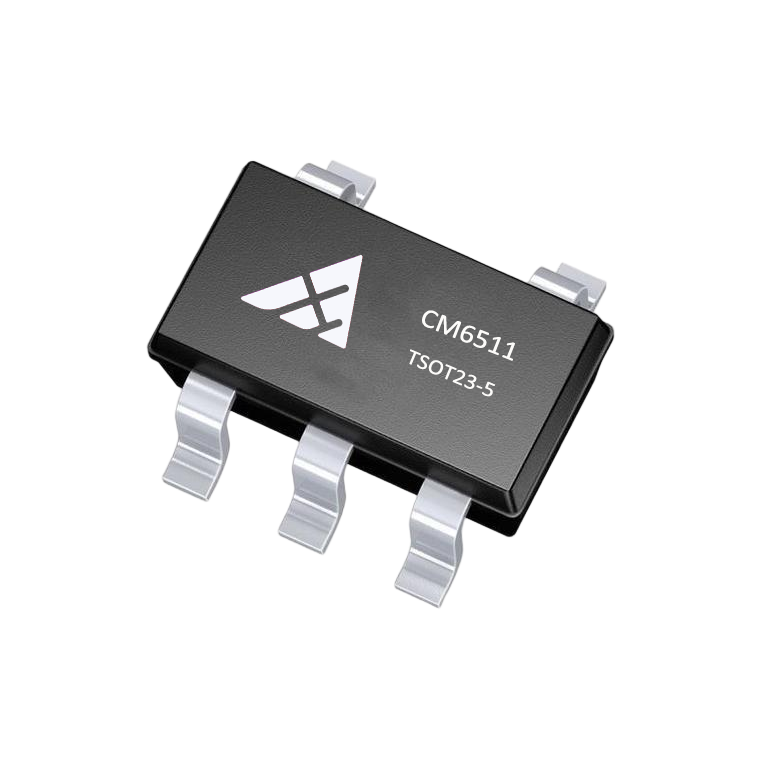
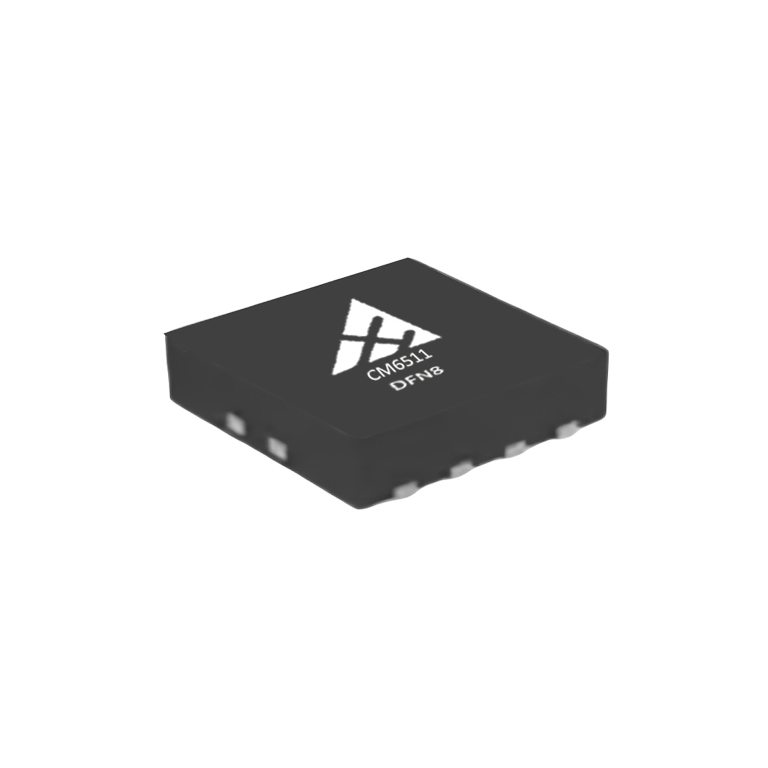
The emergence of domestic semiconductor manufacturers has created new opportunities for businesses seeking alternatives to traditional international suppliers. These manufacturers are developing ADC chips that not only match international standards but often exceed them in specific performance metrics. The shift toward domestic production has been accelerated by supply chain considerations, geopolitical factors, and the desire for greater control over critical components in electronic systems.
Technical Specifications and Performance Metrics
Resolution and Sampling Rate Capabilities
Modern ADC chips are characterized by their ability to achieve high resolution while maintaining rapid sampling rates. The resolution of ADC chips typically ranges from 8-bit to 32-bit, with each additional bit doubling the number of quantization levels available for signal conversion. High-performance applications often require 16-bit or 24-bit resolution to capture the full dynamic range of input signals without introducing significant quantization noise.
Sampling rates for contemporary ADC chips can reach several gigasamples per second, enabling these devices to handle high-frequency signals in real-time applications. The relationship between resolution and sampling rate represents a critical trade-off in ADC chip design, as higher resolution typically comes at the cost of reduced maximum sampling rates. Engineers must carefully balance these parameters based on specific application requirements.
Signal-to-Noise Ratio and Dynamic Range
The signal-to-noise ratio represents one of the most important performance indicators for ADC chips. A high SNR ensures that the converted digital signal accurately represents the original analog input with minimal distortion. Premium ADC chips can achieve SNR values exceeding 100 dB, making them suitable for demanding applications in audio processing, medical instrumentation, and precision measurement systems.
Dynamic range specifications indicate the range of input signal amplitudes that ADC chips can accurately process. This parameter directly influences the versatility of the converter and its ability to handle signals with varying amplitudes without clipping or losing resolution. Advanced ADC chips incorporate sophisticated input stage designs and automatic gain control mechanisms to maximize dynamic range while maintaining linearity across the entire input spectrum.
Power Consumption and Efficiency Considerations
Low-Power Design Architectures
Power consumption has become a critical design consideration for ADC chips, particularly in battery-powered and portable applications. Modern ADC chips employ various power-saving techniques including clock gating, dynamic power scaling, and optimized circuit topologies to minimize energy consumption. These design innovations enable ADC chips to operate efficiently in power-constrained environments without compromising performance.
The implementation of advanced CMOS processes in ADC chips manufacturing has significantly reduced static power consumption while improving switching speeds. Designers can now achieve sub-milliwatt power consumption in many ADC chips while maintaining high-speed operation. This advancement has opened new application areas where power efficiency is paramount, such as IoT devices, wireless sensors, and medical implants.
Thermal Management and Heat Dissipation
Effective thermal management plays a crucial role in maintaining the performance and reliability of ADC chips. High-speed operation and complex internal circuitry can generate significant heat, which must be properly managed to prevent performance degradation and ensure long-term reliability. Advanced packaging technologies and thermal design considerations help ADC chips maintain stable operation across wide temperature ranges.
The thermal characteristics of ADC chips directly impact their accuracy and linearity. Temperature variations can introduce offset errors, gain variations, and noise increases that degrade overall system performance. Modern ADC chips incorporate temperature compensation circuits and calibration mechanisms to minimize these effects and maintain consistent performance across operating temperature ranges.
Domestic Manufacturing Capabilities and Market Trends
Production Technology and Quality Standards
Domestic manufacturers have invested heavily in advanced semiconductor fabrication technologies to produce high-quality ADC chips. These facilities utilize state-of-the-art lithography equipment, precision process controls, and comprehensive quality assurance programs to ensure that ADC chips meet or exceed international standards. The commitment to quality has resulted in domestic ADC chips that compete effectively with established international brands.
Quality management systems implemented by domestic ADC chips manufacturers typically include rigorous testing protocols, statistical process control, and continuous improvement initiatives. These systems ensure consistent product quality and reliability while enabling rapid response to customer requirements and market changes. The focus on quality has established domestic ADC chips as viable alternatives for demanding applications across various industries.
Cost Competitiveness and Supply Chain Advantages
Domestic production of ADC chips offers significant cost advantages through reduced logistics expenses, shorter supply chains, and optimized manufacturing processes. These cost benefits can be passed on to customers while maintaining healthy profit margins for manufacturers. The proximity of domestic ADC chips production facilities to end users also enables faster delivery times and more responsive customer support.
Supply chain resilience has become increasingly important in the global semiconductor market. Domestic ADC chips manufacturing provides enhanced supply security and reduces dependence on international suppliers that may be subject to trade restrictions or geopolitical tensions. This advantage has made domestic ADC chips particularly attractive to companies prioritizing supply chain stability and risk mitigation.
Application Areas and Industry Integration
Industrial Automation and Control Systems
Industrial automation systems rely heavily on ADC chips for sensor data acquisition, process monitoring, and control feedback loops. The demanding requirements of industrial environments necessitate ADC chips that can operate reliably in the presence of electrical noise, temperature variations, and mechanical vibrations. Domestic ADC chips have demonstrated excellent performance in these challenging conditions while offering competitive pricing and local support.
The integration of ADC chips into industrial control systems requires careful consideration of isolation, protection, and communication interfaces. Modern ADC chips incorporate features such as galvanic isolation, overvoltage protection, and digital communication protocols to simplify system integration and improve reliability. These features make domestic ADC chips well-suited for industrial applications ranging from process control to robotics and automation.
Telecommunications and Data Communication
Telecommunications infrastructure depends on high-speed ADC chips for signal processing, modulation, and demodulation functions. The rapid evolution of communication standards and the increasing demand for bandwidth require ADC chips that can handle wide frequency ranges and high data rates. Domestic manufacturers have developed ADC chips specifically optimized for telecommunications applications, offering performance comparable to international alternatives.
The deployment of 5G networks and advanced communication systems has created new opportunities for ADC chips manufacturers. These applications demand exceptional linearity, low phase noise, and high dynamic range to ensure reliable signal transmission and reception. Domestic ADC chips designed for telecommunications applications incorporate advanced calibration techniques and digital signal processing capabilities to meet these stringent requirements.
Design Considerations and Selection Criteria
Performance Specifications Matching
Selecting appropriate ADC chips for specific applications requires careful analysis of performance requirements and available options. Engineers must consider factors such as resolution, sampling rate, input bandwidth, and power consumption when evaluating different ADC chips. The performance specifications of domestic ADC chips have evolved to address the full spectrum of application requirements, from low-power sensor interfaces to high-speed data acquisition systems.
The evaluation process for ADC chips should include consideration of secondary specifications such as integral non-linearity, differential non-linearity, and spurious-free dynamic range. These parameters significantly impact system performance in real-world applications and may not be immediately apparent from basic specifications. Domestic ADC chips manufacturers provide comprehensive documentation and application support to help engineers make informed selection decisions.
Integration and Interface Requirements
Modern electronic systems require ADC chips that integrate seamlessly with microcontrollers, digital signal processors, and communication interfaces. The availability of standard communication protocols such as SPI, I2C, and parallel interfaces simplifies system design and reduces development time. Domestic ADC chips typically offer multiple interface options to accommodate various system architectures and design preferences.
The physical packaging and pinout configuration of ADC chips can significantly impact PCB layout and system design complexity. Compact packages with optimized pin arrangements help minimize board space requirements while maintaining signal integrity and thermal performance. Domestic manufacturers have developed ADC chips in various package options to meet different space and performance constraints.
Future Developments and Technology Roadmap
Emerging Technologies and Innovations
The future development of ADC chips will be driven by advances in semiconductor process technology, circuit design techniques, and application requirements. Emerging technologies such as artificial intelligence, edge computing, and autonomous systems are creating new demands for ADC chips with enhanced capabilities. Domestic manufacturers are investing in research and development to address these evolving requirements and maintain competitiveness in the global market.
Innovation in ADC chips design is focusing on areas such as self-calibration, adaptive sampling, and integrated signal conditioning. These advanced features will enable ADC chips to automatically optimize their performance based on input signal characteristics and environmental conditions. The integration of digital signal processing capabilities directly into ADC chips will further enhance their functionality and reduce system complexity.
Market Growth and Expansion Opportunities
The market for ADC chips continues to expand as new applications emerge and existing applications demand higher performance. Sectors such as automotive electronics, medical devices, and renewable energy systems present significant growth opportunities for ADC chips manufacturers. Domestic producers are well-positioned to capitalize on these opportunities through their ability to provide customized solutions and responsive customer support.
The increasing emphasis on sustainability and environmental responsibility is driving demand for energy-efficient ADC chips and environmentally friendly manufacturing processes. Domestic manufacturers have the opportunity to lead in these areas by implementing green manufacturing practices and developing ultra-low-power ADC chips for sustainable applications. This focus on sustainability will become increasingly important as environmental regulations and customer expectations continue to evolve.
FAQ
What are the key advantages of domestic ADC chips compared to international alternatives
Domestic ADC chips offer several significant advantages including cost competitiveness, shorter supply chains, enhanced supply security, and responsive local customer support. They typically provide comparable technical performance while offering better pricing and faster delivery times. Additionally, domestic manufacturers can provide customized solutions and technical support in local languages with better time zone alignment for customer service.
How do I determine the appropriate resolution and sampling rate for my application
The required resolution depends on the signal dynamic range and desired measurement accuracy, while sampling rate should be at least twice the highest frequency component of interest according to the Nyquist criterion. For most applications, choose resolution based on the number of distinguishable signal levels needed, and select sampling rate to capture all relevant frequency content with margin for anti-aliasing filter design.
What factors should I consider when evaluating the power consumption of ADC chips
Consider both static power consumption during idle periods and dynamic power during active conversion cycles. Evaluate power scaling options, sleep modes, and the relationship between sampling rate and power consumption. Also assess thermal requirements and battery life impact for portable applications, as power consumption directly affects system thermal design and operating duration.
How important is the signal-to-noise ratio specification for different applications
Signal-to-noise ratio is crucial for applications requiring accurate signal representation, particularly in audio processing, precision measurement, and communication systems. Higher SNR values indicate better signal quality and lower noise interference. For applications with high dynamic range requirements or where small signals must be accurately detected, prioritize ADC chips with superior SNR specifications to ensure optimal system performance.
Table of Contents
- Technical Specifications and Performance Metrics
- Power Consumption and Efficiency Considerations
- Domestic Manufacturing Capabilities and Market Trends
- Application Areas and Industry Integration
- Design Considerations and Selection Criteria
- Future Developments and Technology Roadmap
-
FAQ
- What are the key advantages of domestic ADC chips compared to international alternatives
- How do I determine the appropriate resolution and sampling rate for my application
- What factors should I consider when evaluating the power consumption of ADC chips
- How important is the signal-to-noise ratio specification for different applications