
 EN
EN
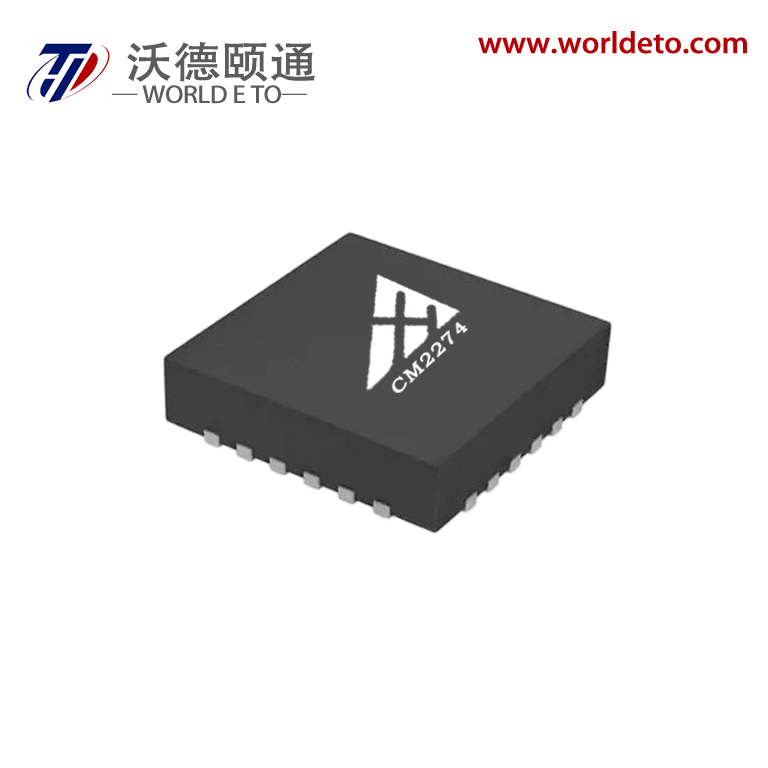
The semiconductor industry faces unprecedented challenges as global supply chain disruptions and geopolitical tensions drive demand for reliable domestic chip replacement solutions. Companies across industries are increasingly seeking alternatives to foreign semiconductor components, prioritizing supply chain security and long-term operational stability. This shift has accelerated innovation in domestic semiconductor manufacturing, particularly in high-precision analog and power management integrated circuits. Modern domestic chip replacement solutions now offer comparable performance to international counterparts while providing enhanced supply chain reliability and cost-effectiveness for critical applications.
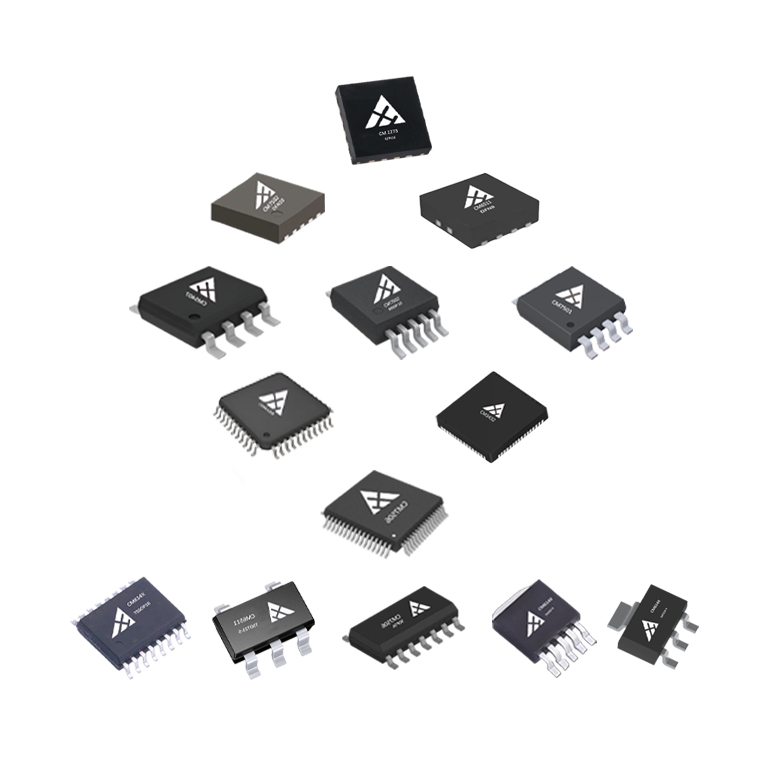
Understanding Modern Semiconductor Replacement Strategies
Market Dynamics Driving Component Substitution
The global semiconductor shortage has fundamentally altered how companies approach component sourcing and design strategies. Supply chain vulnerabilities exposed during recent disruptions have pushed organizations to evaluate domestic chip replacement solutions as strategic alternatives to traditional international suppliers. This evaluation process involves comprehensive assessment of performance specifications, quality standards, and long-term availability guarantees that domestic manufacturers can provide.
Industry leaders recognize that effective component replacement extends beyond simple functional equivalence. Modern domestic chip replacement solutions must demonstrate superior reliability metrics, environmental compliance certifications, and scalable production capabilities. These requirements have driven significant investment in domestic semiconductor fabrication facilities and advanced packaging technologies that enable competitive performance characteristics across diverse application domains.
Technical Specifications and Performance Benchmarks
Evaluating domestic chip replacement solutions requires detailed analysis of electrical characteristics, thermal performance parameters, and manufacturing process capabilities. Contemporary domestic semiconductor manufacturers have achieved remarkable progress in precision analog design, with many products now matching or exceeding international standards for linearity, noise performance, and temperature stability. These improvements reflect substantial investments in process technology development and quality control systems.
Performance validation involves comprehensive testing protocols that verify operational parameters under various environmental conditions and stress scenarios. Domestic chip replacement solutions undergo rigorous qualification processes including extended temperature cycling, humidity exposure testing, and electromagnetic compatibility verification. These validation procedures ensure that replacement components maintain specified performance levels throughout their operational lifetime while meeting industry-specific reliability requirements.
Analog-to-Digital Converter Technology Evolution
Precision ADC Architecture Development
High-precision analog-to-digital converters represent critical components in modern measurement and control systems, where accuracy and stability directly impact system performance. Domestic semiconductor manufacturers have developed sophisticated ADC architectures that incorporate advanced noise reduction techniques, improved reference voltage stability, and enhanced digital filtering capabilities. These innovations enable domestic chip replacement solutions to achieve measurement accuracies previously available only through premium international suppliers.
Contemporary ADC designs emphasize low-power operation while maintaining exceptional linearity and dynamic range performance. Domestic manufacturers have implemented innovative circuit topologies that reduce power consumption by up to 40% compared to traditional designs while preserving measurement precision. This combination of high performance and energy efficiency makes domestic chip replacement solutions particularly attractive for battery-powered applications and energy-conscious system designs.
Application-Specific ADC Solutions
Modern industrial applications demand ADC solutions tailored to specific measurement requirements and environmental constraints. Domestic chip replacement solutions now encompass specialized ADC variants optimized for high-speed data acquisition, precision sensor interfacing, and multi-channel measurement systems. These application-focused designs incorporate features such as programmable gain amplifiers, integrated voltage references, and flexible digital interfaces that simplify system integration while reducing component count.
Automotive and industrial automation sectors have particularly benefited from advances in domestic ADC technology, where component reliability and long-term availability are paramount concerns. Domestic chip replacement solutions for these markets include enhanced ESD protection, extended temperature operation ranges, and automotive-grade qualification standards. These features ensure consistent performance across harsh operating environments while providing the supply chain security that critical applications require.
Low-Dropout Regulator Innovation and Implementation
Advanced LDO Architecture Design
Low-dropout regulators serve as fundamental building blocks in modern power management systems, providing stable voltage regulation with minimal power dissipation and excellent transient response characteristics. Domestic semiconductor manufacturers have developed innovative LDO architectures that achieve dropout voltages below 100mV while maintaining stable operation across wide load current ranges. These domestic chip replacement solutions incorporate advanced compensation techniques that ensure stability without external compensation components.
Contemporary LDO designs emphasize ultra-low quiescent current consumption, enabling efficient operation in battery-powered applications where power conservation is critical. Advanced domestic chip replacement solutions achieve quiescent currents below 1 microampere while maintaining fast transient response and excellent line regulation performance. These characteristics make domestic LDO solutions particularly suitable for portable electronics, IoT devices, and energy harvesting applications where power efficiency directly impacts operational lifetime.
Thermal Management and Protection Features
Effective thermal management represents a crucial aspect of LDO design, particularly in high-current applications where power dissipation can impact system reliability and performance. Domestic chip replacement solutions incorporate sophisticated thermal protection mechanisms including temperature monitoring circuits, automatic current limiting, and thermal shutdown capabilities. These protection features prevent device damage while maintaining system operation under challenging thermal conditions.
Advanced packaging technologies employed in domestic LDO manufacturing provide enhanced thermal conductivity and improved heat dissipation characteristics. Modern domestic chip replacement solutions utilize copper lead frames, exposed pad configurations, and thermally enhanced package designs that reduce junction-to-ambient thermal resistance by up to 50% compared to standard packages. These thermal improvements enable higher power density designs while maintaining reliable operation across extended temperature ranges.
Integration Strategies for Complete System Solutions
Multi-Function Integrated Circuit Development
System-level integration represents the next evolution in domestic semiconductor technology, where multiple functions are combined within single integrated circuits to reduce component count and improve reliability. Domestic chip replacement solutions now include power management ICs that integrate multiple LDO regulators, switching regulators, and supervisory functions within compact packages. This integration approach simplifies system design while reducing board space requirements and manufacturing costs.
Advanced integration extends beyond power management to include mixed-signal processing capabilities that combine ADC functions with digital signal processing and communication interfaces. Domestic manufacturers have developed sophisticated system-on-chip solutions that incorporate high-resolution ADCs, microcontroller cores, and wireless communication capabilities within single packages. These integrated domestic chip replacement solutions enable simplified system architectures while maintaining design flexibility and scalability.
Supply Chain Optimization and Quality Assurance
Successful implementation of domestic chip replacement solutions requires comprehensive supply chain management strategies that ensure component availability, quality consistency, and long-term support. Domestic semiconductor manufacturers have established robust quality management systems that encompass incoming material inspection, process control monitoring, and finished product testing protocols. These quality assurance measures guarantee that domestic chip replacement solutions meet specified performance parameters and reliability requirements.
Long-term supply agreements and strategic partnerships between domestic manufacturers and end-users provide additional security for critical applications. These relationships enable customized product development, extended product lifecycle support, and priority allocation during supply constraints. Such collaborative approaches strengthen the overall value proposition of domestic chip replacement solutions while fostering innovation in specialized application domains.
Performance Validation and Testing Methodologies
Comprehensive Characterization Protocols
Rigorous testing and validation procedures are essential for qualifying domestic chip replacement solutions in critical applications where performance and reliability cannot be compromised. Modern characterization protocols encompass electrical parameter verification, environmental stress testing, and long-term reliability assessment. These comprehensive testing procedures validate that domestic semiconductor products meet or exceed specifications across all operating conditions and application scenarios.
Statistical process control methods ensure consistent quality across production batches while identifying potential process variations that could impact product performance. Domestic chip replacement solutions undergo extensive parametric testing that verifies electrical characteristics, measures process capability indices, and establishes control limits for critical parameters. This data-driven approach to quality control provides confidence in product reliability while enabling continuous improvement in manufacturing processes.
Application-Specific Validation Requirements
Different industries impose unique validation requirements that domestic chip replacement solutions must satisfy to gain market acceptance. Automotive applications demand compliance with AEC-Q100 qualification standards, while medical devices require adherence to ISO 13485 quality management systems. Domestic manufacturers have invested significantly in developing testing capabilities and quality systems that meet these stringent industry requirements.
Accelerated life testing and failure analysis capabilities enable domestic manufacturers to predict long-term reliability and identify potential failure mechanisms before they impact field performance. These advanced testing methodologies provide valuable insights into product reliability while supporting continuous improvement in design and manufacturing processes. The resulting confidence in domestic chip replacement solutions has facilitated broader adoption across industries that demand exceptional reliability and performance consistency.
Future Trends and Technology Roadmap
Emerging Technologies and Innovation Directions
The evolution of domestic chip replacement solutions continues to accelerate as manufacturers invest in advanced process technologies and innovative circuit architectures. Emerging trends include the adoption of advanced process nodes that enable higher integration density, improved power efficiency, and enhanced performance characteristics. These technological advances position domestic semiconductor manufacturers to compete effectively with international suppliers while offering unique advantages in supply chain security and customer support.
Artificial intelligence and machine learning technologies are being integrated into domestic chip replacement solutions to enable adaptive performance optimization and predictive maintenance capabilities. These intelligent features allow systems to automatically adjust operating parameters based on environmental conditions and usage patterns, maximizing efficiency while minimizing power consumption. Such innovations demonstrate the continued evolution and sophistication of domestic semiconductor technology.
Market Expansion and Competitive Positioning
Strategic market expansion efforts focus on developing domestic chip replacement solutions for emerging application domains including electric vehicles, renewable energy systems, and industrial automation. These growth markets present significant opportunities for domestic manufacturers to establish strong competitive positions while supporting national technological independence. Targeted product development initiatives address specific market requirements while leveraging core competencies in analog and mixed-signal design.
Collaborative research and development partnerships between domestic manufacturers, universities, and research institutions accelerate innovation while building technical expertise in advanced semiconductor technologies. These partnerships facilitate knowledge transfer, support workforce development, and enable access to cutting-edge research facilities. The resulting technological capabilities strengthen the competitive position of domestic chip replacement solutions while fostering continued innovation in semiconductor design and manufacturing.
FAQ
What are the key advantages of domestic chip replacement solutions over international alternatives
Domestic chip replacement solutions offer several compelling advantages including enhanced supply chain security, reduced geopolitical risk, shorter lead times, and improved customer support accessibility. Additionally, domestic manufacturers often provide greater design flexibility and customization capabilities compared to large international suppliers, enabling optimized solutions for specific applications. Cost advantages may also emerge from reduced transportation costs and favorable currency exchange rates.
How do domestic semiconductor manufacturers ensure quality and reliability standards
Domestic manufacturers implement comprehensive quality management systems that encompass statistical process control, extensive testing protocols, and continuous improvement methodologies. These systems include incoming material inspection, in-process monitoring, and finished product testing using advanced characterization equipment. Many domestic facilities have achieved international quality certifications including ISO 9001, AS9100, and industry-specific standards that validate their quality management capabilities.
What performance levels can be expected from modern domestic ADC and LDO solutions
Contemporary domestic ADC solutions achieve resolution levels up to 24 bits with excellent linearity and low noise performance that rivals international premium products. LDO regulators from domestic manufacturers typically provide dropout voltages below 100mV, quiescent currents under 1 microampere, and excellent transient response characteristics. These performance specifications meet or exceed requirements for most industrial, automotive, and consumer applications.
How can companies evaluate and qualify domestic chip replacement solutions for their applications
Successful evaluation requires comprehensive assessment of electrical specifications, reliability data, quality certifications, and supply chain capabilities. Companies should request detailed datasheets, qualification test results, and reliability reports from domestic manufacturers. Prototype testing and small-scale production trials provide valuable validation data before committing to large-volume adoption. Additionally, evaluation should consider long-term support capabilities, technical expertise, and manufacturing capacity of domestic suppliers.
Table of Contents
- Understanding Modern Semiconductor Replacement Strategies
- Analog-to-Digital Converter Technology Evolution
- Low-Dropout Regulator Innovation and Implementation
- Integration Strategies for Complete System Solutions
- Performance Validation and Testing Methodologies
- Future Trends and Technology Roadmap
-
FAQ
- What are the key advantages of domestic chip replacement solutions over international alternatives
- How do domestic semiconductor manufacturers ensure quality and reliability standards
- What performance levels can be expected from modern domestic ADC and LDO solutions
- How can companies evaluate and qualify domestic chip replacement solutions for their applications