
 EN
EN
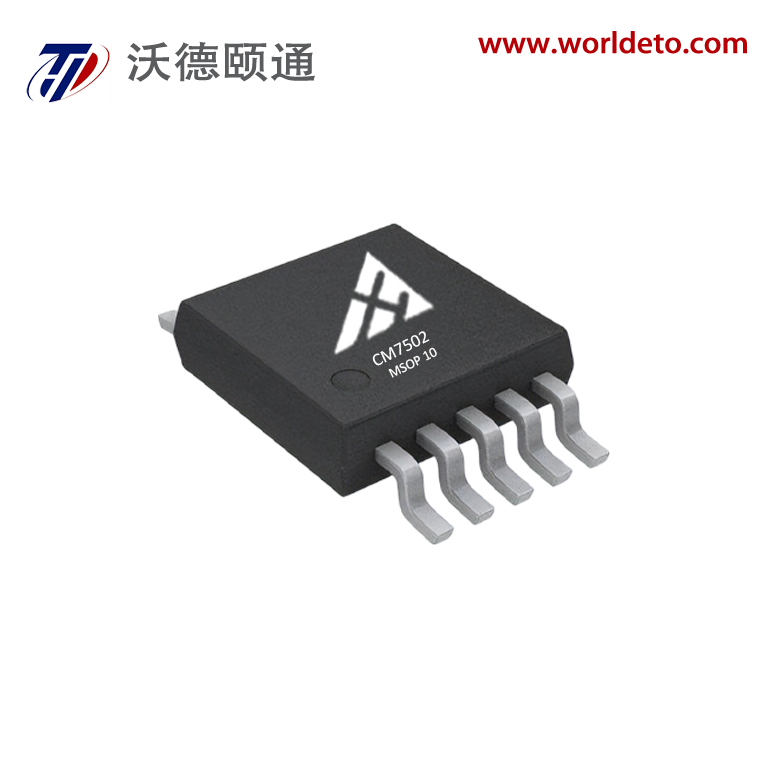
Modern electronic systems demand unprecedented levels of accuracy and efficiency, particularly in applications where signal integrity directly impacts performance. Precision DAC chips have emerged as critical components for achieving sub-millivolt accuracy while maintaining low-power consumption across diverse industrial applications. These advanced digital-to-analog converters represent a significant leap forward in semiconductor technology, offering engineers the tools necessary to meet stringent performance requirements in measurement systems, industrial automation, and high-resolution audio equipment.
The evolution of precision DAC chips has been driven by the increasing need for accurate analog signal generation in digital control systems. Unlike traditional DACs that prioritize speed or cost-effectiveness, precision-focused designs emphasize accuracy, stability, and noise reduction. This specialized approach enables engineers to achieve measurement resolutions that were previously impossible with conventional analog-to-digital conversion methods.
Understanding Precision DAC Architecture
Core Design Principles
The architecture of precision DAC chips incorporates several fundamental design elements that distinguish them from standard digital-to-analog converters. These components work synergistically to minimize conversion errors and maintain exceptional accuracy across varying operating conditions. Advanced reference voltage circuits form the foundation of precision performance, providing stable voltage standards that remain constant despite temperature fluctuations and supply voltage variations.
Internal calibration systems continuously monitor and correct for drift and non-linearity errors that can accumulate over time. These self-correcting mechanisms utilize sophisticated algorithms to detect deviations from ideal transfer functions and apply real-time corrections to maintain accuracy specifications. The result is a converter that maintains its precision characteristics throughout its operational lifetime without requiring external calibration procedures.
Resolution and Accuracy Specifications
Modern precision DAC chips achieve resolutions ranging from 16 to 24 bits, with some specialized devices reaching even higher bit depths. However, resolution alone does not determine accuracy performance. The relationship between resolution and actual accuracy depends on various factors including integral non-linearity, differential non-linearity, and temperature coefficient specifications. High-performance precision DAC chips typically maintain accuracy within 0.01% of full-scale range across their specified operating temperature range.
Temperature stability represents a critical specification for precision applications, as thermal variations can introduce significant errors in sensitive measurement systems. Advanced precision DAC chips incorporate temperature compensation circuits that actively adjust internal parameters to counteract thermal drift. This compensation enables these devices to maintain sub-millivolt accuracy even when subjected to industrial temperature extremes ranging from -40°C to +125°C.
Low-Power Design Strategies
Power Management Techniques
Achieving low-power consumption while maintaining precision presents unique engineering challenges that require innovative design approaches. Modern precision DAC chips employ multiple power management strategies to minimize current consumption without compromising accuracy. Dynamic power scaling allows these devices to adjust their power consumption based on conversion rate requirements, reducing energy usage during periods of low activity while maintaining full performance when needed.
Sleep modes and power-down features enable significant power savings in battery-powered applications. These modes can reduce power consumption to microampere levels while preserving internal calibration data and reference voltages. Wake-up times are optimized to minimize the delay between power-on and full accuracy availability, ensuring that precision DAC chips can respond quickly to system demands without sacrificing energy efficiency.
Supply Voltage Optimization
Low-voltage operation capabilities have become increasingly important as system designers seek to reduce overall power consumption. Precision DAC chips now operate effectively from supply voltages as low as 2.7V while maintaining their accuracy specifications. This low-voltage capability enables direct interface with modern digital processors and reduces the need for voltage regulators and level-shifting circuits.
Dual supply configurations allow precision DAC chips to optimize power consumption by using separate analog and digital supply domains. This separation minimizes digital switching noise interference with analog circuits while enabling independent optimization of each power domain. The result is improved accuracy performance with reduced overall power consumption compared to single-supply alternatives.
Application Areas and Implementation
Industrial Process Control
Precision DAC chips play crucial roles in industrial process control systems where accurate analog output signals directly impact product quality and operational efficiency. These applications require stable, repeatable analog outputs that maintain their accuracy over extended periods of continuous operation. Temperature control systems, pressure regulation circuits, and flow control valves all benefit from the exceptional accuracy provided by precision DAC chips.
Calibration and metrology equipment represents another significant application area where precision DAC chips enable the generation of highly accurate reference signals. These reference signals serve as standards for calibrating measurement instruments and verifying the performance of other electronic systems. The long-term stability and low drift characteristics of precision DAC chips make them ideal for applications where measurement traceability and repeatability are essential.
High-Resolution Audio Systems
Professional audio equipment increasingly relies on precision DAC chips to achieve the signal quality demanded by modern recording and playback systems. These applications require not only high resolution but also exceptional linearity and low distortion characteristics. Precision DAC chips designed for audio applications incorporate specialized filtering and noise shaping techniques that minimize audible artifacts while maintaining accurate signal reproduction.
Digital audio workstations and mastering equipment benefit from the superior dynamic range and signal-to-noise ratios provided by precision DAC chips. The ability to maintain accuracy at low signal levels enables these systems to preserve subtle musical details that might be lost with conventional DACs. This capability is particularly important in professional applications where signal quality directly impacts the final product's commercial value.
Selection Criteria and Design Considerations
Performance Parameters
Selecting appropriate precision DAC chips requires careful evaluation of multiple performance parameters that impact overall system accuracy. Integral non-linearity specifications indicate how closely the actual transfer function matches the ideal linear relationship between digital input codes and analog output voltages. Values typically range from ±0.5 LSB to ±4 LSB depending on the application requirements and cost constraints.
Settling time characteristics determine how quickly precision DAC chips can respond to input code changes while maintaining their accuracy specifications. Fast settling times enable higher update rates and improved system responsiveness, while slower settling may be acceptable in applications where update rates are limited by other system constraints. The relationship between settling time and accuracy must be carefully balanced based on specific application requirements.
Interface and Integration Requirements
Digital interface compatibility represents a critical consideration when integrating precision DAC chips into existing systems. Popular interface standards include SPI, I2C, and parallel configurations, each offering different advantages in terms of speed, simplicity, and pin count requirements. SPI interfaces typically provide the fastest data transfer rates, while I2C offers simplified wiring and multi-device addressing capabilities.
Package options and thermal management considerations influence both performance and integration complexity. Smaller packages reduce board space requirements but may limit thermal dissipation capabilities. Larger packages with enhanced thermal properties enable higher power operation but require additional board area. The choice between these options depends on system size constraints, power dissipation requirements, and thermal management capabilities.
Future Trends and Developments
Technology Advancement Directions
The development trajectory of precision DAC chips continues to focus on improved accuracy, reduced power consumption, and enhanced integration capabilities. Emerging semiconductor processes enable smaller feature sizes that reduce parasitic effects and improve matching between circuit elements. These improvements translate directly into better accuracy specifications and lower power consumption for next-generation precision DAC chips.
Advanced calibration algorithms and machine learning techniques are being incorporated into precision DAC chips to provide adaptive accuracy enhancement. These systems can learn from historical performance data and environmental conditions to predict and compensate for potential accuracy degradation. The result is improved long-term stability and reduced maintenance requirements for precision measurement systems.
Integration and System-Level Solutions
System-on-chip implementations that combine precision DAC chips with digital signal processing capabilities are becoming increasingly common. These integrated solutions reduce component count, improve signal integrity, and simplify system design while maintaining the accuracy characteristics required for precision applications. The integration approach also enables better optimization of power consumption through coordinated management of digital and analog functions.
Wireless connectivity features are being integrated into precision DAC chips to enable remote monitoring and control capabilities. These features allow engineers to adjust parameters, monitor performance, and diagnose issues without physical access to the equipment. This capability is particularly valuable in applications where precision DAC chips are deployed in hazardous or difficult-to-access locations.
FAQ
What factors determine the accuracy specifications of precision DAC chips
The accuracy of precision DAC chips depends on multiple factors including integral non-linearity, differential non-linearity, temperature coefficient, and reference voltage stability. Manufacturing process variations, component matching, and circuit design techniques all contribute to the overall accuracy performance. Environmental factors such as temperature, humidity, and electromagnetic interference can also impact accuracy, which is why precision DAC chips incorporate compensation and shielding techniques to minimize these effects.
How do precision DAC chips achieve low power consumption without sacrificing accuracy
Precision DAC chips achieve low power consumption through several design strategies including dynamic power scaling, optimized circuit topologies, and advanced process technologies. Power management features allow these devices to reduce current consumption during idle periods while maintaining critical circuit blocks that preserve accuracy. Low-voltage operation capabilities and efficient reference circuits also contribute to reduced power consumption without compromising precision performance.
What interface options are available for precision DAC chips
Most precision DAC chips support standard digital interfaces including SPI, I2C, and parallel configurations. SPI interfaces offer high-speed data transfer capabilities suitable for applications requiring fast update rates. I2C provides simplified wiring and multi-device addressing for systems with multiple precision DAC chips. Parallel interfaces enable the fastest possible update rates but require more connection pins and board space.
How do environmental conditions affect precision DAC chip performance
Environmental factors such as temperature, humidity, and electromagnetic interference can significantly impact precision DAC chip performance. Temperature variations are typically the most significant factor, which is why precision DAC chips incorporate temperature compensation circuits and specify temperature coefficients. Proper shielding, grounding techniques, and power supply filtering help minimize the impact of electromagnetic interference on accuracy specifications.