
 EN
EN

Modern electronic systems demand increasingly efficient power management solutions, particularly in battery-operated devices where every microampere of current consumption matters. Low-quiescent current LDOs represent a critical advancement in power management technology, enabling designers to achieve ultra-low power consumption while maintaining precise voltage regulation. These specialized linear regulators consume minimal standby current, typically in the range of microamperes or even nanoamperes, making them indispensable for applications requiring extended battery life and stringent power budgets.
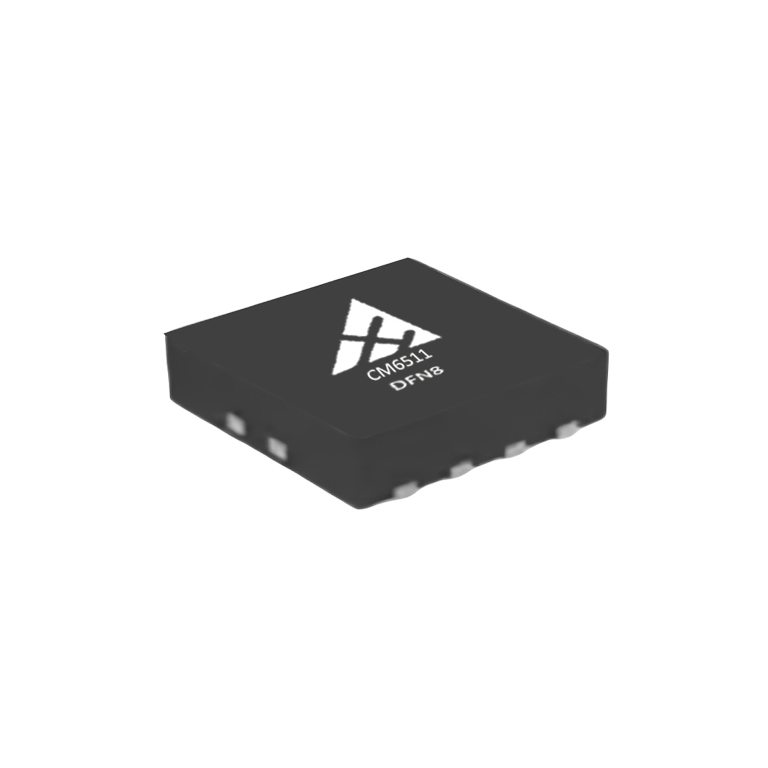
The significance of low-quiescent current LDOs extends beyond simple power conservation. These devices enable the development of sophisticated analog circuits that can operate continuously for months or years on a single battery charge. From wireless sensor networks to portable medical devices, the implementation of low-quiescent current LDOs has revolutionized how engineers approach power-sensitive design challenges. Understanding their unique characteristics and optimal implementation strategies is essential for creating competitive products in today's energy-conscious market.
Understanding Quiescent Current Fundamentals
Definition and Impact of Quiescent Current
Quiescent current, often denoted as Iq, represents the ground current consumed by an LDO regulator when no load is present at its output. This parameter directly affects the overall power efficiency of the system, particularly during standby or light-load conditions. Traditional LDOs typically exhibit quiescent currents in the milliampere range, which can be prohibitive for ultra-low power applications where the total system current must remain below 100 microamperes.
The impact of quiescent current becomes more pronounced as the load current decreases. In scenarios where the load current approaches or falls below the quiescent current value, the efficiency of the regulator drops dramatically. Low-quiescent current LDOs address this challenge by implementing advanced circuit topologies and process technologies that minimize internal current consumption while maintaining regulation accuracy and transient response characteristics.
Measurement and Specification Considerations
Accurate measurement of quiescent current requires careful consideration of test conditions and measurement techniques. The quiescent current specification is typically provided at no-load conditions with specified input and output voltages. However, real-world applications may experience variations in quiescent current due to temperature changes, input voltage variations, and output capacitor characteristics.
When evaluating low-quiescent current LDOs for specific applications, engineers must consider not only the typical quiescent current value but also the maximum specification across temperature and voltage ranges. Some devices exhibit quiescent current variations of several microamperes across their operating range, which can significantly impact battery life calculations in ultra-low power systems.
Advanced Circuit Topologies and Design Techniques
CMOS Process Optimization
The development of low-quiescent current LDOs relies heavily on advanced CMOS process technologies that enable the creation of high-performance analog circuits with minimal power consumption. Modern submicron CMOS processes allow designers to implement complex circuit topologies while maintaining extremely low static current consumption. These processes feature high-gain amplifiers, precision current mirrors, and low-leakage switches that collectively contribute to reduced quiescent current.
Process optimization techniques include the use of thick-oxide devices for high-voltage applications and thin-oxide devices for low-voltage, high-speed operation. The careful selection of device geometries and bias conditions ensures optimal performance while minimizing power consumption. Additionally, advanced layout techniques help reduce parasitic effects that could otherwise increase quiescent current through unwanted leakage paths.
Innovative Amplifier Architectures
The heart of any LDO regulator is its error amplifier, which must maintain high gain and bandwidth while consuming minimal current. Low-quiescent current LDOs employ innovative amplifier architectures such as folded-cascode configurations, current-mirror load structures, and multi-stage designs optimized for low power operation. These architectures achieve the necessary gain-bandwidth product while operating with bias currents in the microampere range.
Compensation techniques for these ultra-low power amplifiers require careful consideration of stability margins and transient response. Frequency compensation networks must be designed to work effectively with the high output impedance characteristics of low-power amplifier stages while maintaining adequate phase and gain margins across all operating conditions.
Application-Specific Design Considerations
Battery-Powered Systems Integration
Integration of low-quiescent current LDOs into battery-powered systems requires comprehensive analysis of power budgets and load profiles. These regulators excel in applications where the system spends significant time in standby or sleep modes, as their ultra-low quiescent current extends battery life during these critical periods. Proper system partitioning allows designers to power critical always-on circuits with low-quiescent current LDOs while using higher-performance regulators for active circuitry.
Battery chemistry and discharge characteristics must be considered when selecting low-quiescent current LDOs for portable applications. Different battery types exhibit varying voltage discharge profiles, and the LDO must maintain regulation accuracy throughout the battery's useful voltage range. Additionally, the regulator's dropout voltage becomes critical as the battery voltage approaches its end-of-life condition.
Wireless and IoT Applications
Wireless sensor networks and Internet of Things devices represent ideal applications for low-quiescent current LDOs due to their duty-cycled operation and strict power constraints. These systems typically transmit data periodically while remaining in low-power standby modes for extended periods. The ultra-low quiescent current of specialized LDOs ensures minimal power consumption during these standby intervals.
Noise performance becomes particularly important in wireless applications where the power supply noise can directly impact RF performance. Low-quiescent current LDOs must maintain excellent power supply rejection ratio and output noise characteristics despite their minimal current consumption. This requires careful design of the reference voltage generation and error amplifier circuits to minimize noise contribution while preserving low power operation.
Performance Optimization Strategies
Load Transient Response Enhancement
One of the primary challenges in designing low-quiescent current LDOs is maintaining adequate transient response while minimizing power consumption. Traditional high-performance LDOs achieve fast transient response by using high bias currents in their control loops, but this approach conflicts with low quiescent current requirements. Advanced designs employ dynamic biasing techniques that temporarily increase loop gain and bandwidth during load transients while returning to minimal power consumption during steady-state conditions.
Output capacitor selection plays a crucial role in transient performance optimization. Low-quiescent current LDOs often require larger output capacitors to maintain voltage regulation during load steps due to their inherently lower loop bandwidth. The choice of capacitor technology, including ceramic, tantalum, or specialized low-ESR types, directly impacts both transient response and overall system cost.
Temperature Coefficient Optimization
Temperature stability represents another critical performance parameter for low-quiescent current LDOs operating in diverse environmental conditions. The reference voltage generation circuit must maintain excellent temperature coefficient characteristics while consuming minimal current. This typically involves the use of bandgap reference architectures optimized for ultra-low power operation, often incorporating curvature correction techniques to achieve temperature coefficients below 50 ppm per degree Celsius.
Thermal management considerations become important in applications where the LDO may experience significant temperature variations. The device's thermal characteristics, including junction-to-ambient thermal resistance and power dissipation capabilities, must be carefully evaluated to ensure reliable operation across the specified temperature range while maintaining low quiescent current performance.
Selection Criteria and Design Guidelines
Key Specification Parameters
Selecting the optimal low-quiescent current LDO for a specific application requires careful evaluation of multiple specification parameters beyond just the quiescent current value. Input voltage range, output voltage accuracy, load regulation, line regulation, and dropout voltage all play important roles in determining suitability for a particular application. The maximum load current capability must also be considered, as many ultra-low quiescent current devices are optimized for light-load applications.
Package considerations become increasingly important for low-quiescent current LDOs due to their frequent use in space-constrained applications. Miniature packages such as SC70, SOT-23, and DFN formats are commonly employed, but thermal considerations may limit the maximum power dissipation in these small packages. The selection must balance size constraints with thermal performance and reliability requirements.
System-Level Design Integration
Successful integration of low-quiescent current LDOs requires careful attention to PCB layout and system-level design considerations. Ground plane design, input and output capacitor placement, and thermal management all impact the regulator's performance and quiescent current characteristics. Proper layout techniques minimize parasitic inductances and resistances that could otherwise degrade transient response or increase power consumption.
Power sequencing and enable control features provide additional flexibility for system-level power management. Many low-quiescent current LDOs include enable pins that allow the regulator to be completely shut down when not needed, reducing system power consumption to leakage levels. The enable pin threshold voltage and timing characteristics must be compatible with the system's power management controller requirements.
Future Trends and Technological Advances
Process Technology Evolution
Continued advancement in semiconductor process technologies promises further improvements in low-quiescent current LDO performance. Emerging process nodes offer reduced device geometries and improved transistor characteristics that enable even lower quiescent current operation while maintaining or improving other performance parameters. These advances include better matching characteristics, reduced process variations, and enhanced reliability in harsh operating environments.
Novel device structures and materials are being explored to push the boundaries of ultra-low power operation. These include advanced high-k dielectrics, strained silicon technologies, and specialized device architectures optimized for analog applications. Such innovations may enable the development of low-quiescent current LDOs with performance characteristics previously thought impossible to achieve simultaneously.
Smart Power Management Integration
The integration of intelligent power management features directly into low-quiescent current LDOs represents an emerging trend that promises enhanced system-level efficiency. These features may include adaptive biasing based on load conditions, predictive wake-up capabilities, and integrated power monitoring functions. Such smart features enable more sophisticated power management strategies while maintaining the fundamental ultra-low power characteristics.
Digital control interfaces and programmability are increasingly being incorporated into advanced low-quiescent current LDOs. These features allow dynamic adjustment of output voltage, current limits, and other parameters based on system requirements or operating conditions. The challenge lies in implementing these digital features without significantly increasing the quiescent current consumption of the regulator itself.
FAQ
What is the typical quiescent current range for ultra-low power LDOs
Ultra-low power LDOs typically exhibit quiescent currents ranging from 100 nanoamperes to 10 microamperes, depending on the specific device architecture and performance requirements. The most advanced devices can achieve quiescent currents below 500 nanoamperes while maintaining reasonable regulation accuracy and transient response. However, there is often a trade-off between extremely low quiescent current and other performance parameters such as load regulation, line regulation, and output noise.
How does temperature affect the quiescent current of low-power LDOs
Temperature variations can significantly impact the quiescent current of low-quiescent current LDOs due to the temperature dependence of semiconductor device characteristics. Most quality devices specify quiescent current over their full operating temperature range, with variations typically ranging from 50% to 200% of the room temperature value. Designers must account for these variations when calculating battery life and system power budgets, particularly for applications operating in harsh environmental conditions.
Can low-quiescent current LDOs handle high-frequency load transients effectively
Low-quiescent current LDOs face inherent limitations in handling high-frequency load transients due to their reduced bias currents and associated bandwidth limitations. While they can manage moderate transient rates effectively with proper output capacitor selection, applications requiring very fast transient response may need to consider alternative approaches such as parallel regulation schemes or dynamic biasing techniques. The key is matching the regulator's transient capabilities to the specific application requirements.
What output capacitor considerations are important for low-quiescent current LDOs
Output capacitor selection for low-quiescent current LDOs requires careful attention to both capacitance value and ESR characteristics. Due to their typically lower loop bandwidth, these regulators often require larger output capacitors to maintain stability and adequate transient response. The capacitor's ESR must be within the specified range to ensure proper frequency compensation, and the technology choice affects both performance and cost. Ceramic capacitors offer excellent high-frequency characteristics but may require larger values, while tantalum capacitors provide higher capacitance density but with different ESR characteristics.