
 EN
EN
Modern electronic systems demand precision signal conditioning solutions that can deliver exceptional performance while maintaining cost-effectiveness. Instrumentation amplifiers have emerged as the cornerstone technology for applications requiring high common-mode rejection, low noise, and precise gain control. These specialized amplifiers play a crucial role in bridging the gap between weak sensor signals and the processing capabilities of modern data acquisition systems.
Understanding Instrumentation Amplifier Architecture
Core Design Principles
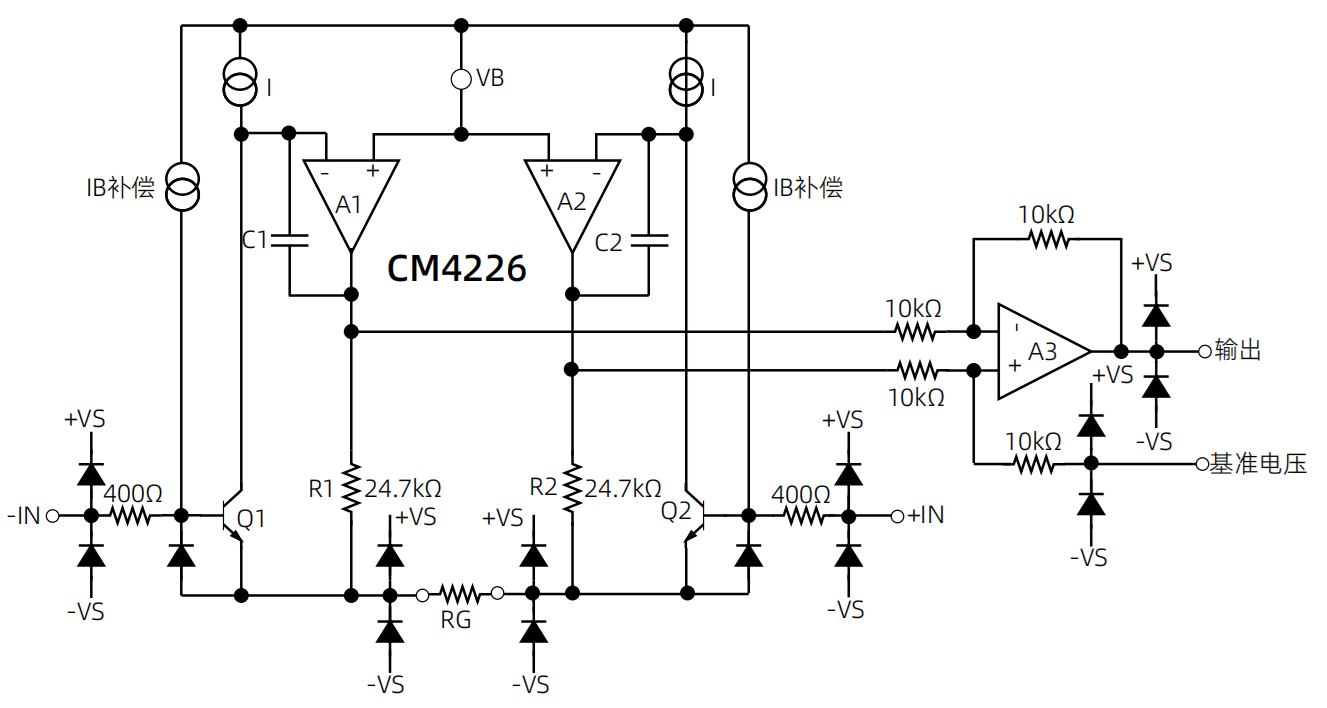
Instrumentation amplifiers utilize a three-amplifier architecture that provides superior performance characteristics compared to conventional operational amplifiers. The input stage consists of two buffer amplifiers that present extremely high input impedance to the signal source, while a difference amplifier in the output stage provides the final gain and common-mode rejection. This configuration ensures that instrumentation amplifiers can accurately process differential signals while rejecting common-mode noise that would otherwise compromise measurement accuracy.
The precision gain setting mechanism distinguishes quality instrumentation amplifiers from standard solutions. External resistor networks allow engineers to configure gain values with exceptional accuracy, typically achieving gain errors below 0.1%. This level of precision makes these amplifiers indispensable for applications where signal integrity cannot be compromised, such as medical instrumentation and industrial process control systems.
Signal Conditioning Capabilities
Advanced instrumentation amplifiers incorporate sophisticated signal conditioning features that extend their utility beyond basic amplification. Input protection circuits safeguard sensitive internal components from voltage transients and overvoltage conditions, ensuring reliable operation in harsh industrial environments. Additionally, many modern designs include built-in filtering capabilities that reduce high-frequency noise without requiring external components.
The ability to maintain high common-mode rejection ratios across extended frequency ranges represents another key advantage of professional-grade instrumentation amplifiers. This characteristic proves essential when processing signals from sensors exposed to electromagnetic interference or when long cable runs introduce unwanted common-mode voltages into the measurement system.
Performance Specifications and Selection Criteria
Low-Noise Performance Parameters
Noise performance stands as the most critical specification when evaluating instrumentation amplifiers for precision applications. Input-referred voltage noise density, typically measured in nanovolts per square root hertz, determines the minimum detectable signal level. Premium instrumentation amplifiers achieve noise densities below 10 nV/√Hz, enabling accurate measurement of microvolt-level signals from strain gauges, thermocouples, and other low-level sensors.
Current noise specifications become equally important when working with high-impedance signal sources. The interaction between current noise and source impedance generates additional voltage noise that can degrade overall system performance. Understanding this relationship allows engineers to optimize the impedance matching between sensors and amplifiers, maximizing signal-to-noise ratios in critical measurement applications.
Bandwidth and Settling Time Considerations
The frequency response characteristics of instrumentation amplifiers must align with application requirements to ensure accurate signal reproduction. High-performance models provide bandwidths extending into the megahertz range while maintaining excellent phase linearity. This combination enables faithful reproduction of complex waveforms without introducing distortion that could compromise measurement accuracy.
Settling time specifications become particularly relevant in multiplexed data acquisition systems where rapid channel switching occurs. Fast-settling instrumentation amplifiers minimize the time required to achieve final accuracy after input changes, thereby improving overall system throughput. Advanced designs achieve settling times below one microsecond to full accuracy, making them suitable for high-speed measurement applications.
National Manufacturing Advantages
Supply Chain Reliability
Domestic production of instrumentation amplifiers offers significant advantages in terms of supply chain stability and reduced lead times. National manufacturers maintain closer relationships with local semiconductor fabrication facilities, enabling more predictable delivery schedules and better inventory management. This proximity becomes especially valuable during periods of global supply chain disruption when international sourcing faces extended delays.
The ability to customize instrumentation amplifiers for specific applications represents another key benefit of working with national suppliers. Local manufacturers can modify standard designs to meet unique performance requirements or packaging constraints, providing solutions that may not be available from global suppliers focused on high-volume standard products.
Technical Support and Application Engineering
National manufacturers typically provide superior technical support services compared to international alternatives. Local application engineers understand regional industry requirements and can provide hands-on assistance during the design phase. This support proves invaluable when optimizing instrumentation amplifiers for specific measurement challenges or when troubleshooting performance issues in existing designs.
The availability of local technical training and educational resources further enhances the value proposition of national instrumentation amplifiers. Engineers can attend in-person seminars and workshops that provide deep technical insights into amplifier selection, circuit design, and application optimization. This knowledge transfer capability ensures that design teams can fully leverage the performance capabilities of their chosen amplification solutions.
Application-Specific Implementation Strategies
Medical Instrumentation Requirements
Medical device applications place stringent demands on instrumentation amplifiers regarding noise performance, input bias current, and electromagnetic compatibility. Biomedical signals such as electrocardiograms and electroencephalograms require amplification of microvolt-level signals in the presence of significant interference from power lines and other electronic equipment. High-quality instrumentation amplifiers designed for medical applications incorporate specialized input protection and filtering circuits that ensure patient safety while maintaining signal fidelity.
The regulatory compliance requirements for medical instrumentation amplifiers necessitate extensive documentation and quality control procedures that national manufacturers are well-positioned to provide. Local suppliers can work closely with medical device companies to ensure that their instrumentation amplifiers meet all applicable safety standards and regulatory requirements throughout the product lifecycle.
Industrial Process Control Applications
Industrial process control systems rely on instrumentation amplifiers to condition signals from temperature sensors, pressure transducers, and flow meters operating in challenging environmental conditions. These applications require amplifiers that can maintain accuracy over extended temperature ranges while rejecting electromagnetic interference from motor drives and switching power supplies. Ruggedized instrumentation amplifiers designed for industrial use incorporate enhanced ESD protection and wider operating temperature ranges compared to commercial-grade alternatives.
The ability to interface directly with industry-standard sensor outputs represents a key advantage of specialized industrial instrumentation amplifiers. Many designs include built-in excitation circuits for bridge-type sensors and programmable gain settings that accommodate different sensor sensitivities without requiring external components. This integration simplifies system design while reducing component count and improving overall reliability.
Cost-Performance Optimization
Total Cost of Ownership Analysis
Evaluating instrumentation amplifiers based solely on initial purchase price fails to account for the total cost of ownership throughout the product lifecycle. National alternatives often provide superior long-term value through reduced shipping costs, faster technical support response times, and more predictable pricing structures. The elimination of international shipping and customs procedures can result in significant cost savings for high-volume production programs.
Design flexibility represents another important cost consideration when selecting instrumentation amplifiers. National manufacturers can often provide custom solutions at competitive prices, eliminating the need for expensive external circuitry that would be required with standard international products. This customization capability allows engineers to optimize both performance and cost simultaneously.
Volume Pricing and Long-Term Partnerships
National instrumentation amplifier manufacturers typically offer more flexible pricing structures and longer-term supply agreements compared to global alternatives. These partnerships provide price stability and guaranteed availability that enable more accurate product cost projections throughout multi-year production cycles. The ability to negotiate volume discounts based on projected usage rather than minimum order quantities further enhances the economic attractiveness of national suppliers.
Collaborative product development opportunities with national manufacturers can result in next-generation instrumentation amplifiers optimized for specific market segments or applications. This partnership approach ensures that future product generations will continue to meet evolving performance requirements while maintaining competitive cost structures.
Quality Assurance and Testing Protocols
Manufacturing Quality Control
National instrumentation amplifier manufacturers implement comprehensive quality control procedures that ensure consistent performance across production lots. Statistical process control methodologies monitor critical parameters throughout the manufacturing process, identifying potential quality issues before they impact shipped products. This proactive approach to quality management results in lower field failure rates and improved customer satisfaction compared to suppliers with less rigorous quality systems.
Traceability systems maintained by quality-focused manufacturers provide detailed documentation of component sourcing, manufacturing processes, and test results for each production lot. This documentation proves essential for applications requiring compliance with aerospace, medical, or automotive quality standards where complete supply chain visibility is mandatory.
Performance Validation and Characterization
Comprehensive performance testing of instrumentation amplifiers encompasses not only standard datasheet parameters but also application-specific characteristics that affect real-world performance. Advanced test procedures evaluate amplifier behavior under various loading conditions, temperature extremes, and electromagnetic interference levels that represent actual operating environments.
The availability of detailed characterization data from national manufacturers enables more accurate circuit simulations and performance predictions during the design phase. This information reduces the risk of performance surprises during prototype testing and accelerates the overall product development timeline.
Future Technology Trends
Digital Integration and Smart Features
The evolution of instrumentation amplifiers increasingly incorporates digital control and communication capabilities that enhance their utility in modern measurement systems. Programmable gain settings, digital filtering, and built-in self-diagnostic features represent emerging trends that improve system flexibility while reducing external component requirements. National manufacturers are well-positioned to incorporate these advanced features while maintaining the performance characteristics required for precision measurement applications.
Integration with standard communication protocols such as SPI and I2C enables instrumentation amplifiers to participate directly in digital control systems without requiring additional interface circuitry. This integration simplifies system architecture while providing real-time monitoring and control capabilities that enhance overall system reliability and performance.
Environmental and Efficiency Improvements
Ongoing development efforts focus on reducing power consumption while maintaining or improving performance specifications of instrumentation amplifiers. Advanced process technologies enable the design of amplifiers that consume significantly less power than previous generations, extending battery life in portable measurement systems and reducing cooling requirements in high-density applications.
Environmental considerations increasingly influence the design and manufacturing of instrumentation amplifiers, with emphasis on reducing hazardous materials and improving recyclability. National manufacturers can more easily implement environmentally responsible manufacturing practices and provide detailed environmental compliance documentation required for green technology initiatives.
FAQ
What distinguishes high-performance instrumentation amplifiers from standard operational amplifiers
High-performance instrumentation amplifiers feature specialized three-amplifier architectures that provide superior common-mode rejection, lower noise, and higher input impedance compared to standard operational amplifiers. They also include precision gain-setting mechanisms and enhanced input protection circuits that make them ideal for processing low-level differential signals in the presence of common-mode interference.
How do national instrumentation amplifier suppliers compare to international alternatives
National suppliers typically offer advantages including shorter lead times, superior technical support, customization capabilities, and more stable supply chains. They can provide hands-on application engineering assistance and develop custom solutions for specific requirements while maintaining competitive pricing structures and flexible volume agreements.
What performance specifications are most critical when selecting instrumentation amplifiers
Key specifications include input-referred voltage noise, common-mode rejection ratio, input bias current, gain accuracy, and bandwidth. The relative importance of these parameters depends on the specific application, with low-noise performance being critical for sensor signal conditioning and high CMRR being essential for applications with significant common-mode interference.
How can engineers optimize the cost-effectiveness of instrumentation amplifier solutions
Cost optimization requires considering total cost of ownership including purchase price, shipping costs, technical support, and long-term availability. National suppliers often provide better overall value through reduced logistics costs, faster support response, customization options that eliminate external components, and more predictable pricing for volume production programs.
Table of Contents
- Understanding Instrumentation Amplifier Architecture
- Performance Specifications and Selection Criteria
- National Manufacturing Advantages
- Application-Specific Implementation Strategies
- Cost-Performance Optimization
- Quality Assurance and Testing Protocols
- Future Technology Trends
-
FAQ
- What distinguishes high-performance instrumentation amplifiers from standard operational amplifiers
- How do national instrumentation amplifier suppliers compare to international alternatives
- What performance specifications are most critical when selecting instrumentation amplifiers
- How can engineers optimize the cost-effectiveness of instrumentation amplifier solutions