
 EN
EN
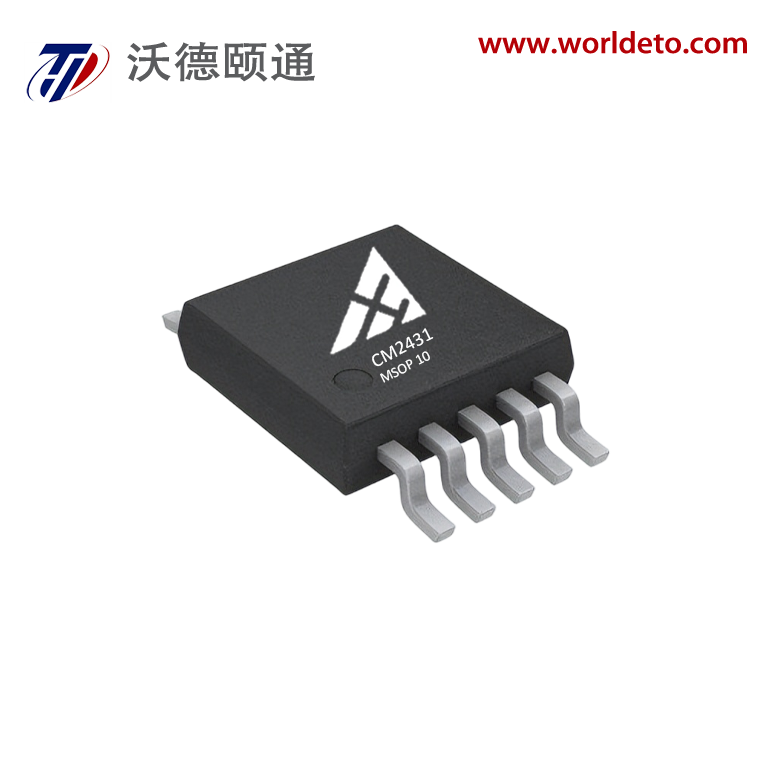
In today's advanced measurement and control systems, the bridge between analog real-world signals and digital processing relies heavily on specialized semiconductor components. These critical interface chips, specifically High-Accuracy ADC & DAC Chips, enable precise conversion between continuous analog signals and discrete digital values, forming the foundation of accurate data acquisition and signal generation. Modern industrial applications demand exceptional precision, minimal noise, and consistent performance across varying environmental conditions, making the selection of appropriate High-Accuracy ADC & DAC Chips absolutely crucial for system reliability.

The evolution of precision conversion technology, driven by advancements in High-Accuracy ADC & DAC Chips, has revolutionized industries ranging from aerospace instrumentation to medical diagnostics. These sophisticated components must maintain exceptional linearity while minimizing distortion and drift over extended operational periods. Understanding the technical specifications and application requirements of High-Accuracy ADC & DAC Chips becomes essential for engineers designing next-generation measurement platforms that require uncompromising accuracy and reliability.
Fundamental Architecture of Precision Conversion Components
Core Design Principles and Signal Processing Methods
Precision analog-to-digital and digital-to-analog conversion relies on sophisticated architectural approaches that minimize inherent limitations of electronic circuits. The choice of architecture within High-Accuracy ADC & DAC Chips is paramount. Delta-sigma architectures provide exceptional resolution through oversampling techniques, while successive approximation register designs offer optimal speed-accuracy trade-offs for many applications. The internal reference voltage systems within these High-Accuracy ADC & DAC Chips must maintain stability across temperature variations and supply voltage fluctuations to ensure consistent performance.
Modern High-Accuracy ADC & DAC Chips incorporate advanced calibration algorithms that automatically compensate for component aging and environmental drift. These self-correcting mechanisms continuously monitor internal parameters and adjust conversion coefficients to maintain specified accuracy levels throughout the operational lifetime. Such intelligent design approaches in High-Accuracy ADC & DAC Chips significantly reduce maintenance requirements while extending the useful service life of precision measurement systems.
Resolution and Dynamic Range Considerations
The effective number of bits represents a critical performance parameter that directly impacts measurement precision and system dynamic range in High-Accuracy ADC & DAC Chips. Higher resolution specifications enable detection of smaller signal variations, but also introduce additional complexity in circuit design and signal conditioning requirements. Engineers must carefully balance resolution needs against bandwidth limitations, power consumption constraints, and overall system cost considerations when selecting High-Accuracy ADC & DAC Chips.
Dynamic range specifications determine the ratio between maximum and minimum measurable signal levels without significant degradation in conversion accuracy, a key strength of High-Accuracy ADC & DAC Chips. This parameter becomes particularly important in applications involving wide signal variations, such as vibration analysis or acoustic measurements. High-Accuracy ADC & DAC Chips designed for precision applications typically feature enhanced dynamic range capabilities that exceed standard commercial-grade components by significant margins.
Critical Performance Parameters and Selection Criteria for High-Accuracy ADC & DAC Chips
Accuracy and Linearity Specifications
Absolute accuracy in High-Accuracy ADC & DAC Chips encompasses multiple error sources including offset, gain, and nonlinearity contributions that affect overall measurement uncertainty. Integral nonlinearity represents the maximum deviation from an ideal straight-line transfer function, while differential nonlinearity indicates step-size variations between adjacent conversion codes. These parameters directly influence the quality of measurement data and must be carefully evaluated against application requirements for any High-Accuracy ADC & DAC Chips.
Temperature coefficients significantly impact long-term stability and measurement repeatability across varying environmental conditions, making them a critical specification for High-Accuracy ADC & DAC Chips. Premium conversion components incorporate sophisticated compensation techniques that minimize thermal drift effects through internal temperature sensing and algorithmic correction methods. Understanding these specifications enables proper system-level calibration procedures and uncertainty budget allocation for critical measurement applications utilizing High-Accuracy ADC & DAC Chips.
Noise Performance and Signal Integrity
Noise characteristics fundamentally limit the smallest detectable signal changes and determine the effective resolution under practical operating conditions for High-Accuracy ADC & DAC Chips. Thermal noise, quantization noise, and interference from switching circuits all contribute to the overall noise floor that masks low-level signal information. Advanced High-Accuracy ADC & DAC Chips employ sophisticated filtering and shielding techniques to minimize noise contributions while maintaining adequate bandwidth for the intended application.
Clock jitter and aperture uncertainty introduce timing-related errors that become increasingly significant at higher sampling frequencies and resolution levels in High-Accuracy ADC & DAC Chips. These temporal variations cause sampling instant uncertainties that translate directly into amplitude errors in the converted digital representation. Proper clock distribution design and jitter-attenuated timing sources become essential for achieving specified performance levels in high-precision measurement systems based on High-Accuracy ADC & DAC Chips.
Industrial Applications and Implementation Strategies
Process Control and Automation Systems
Manufacturing process control demands exceptional stability and accuracy from High-Accuracy ADC & DAC Chips to ensure product quality consistency and operational efficiency. Temperature, pressure, flow, and chemical composition measurements require different performance characteristics and environmental resilience levels. The chosen High-Accuracy ADC & DAC Chips must operate reliably in harsh industrial environments while maintaining calibrated accuracy over extended periods without frequent recalibration requirements.
Safety-critical applications impose additional requirements for fault detection, diagnostic capabilities, and fail-safe operation modes on High-Accuracy ADC & DAC Chips. Built-in self-test features enable continuous monitoring of conversion component health and provide early warning of potential failures before they compromise system operation. These diagnostic capabilities in modern High-Accuracy ADC & DAC Chips integrate seamlessly with higher-level control systems to support predictive maintenance strategies and minimize unplanned downtime events.
Scientific Instrumentation and Research Applications
Research-grade instrumentation demands the highest levels of precision and stability available from current conversion technology, a domain ruled by specialized High-Accuracy ADC & DAC Chips. Laboratory measurements often require traceability to national standards and documented uncertainty calculations that account for all known error sources. Long-term drift characteristics become particularly important for experiments spanning extended time periods where measurement consistency directly impacts scientific conclusions, placing a premium on the quality of the High-Accuracy ADC & DAC Chips used.
Multi-channel synchronous sampling applications require precise timing coordination between multiple conversion channels to maintain phase relationships and enable accurate correlation analysis. Advanced conversion systems based on synchronized High-Accuracy ADC & DAC Chips incorporate sophisticated timing distribution networks and sample-and-hold amplifiers that ensure simultaneous acquisition across all measurement channels. These capabilities enabled by specialized High-Accuracy ADC & DAC Chips make possible complex signal analysis techniques that would be impossible with non-synchronous conversion approaches.
Design Implementation and System Integration with High-Accuracy ADC & DAC Chips
Power Supply and Grounding Considerations
High-Accuracy ADC & DAC Chips require exceptionally clean power supplies with minimal ripple and noise content to achieve specified performance levels. Linear regulation techniques often prove superior to switching approaches for the most demanding applications, despite efficiency considerations. Separate analog and digital supply domains help isolate sensitive conversion circuits in High-Accuracy ADC & DAC Chips from digital switching noise that could degrade measurement accuracy.
Ground plane design significantly impacts noise performance and measurement accuracy through the creation of current loops and potential differences between circuit sections. Star grounding configurations minimize interference between high-current digital circuits and the sensitive analog measurement paths within High-Accuracy ADC & DAC Chips. Proper impedance control and shield termination techniques become essential for maintaining signal integrity in high-frequency applications or long cable runs involving High-Accuracy ADC & DAC Chips.
Thermal Management and Environmental Protection
Temperature stability requirements for High-Accuracy ADC & DAC Chips often necessitate active thermal control systems that maintain conversion components within narrow temperature ranges regardless of ambient conditions. Thermoelectric cooling systems provide precise temperature regulation while thermal isolation techniques minimize external temperature influences. Understanding thermal time constants of High-Accuracy ADC & DAC Chips enables proper system startup procedures that ensure stable operation before beginning critical measurements.
Environmental protection measures must address moisture, vibration, electromagnetic interference, and chemical exposure concerns that could degrade long-term performance or cause premature failure of High-Accuracy ADC & DAC Chips. Sealed enclosures with controlled atmospheres protect sensitive circuits while advanced filtering techniques eliminate interference from external electromagnetic sources. These protection measures become increasingly important in mobile or outdoor measurement applications where environmental conditions cannot be controlled, yet the integrity of the High-Accuracy ADC & DAC Chips must be preserved.
Future Technology Trends and Development Directions for High-Accuracy ADC & DAC Chips
Advanced Process Technologies and Performance Improvements
Semiconductor process improvements continue to enable higher resolution and faster conversion speeds for High-Accuracy ADC & DAC Chips while reducing power consumption and component size. Advanced lithography techniques allow more precise component matching and reduced parasitics that directly translate into improved conversion accuracy and stability. These technological advances enable new measurement capabilities that were previously impossible due to performance limitations of available High-Accuracy ADC & DAC Chips.
Integrated calibration and correction capabilities are becoming standard features in new generations of High-Accuracy ADC & DAC Chips, simplifying system design while improving long-term stability. Machine learning algorithms embedded within advanced High-Accuracy ADC & DAC Chips can adapt to changing environmental conditions and component aging effects automatically. These intelligent features reduce the burden on system designers while ensuring optimal performance throughout the operational lifetime of precision measurement equipment built around these smart High-Accuracy ADC & DAC Chips.
Integration with Digital Signal Processing and Communication Interfaces
Modern High-Accuracy ADC & DAC Chips increasingly incorporate sophisticated digital signal processing capabilities that eliminate the need for external processing components. Integrated filtering, decimation, and data formatting functions simplify system architecture while reducing component count and power consumption. Standard communication interfaces on these High-Accuracy ADC & DAC Chips enable direct connection to microprocessors and field-programmable gate arrays without additional interface circuits.
Wireless connectivity and remote monitoring capabilities are expanding the application possibilities for precision measurement systems in previously inaccessible locations, powered by low-power High-Accuracy ADC & DAC Chips. Battery-powered operation with extremely low power consumption enables autonomous measurement stations that can operate for extended periods without maintenance. These capabilities open new opportunities for environmental monitoring, structural health assessment, and distributed sensing applications that require long-term unattended operation, all reliant on the evolving capabilities of High-Accuracy ADC & DAC Chips.
FAQ on High-Accuracy ADC & DAC Chips
Q1: What factors determine the appropriate resolution when selecting High-Accuracy ADC & DAC Chips for a specific measurement application? Resolution requirements depend primarily on the smallest signal change that must be detected reliably above the system noise floor. The dynamic range of expected signals, measurement uncertainty budget, and post-processing requirements all influence the optimal resolution choice in High-Accuracy ADC & DAC Chips. Higher resolution provides better measurement precision but increases cost, power consumption, and data processing requirements that must be balanced against performance benefits.
Q2: How do environmental conditions affect the performance of High-Accuracy ADC & DAC Chips? Temperature variations cause drift in reference voltages, component values, and timing parameters that directly impact conversion accuracy in High-Accuracy ADC & DAC Chips. Humidity can affect insulation resistance and create leakage paths that introduce measurement errors. Vibration and mechanical stress can cause intermittent connections or component damage, while electromagnetic interference can couple into sensitive analog circuits within High-Accuracy ADC & DAC Chips and corrupt measurement data.
Q3: What calibration procedures are necessary for maintaining the long-term accuracy of systems using High-Accuracy ADC & DAC Chips? Regular calibration against traceable standards ensures continued measurement accuracy as components age and environmental conditions change. While self-calibration features in modern High-Accuracy ADC & DAC Chips can compensate for some drift effects automatically, external reference standards remain necessary for absolute accuracy verification. Calibration intervals depend on stability requirements, environmental conditions, and the specifications of the High-Accuracy ADC & DAC Chips, typically ranging from monthly to annual schedules for precision applications.
Q4: How do sampling rate and bandwidth requirements affect the selection of High-Accuracy ADC & DAC Chips? Nyquist theorem requirements mandate sampling rates at least twice the highest signal frequency of interest to avoid aliasing effects, a key consideration when specifying High-Accuracy ADC & DAC Chips. Anti-aliasing filters must provide adequate attenuation of out-of-band signals while maintaining flat response in the passband. Higher sampling rates enabled by certain High-Accuracy ADC & DAC Chips allow oversampling techniques that can improve effective resolution but require increased processing power and data storage capacity for the resulting higher data rates.