
 EN
EN
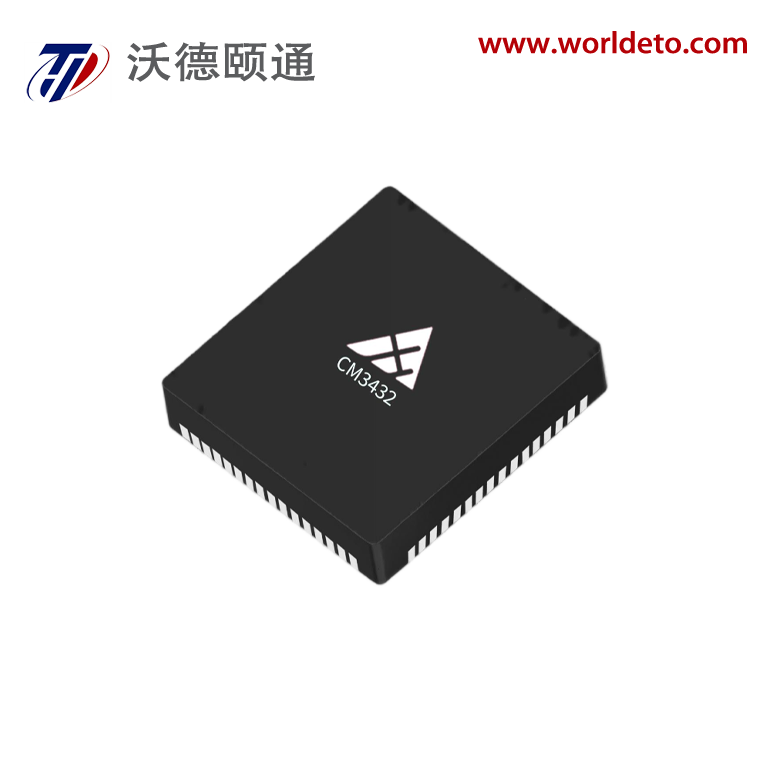
In today's rapidly evolving electronics landscape, the demand for precise and rapid signal processing continues to grow exponentially. From telecommunications infrastructure to advanced measurement systems, engineers are constantly seeking solutions that can handle high-frequency signals with exceptional accuracy. The combination of high-speed ADCs and precision amplifiers represents a critical partnership in modern signal processing applications, enabling systems to achieve unprecedented levels of performance and reliability.
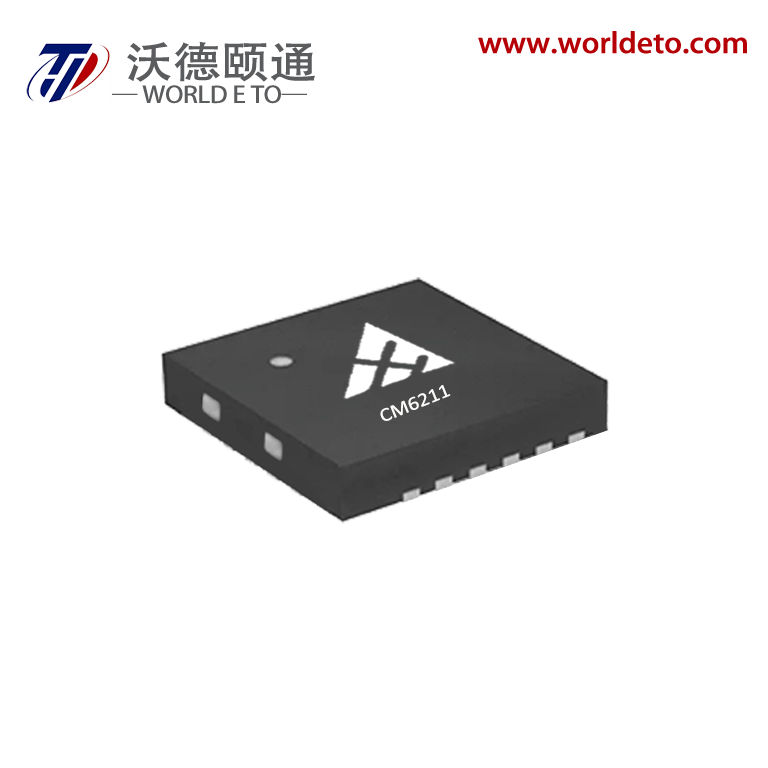
The synergy between these two essential components creates opportunities for breakthrough innovations across multiple industries. When properly integrated, high-speed analog-to-digital converters and precision amplifiers can deliver exceptional signal fidelity while maintaining the speed necessary for real-time processing applications. This powerful combination addresses the fundamental challenge of converting analog signals to digital format without compromising accuracy or introducing unwanted noise and distortion.
Understanding High-Speed ADC Architecture
Core Design Principles
High-speed ADCs operate on sophisticated architectural principles that enable them to process signals at remarkable speeds while maintaining precision. These converters utilize advanced sampling techniques, including pipeline, flash, and successive approximation register architectures, each optimized for specific performance characteristics. The selection of the appropriate architecture depends heavily on the application requirements, including sampling rate, resolution, power consumption, and cost considerations.
Modern high-speed ADC designs incorporate innovative circuit topologies that minimize sampling jitter and maximize effective number of bits. These devices feature ultra-low latency conversion processes, enabling real-time signal processing applications that were previously impossible. The integration of advanced calibration algorithms further enhances performance by compensating for process variations and environmental changes that could otherwise degrade conversion accuracy.
Performance Metrics and Specifications
Critical performance parameters for high-speed ADCs include sampling rate, resolution, signal-to-noise ratio, spurious-free dynamic range, and effective number of bits. These specifications directly impact the converter's ability to accurately represent input signals across various frequency ranges. Understanding these metrics is essential for system designers who need to select the optimal converter for their specific application requirements.
The relationship between sampling rate and resolution presents interesting trade-offs in high-speed ADC design. While higher sampling rates enable the processing of wider bandwidth signals, they often come at the expense of resolution or power consumption. Advanced converter architectures address these challenges through innovative design techniques that optimize performance across multiple parameters simultaneously.
Precision Amplifier Integration Strategies
Signal Conditioning Requirements
Precision amplifiers serve as the critical interface between analog signal sources and high-speed ADCs, providing necessary signal conditioning to optimize converter performance. These amplifiers must deliver exceptional linearity, low noise, and wide bandwidth characteristics to preserve signal integrity throughout the conversion process. The amplifier's ability to drive the ADC input while maintaining signal fidelity directly impacts overall system performance.
Modern precision amplifiers incorporate advanced circuit techniques to minimize distortion and noise contributions. Features such as auto-zero and chopper stabilization help maintain DC accuracy over time and temperature variations. Additionally, these amplifiers often include programmable gain capabilities, allowing system designers to optimize signal levels for maximum ADC utilization while preventing overload conditions.
Impedance Matching and Drive Capabilities
Proper impedance matching between precision amplifiers and high-speed ADCs is crucial for maintaining signal integrity and preventing reflections that could degrade performance. The amplifier must provide sufficient drive current to charge and discharge the ADC's input capacitance within the required settling time. This becomes increasingly challenging at higher sampling rates where settling requirements become more stringent.
Advanced amplifier designs feature enhanced output stages specifically optimized for driving capacitive loads typical of high-speed converters. These output stages provide excellent stability while delivering the current necessary for rapid settling. Some amplifiers also incorporate built-in back-termination resistors to simplify impedance matching and reduce external component requirements.
System-Level Design Considerations
Power Supply and Grounding Strategies
Effective power supply design plays a fundamental role in achieving optimal performance from combined high-speed ADC and precision amplifier systems. Clean, stable power supplies with minimal ripple and noise are essential for maintaining converter accuracy and amplifier linearity. Multi-layer PCB designs with dedicated power and ground planes help minimize supply impedance and reduce noise coupling between sensitive analog circuits.
Advanced power management techniques include the use of low-dropout regulators, ferrite beads, and bypass capacitors strategically placed throughout the circuit. Digital switching noise from clocks and data lines can significantly impact analog performance, making proper isolation and filtering critical. Some designs incorporate separate analog and digital power domains to further reduce interference and crosstalk.
Clock Generation and Distribution
High-quality clock generation is paramount for high-speed ADC applications, as sampling jitter directly impacts conversion accuracy and dynamic range. Crystal oscillators and phase-locked loops must deliver exceptional spectral purity and low phase noise to maintain converter performance specifications. Clock distribution networks require careful design to minimize skew and preserve signal integrity across multiple conversion channels.
Modern clock generation circuits incorporate advanced jitter attenuation techniques and programmable output formats to accommodate various ADC requirements. Some systems utilize clock fanout buffers with adjustable delay controls to optimize timing relationships between multiple converters. The integration of on-chip PLLs in many high-speed ADCs simplifies clock distribution while providing excellent jitter performance.
Application-Specific Implementations
Communications Infrastructure
In telecommunications and wireless infrastructure applications, the combination of high-speed ADCs and precision amplifiers enables advanced signal processing techniques such as digital predistortion and software-defined radio implementations. These systems require exceptional dynamic range and linearity to handle multiple signal channels simultaneously while maintaining signal quality standards. The ability to process wide bandwidth signals with high fidelity is essential for next-generation communication protocols.
Base station receivers utilize high-speed conversion systems to digitize received RF signals for subsequent digital signal processing. The precision amplifier stages provide necessary gain and filtering to optimize signal levels for the ADC while minimizing noise figure degradation. Advanced calibration techniques compensate for component variations and environmental changes that could otherwise impact receiver sensitivity and selectivity.
Test and Measurement Equipment
High-performance test and measurement instruments rely heavily on the precise coordination of high-speed ADCs and precision amplifiers to deliver accurate measurements across wide frequency ranges. These applications demand exceptional specification performance, including high resolution, wide bandwidth, and excellent linearity. The ability to capture and analyze complex waveforms with high fidelity is essential for characterizing modern electronic devices and systems.
Oscilloscopes and spectrum analyzers incorporate sophisticated signal conditioning chains that optimize input signals for high-speed conversion. Multiple gain ranges and AC/DC coupling options provide flexibility for various measurement scenarios. Advanced triggering and synchronization capabilities ensure accurate capture of transient events and complex signal patterns that are critical for thorough device characterization.
Optimization Techniques and Best Practices
Thermal Management
Effective thermal management is crucial for maintaining consistent performance from high-speed ADC and precision amplifier systems. Temperature variations can significantly impact converter accuracy and amplifier offset, requiring careful attention to heat dissipation and temperature compensation techniques. Modern system designs incorporate thermal modeling and analysis to optimize component placement and cooling strategies.
Advanced thermal management approaches include the use of thermal vias, heat spreaders, and forced air cooling to maintain stable operating temperatures. Some high-performance applications utilize temperature sensors and adaptive calibration algorithms to compensate for thermal effects in real-time. Package selection and PCB layout optimization play important roles in thermal performance, with careful consideration given to power density and heat flow paths.
EMI and EMC Considerations
Electromagnetic interference and compatibility represent significant challenges in high-speed mixed-signal systems. The rapid switching associated with high-speed ADCs can generate broadband noise that interferes with sensitive analog circuits. Proper shielding, filtering, and layout techniques are essential for minimizing EMI while maintaining system functionality and meeting regulatory requirements.
Effective EMC design strategies include the use of ground planes, controlled impedance traces, and strategic component placement to minimize coupling between digital and analog circuits. Ferrite beads, bypass capacitors, and common-mode chokes help attenuate high-frequency noise and prevent interference propagation. Some designs incorporate spread-spectrum clocking techniques to reduce peak spectral content and improve EMC performance.
FAQ
What are the key advantages of combining high-speed ADCs with precision amplifiers?
The combination of high-speed ADCs with precision amplifiers provides several critical advantages including improved signal-to-noise ratio, enhanced dynamic range, and optimized signal conditioning for maximum converter utilization. This pairing enables systems to achieve better overall performance than would be possible with either component alone, particularly in applications requiring both speed and accuracy.
How do sampling rate and resolution trade-offs affect system performance?
Higher sampling rates typically enable wider bandwidth signal processing but may come at the expense of resolution or increased power consumption. The optimal balance depends on specific application requirements, with some systems prioritizing speed for real-time processing while others emphasize resolution for precise measurements. Modern converter architectures help optimize these trade-offs through innovative design techniques.
What are the most important considerations for power supply design in these systems?
Critical power supply considerations include minimizing ripple and noise, providing adequate current capability for dynamic loads, and maintaining stable voltages across temperature and load variations. Separate analog and digital supply domains, proper bypassing, and low-impedance distribution networks are essential for optimal performance. Clean power supplies directly impact both converter accuracy and amplifier linearity.
How can designers minimize electromagnetic interference in high-speed mixed-signal systems?
EMI minimization strategies include careful PCB layout with proper grounding techniques, strategic component placement to reduce coupling, and the use of filtering components such as ferrite beads and bypass capacitors. Shielding sensitive circuits, controlling impedances, and implementing spread-spectrum clocking can further reduce interference. A systematic approach to EMC design is essential for meeting performance and regulatory requirements.
Table of Contents
- Understanding High-Speed ADC Architecture
- Precision Amplifier Integration Strategies
- System-Level Design Considerations
- Application-Specific Implementations
- Optimization Techniques and Best Practices
-
FAQ
- What are the key advantages of combining high-speed ADCs with precision amplifiers?
- How do sampling rate and resolution trade-offs affect system performance?
- What are the most important considerations for power supply design in these systems?
- How can designers minimize electromagnetic interference in high-speed mixed-signal systems?